Exterior Cleaning Sarsden | Pressure Washing Sarsden
- Residential & Commercial Cleaning Specialists
- 5-Star Rated Service & Customer Care
- Eco-Friendly Cleaning Solutions
- Expert Team Covering Sarsden
Get a FREE Quote
Exterior Cleaning Sarsden
A surprising number of exterior problems are mistaken for other problems, and the misdiagnosis usually leads to money spent on the wrong remedy. Efflorescence and mould look broadly similar from a distance and are entirely different things. Efflorescence is a white or greyish powdery bloom of salts carried through masonry by moisture and left at the surface as water evaporates. Mould is biological, darker, and grows rather than deposits. Biocide clears one and does nothing at all for the other. Rising damp and gutter overflow are confused more constantly than any other pair. Damp appearing high on an internal wall, or a tide mark at first-floor level, is almost always overflow from a blocked run rather than anything rising, and the remedy is a morning’s clearance rather than an injected course. Wear and damage look alike on paving. Exposed aggregate on old concrete is decades of weathering rather than something a contractor caused, whereas parallel lines cut into a surface are lance marks. Photographs at survey settle it. Settlement and subsidence are different in scale and consequence. A local depression in paving where a service trench was backfilled poorly is settlement; cracking that runs through render and brickwork alike is a matter for a surveyor. Algae and general dirt are distinguishable by where they are. Dirt lands everywhere; algae concentrates on the elevations that dry slowest. Lichen shadowing and remaining growth are confused too. Where lichen has etched into a porous surface it leaves a mark after the organism is dead, and that is a permanent record of how long it was left rather than evidence of a treatment that failed. Stewart Exterior Cleaning separates all of these at survey rather than treating everything the same way. Households in Sarsden searching exterior cleaning near me benefit from the diagnosis more than the wash.
Pressure Washing Sarsden
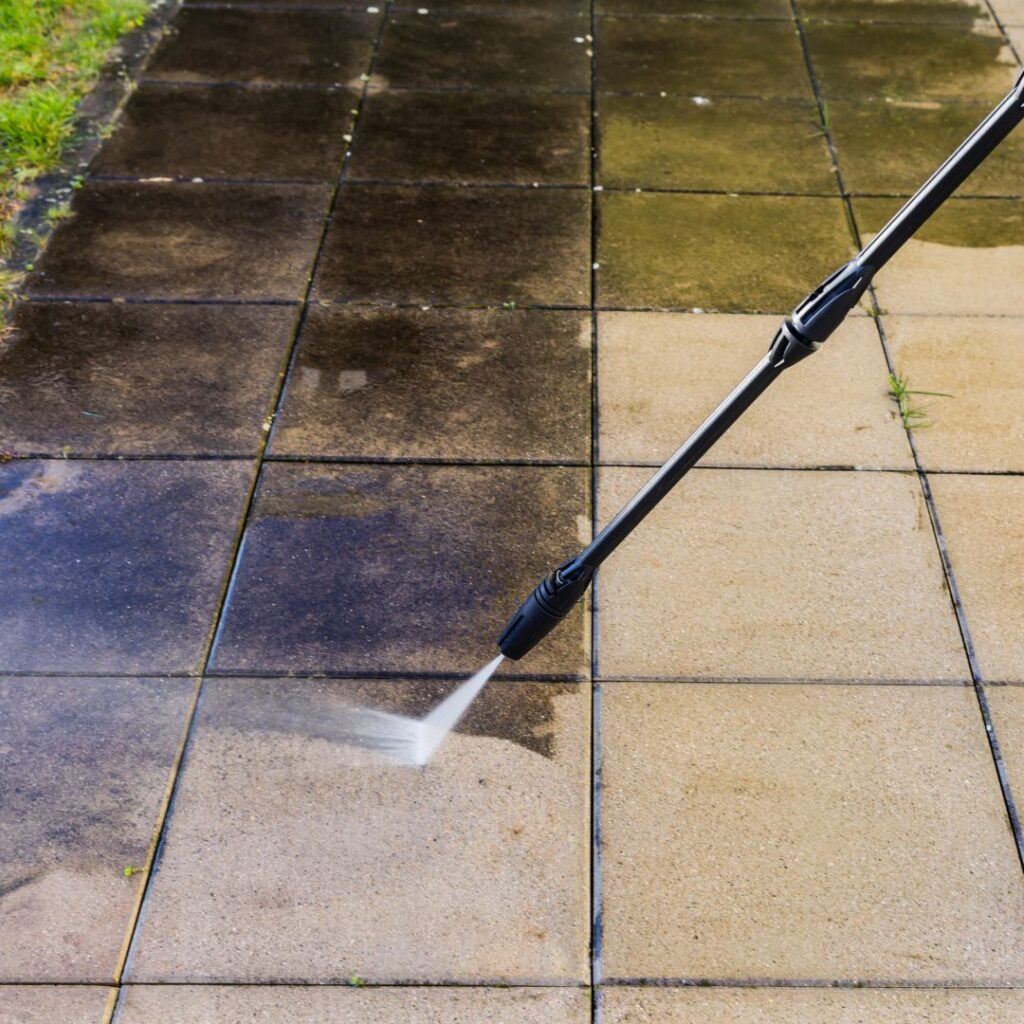
Several things on a hard surface look like dirt and are not, and directing a machine at them wastes both time and material. Exposed aggregate is comfortably the commonest of them. Old concrete loses its fine surface layer over decades and the stone beneath becomes visible, which reads as ingrained grime until it is understood. Pressure removes more matrix and releases more stone rather than improving it. Efflorescence is the second of them. The white bloom on newer paving is salt migrating through the units and depositing as water evaporates, and it is not dirt, does not respond to biocide and generally resolves on its own over a season or two. Iron staining from pyrites within the aggregate is the third. Small orange-brown spots appearing across a slab come from within the material rather than from anything on top, and they cannot be cleaned off. Lime bloom and cement residue from construction are the fourth and need an acidic treatment rather than pressure. Sealer failure is the fifth. A cloudy, blotched appearance is trapped moisture beneath a film-forming sealer, not soiling, and it needs stripping. Colour loss is the sixth. Concrete blocks carry their pigment in the top few millimetres and it fades with frost, traffic and previous over-pressuring. A clean drive can still look tired, and no amount of further work changes it. Shadowing from furniture left in one place for years is the seventh, and it evens out slowly rather than washing away. Tannin staining is the eighth and is genuinely removable, though not by pressure. Brown diffuse marks left by decaying leaves, acorns and berries respond to an alkaline cleaner with dwell time rather than to mechanical energy. Anyone in Sarsden booking pressure washing near me should have all of these identified before the pressure is chosen.
Are you based in Sarsden or the Surrounding Areas?
Patio & Driveway Cleaning Sarsden
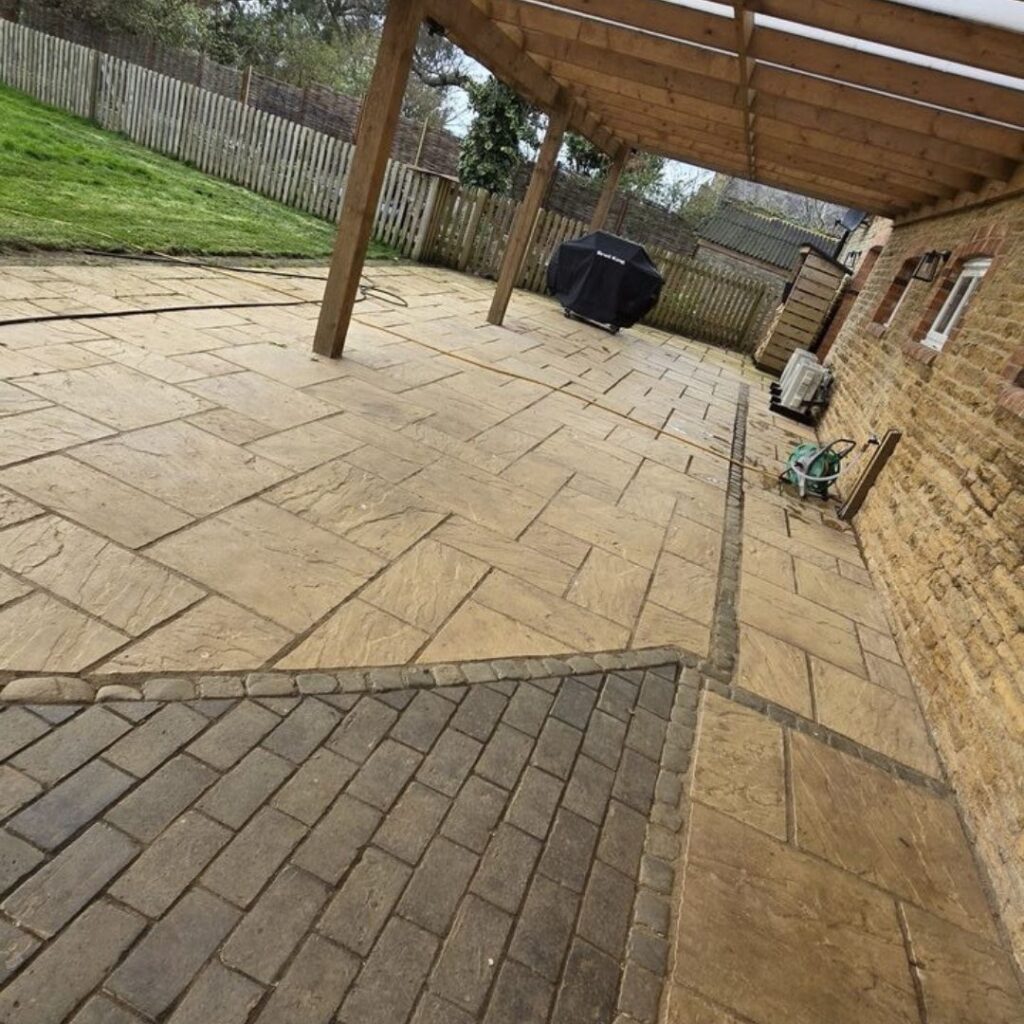
Paving problems tend to come in pairs that look much alike from a distance and need completely different responses. Moss and algae are the first pair worth separating. Algae is a thin green film across a surface, responding readily to biocide and a moderate rinse. Moss is a plant with mass, sitting in joints and shaded margins, absorbing water across its whole surface and needing a biocide with proper dwell followed by mechanical extraction of the composted material beneath it. Red lichen and rust staining are the second pair, and they are frequently confused for one another. Lichen appears as flat orange-pink discs bonded tightly to the surface and is biological despite looking mineral, needing a biocide and patience. Rust is genuinely mineral, comes from metal furniture, fixings or pyrites in the aggregate, and needs a controlled acidic treatment. Oil and general darkening make up the third pair. A patch that darkens further when wet is hydrocarbon and needs an emulsifying poultice; general darkening is biofilm and washes off. Ponding and porosity are the fourth. Water standing in one place is a levels problem; a surface that simply stays damp everywhere is porous material behaving normally. Loose blocks and depleted joints form the fifth pair. Where sand is missing, reinstating it fixes the movement; where sand is full and blocks still rock, the laying course beneath has failed. Weeds and moss in joints are the sixth, needing a systemic herbicide and a biocide respectively. Efflorescence and lime bloom are the seventh pair, and neither is dirt at all. Both are salts deposited as moisture moves through the units and evaporates at the surface, and both generally resolve on their own over a season or two. Homeowners in Sarsden booking driveway cleaning near me should expect each of these pairs distinguished before any work starts.
Roof Cleaning Sarsden
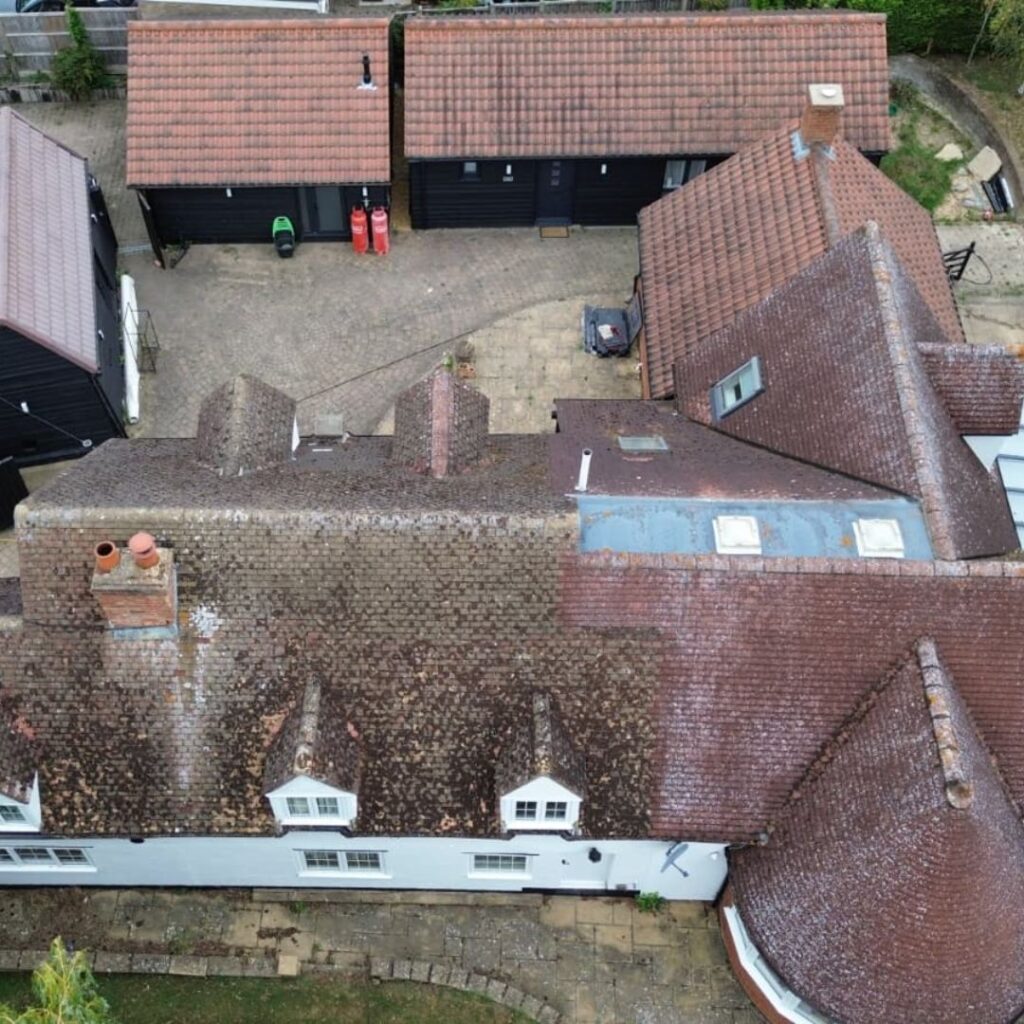
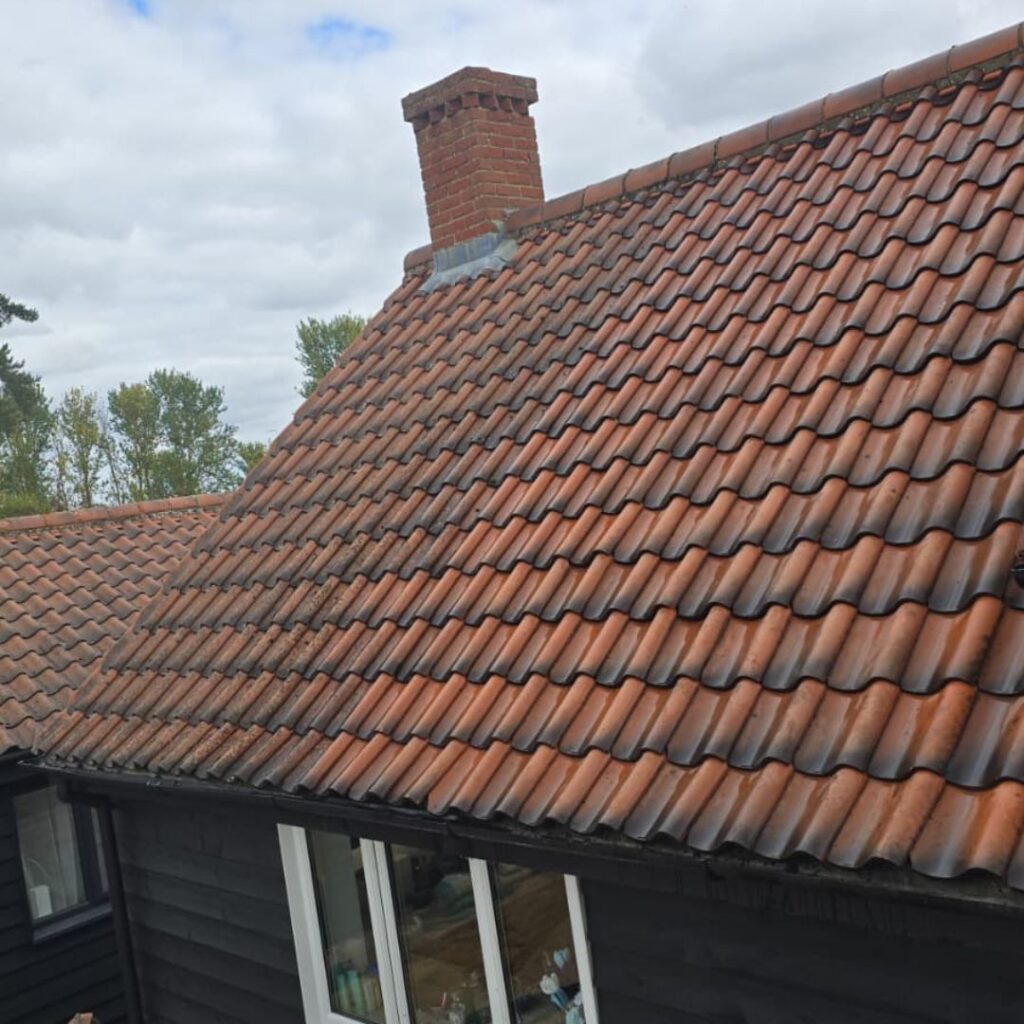
Roof faults are commonly attributed to the wrong cause, and the pattern of the evidence usually settles it. A leak and a slipped tile are the first pair to untangle. A tile visibly out of place is an obvious suspect, and a great many leaks actually originate in a blocked valley several courses higher, where the drainage of two planes concentrates and an obstruction pushes water sideways beneath the covering. Moss damage and age are the second. A covering that looks poor may simply be old, with concrete tiles that have weathered off their granular surface, and treating the growth improves matters without making the tiles new. Distinguishing the two prevents disappointment. Condensation and a roof leak are the third, and they are confused regularly. Damp in a roof space with no obvious entry point above it, worse in cold weather, is frequently condensation from inadequate ventilation rather than water coming in. Gutter overflow and a covering fault are the fourth. Water appearing at the top of a wall rather than on a ceiling is nearly always overflow. Lichen shadowing and remaining growth are the fifth. Where lichen has etched into a porous surface it leaves a mark after the organism is dead, and that is a permanent record rather than a failed treatment. Regrowth and incomplete treatment are the sixth. A covering greening within two years was almost certainly jetted rather than treated, leaving the spore population intact. Ridge bedding failure and a slipped ridge tile are the seventh pair, and the first precedes the second. Mortar cracks and falls away in sections long before anything moves, and catching it at that stage is a cheap repair rather than an expensive one. Anyone in Sarsden searching roof cleaning near me should expect the cause established before the cure is quoted.
Solar Panel Cleaning Sarsden
Solar output problems are attributed to soiling far more often than soiling is responsible, and telling them apart is straightforward once the patterns are known. Soiling and component failure are the first pair. Soiling produces a gradual decline over months, worst during dry spells when rainfall has not been rinsing the glass, and it affects the whole system proportionally. A component fault appears as a step change on a single day and frequently affects one string while the others behave normally. Shading and soiling are the second. Shading has a time signature, appearing at particular hours as the sun moves, and it is caused by a branch, an aerial, a flue or a neighbouring structure. Soiling is constant through the day. Seasonal variation and degradation are the third. Output falls every winter through day length and sun angle, which is normal, whereas genuine degradation is a slow annual decline of a fraction of a per cent visible only across years. Heat losses and dirt are the fourth. Panels perform less efficiently as they get hot, so a clear cool April day can outproduce a hot July one, and that is physics rather than a fault. Water spotting and residual soiling are the fifth. Spots left after a clean mean mains water was used rather than deionised. Frame channel moss and general dirt are the sixth, and the first shades cells permanently while the second does not. Bird fouling and general soiling are the seventh pair, and the difference is disproportionate. An even film across an array costs a modest percentage; a single opaque dropping over one cell restricts the current through its entire string, so the small localised problem is the expensive one. Inverter faults and array faults are the eighth, distinguished by whether every string is affected equally. Owners in Sarsden should let the generation figures rather than the appearance of the glass decide.

Our Customers Say Everything there is to know about us
EXCELLENTTrustindex verifies that the original source of the review is Google. Fantastic service through out! Our roof looks brand new! Decided to also get the driveway done after seeing the results of first job and what a difference! All for a reasonable price as well. Definitely highly recommend 5*Posted on GoogleTrustindex verifies that the original source of the review is Google. Brendan of Stewart Exterior Cleaning was superb. He obviously knows a lot about looking after the exterior of a property and when he visited to clean our gutters, he clearly explained what was going on and gave excellent advice for the future. He was also friendly and enthusiastic, and gave us the sense he enjoys his work and taking care of his customers. He also mentioned some of his company's other services such as landscape gardening, which probably explains why he has so much expertise. But as it was winter and just before Christmas when he visited, it wasn't the right time for things for the garden, but we'd like to have him back in the spring, so he's probably got a customer for life now! Thanks so much, Brendan – it's very obvious why your business is thriving and we'll be back in touch in the future!Posted on GoogleTrustindex verifies that the original source of the review is Google. Brendan was very helpful and informative, he was quick and efficient in completing the job while answering any questions I had, I would definitely recommend his servicesPosted on GoogleTrustindex verifies that the original source of the review is Google. Returning customer of Stewart Exterior Cleaning. Brendan did a gutter clear for us recently and came back today to carry out a repair caused by high winds. Very friendly servicePosted on GoogleTrustindex verifies that the original source of the review is Google. Great service, roof looks newPosted on GoogleTrustindex verifies that the original source of the review is Google. Great service, couldn’t be happier with the end result. We initially had Brendan in to pressure wash and re-sand our driveway and after seeing the excellent job he did, we decided to have the roof and gutters cleaned as well. The transformation has completely refreshed our home and added fantastic curb appeal. Reliable, friendly, and great value for the service provided thanks again, Brendan!Posted on GoogleTrustindex verifies that the original source of the review is Google. Excellent job completed by Brendan. Was prompt and went above and beyond - given that there wasn’t a useable tap on sight! Also advised what do do after cleaning with regards to paving slabs. Would highly recommend, very excellent price and top notch service. Thank you BrendanPosted on GoogleTrustindex verifies that the original source of the review is Google. Excellent job done in a most friendly and efficient manner. Would highly recommend Brendan and his company to anybody looking to have their gutters cleared and fascia’s cleaned. Well done Stewart Exterior Cleaning.Posted on GoogleTrustindex verifies that the original source of the review is Google. I spotted Brendan working at neighbours property and asked him for a quote to pressure wash my pathway and patio. We agreed a price and the work was carried out a few days later. Brendon is hardworking, friendly and diligent and I’m very happy with the outcome and overall experience.Posted on GoogleTrustindex verifies that the original source of the review is Google. Fantastic service from Stewart Cleaning Ltd. Great work, tidy and very accommodating. Would definitely recommend and will definitely be using these guys again. Thank you! Noticed my dirty windows and even cleaned them despite it not being part of the booked job! Many many thanks.
Gutter Cleaning Sarsden
Guttering symptoms are read wrongly with some regularity, and the distinctions matter because the remedies differ enormously. A blockage and a sagging run are the first pair. Both produce overflow, and clearance fixes one while the other returns within months. A run that has deflected between brackets has lost its fall permanently and holds standing water regardless of how well it is cleared. Front overflow and rear leakage are the second pair, and the latter of the two is far more damaging. Water coming over the lip lands on the ground; water getting between the back of the channel and the fascia rots timber out of sight for years. A dripping joint and a cracked section are the third. A perished union gasket drips at a defined point and is a straightforward replacement; a crack is a length that needs renewing. Gutter overflow and rising damp are the fourth, and they are confused constantly. Damp high on a wall or a tide mark at first-floor level is overflow. A blocked channel and a blocked downpipe are the fifth. A run that fills quickly but appears clear along its length usually has an obstruction at the outlet, a swan neck, a hopper or the gully below. Moss deposits and leaf litter are the sixth, and only the first consolidates into something suction may struggle with. Consolidated deposit and loose debris are the seventh pair, and the distinction determines the method. Loose litter lifts under suction in minutes; moss compacted with grit and silt into a dense wet mass may resist it entirely and need hand clearing from a tower. Perished seals and a sagging run are the eighth, and a camera distinguishes them where the ground does not. Householders in Sarsden should ask which of these the camera footage actually showed.

Render Cleaning Sarsden
Render discolouration has several causes that look alike at a glance and behave completely differently under treatment. Algae and general grime are the first pair. Algae is biological, concentrates on the elevations that dry slowest and clears completely with a biocide over subsequent weeks. Grime is atmospheric, lands more evenly and lifts readily, leaving the wall looking its age rather than new. Efflorescence and lime bloom are the second and neither is dirt. Both are mineral deposits left as moisture moves through the wall and evaporates at the surface, and biocide does nothing for either. Water-path staining and colonisation are the third. Even greening across a face is colonisation; a defined vertical streak with clean edges marks water arriving repeatedly at one line from a gutter joint, an unprotected sill or a coping without an overhang, and it returns after every clean until the defect is fixed. Previous pressure damage and remaining growth are the fourth. A pale patch with a hard edge is scoured finish, not an area that was missed, and further cleaning makes the contrast more obvious. Crazing and surface dirt are the fifth. Fine cracking across a wall indicates repeated saturation and freeze-thaw, and it is a condition rather than a deposit. Delamination and sound render are the sixth, distinguished by tapping rather than looking. Bleaching and clearing are the seventh pair. A wall lightening evenly over several weeks is the treatment working as intended; a wall with pale patches and visible tide lines has had a dilution too strong for its finish, and on coloured render that is not correctable. Splash-back staining and rising damp are the eighth, and the first is simply paving draining the wrong way. Anyone in Sarsden comparing render cleaning near me should have the cause named before a method is quoted.