Exterior Cleaning Caulcott | Pressure Washing Caulcott
- Residential & Commercial Cleaning Specialists
- 5-Star Rated Service & Customer Care
- Eco-Friendly Cleaning Solutions
- Expert Team Covering Caulcott
Get a FREE Quote
Exterior Cleaning Caulcott
Putting numbers to exterior cleaning makes the case for it far better than adjectives do. Soiling losses on a solar array run between five and twenty-five per cent depending on pitch and exposure, and that shortfall accrues every day the glass stays dirty rather than waiting to be paid later. A professional pressure washer consumes twelve to fifteen litres a minute continuously, which over a working day runs into thousands of litres, and is the reason a buffer tank or bowser is often part of the arrangement. Soft washing operates at under a hundred pounds per square inch, against two to three thousand for a pressure washer. That thirtyfold difference is the whole distinction between the two methods. A biocide needs weeks rather than hours, with a treated roof lightening progressively for a month or more and a rendered elevation clearing over roughly six. Intervals vary by element: rainwater goods once or twice a year, hard landscaping every eighteen months to two years, render every three to five years, roof coverings every five to ten where the treatment was done properly. A neglected roof yields moss measured in sacks rather than buckets, and it all has to leave the site. Jointing sand needs to sit level to just below the chamfer, and once joints fall below roughly two-thirds full the interlock that gives block paving its strength begins to fail. A working day is roughly half preparation and clearing up, which is the figure that most often surprises people and the one that explains why a thorough quotation looks expensive against a cursory one. Public liability cover should be at least two million pounds, with treatment liability alongside it. Stewart Exterior Cleaning quotes against those figures rather than against impressions. Households in Caulcott searching exterior cleaning near me can check any of them independently.
Pressure Washing Caulcott
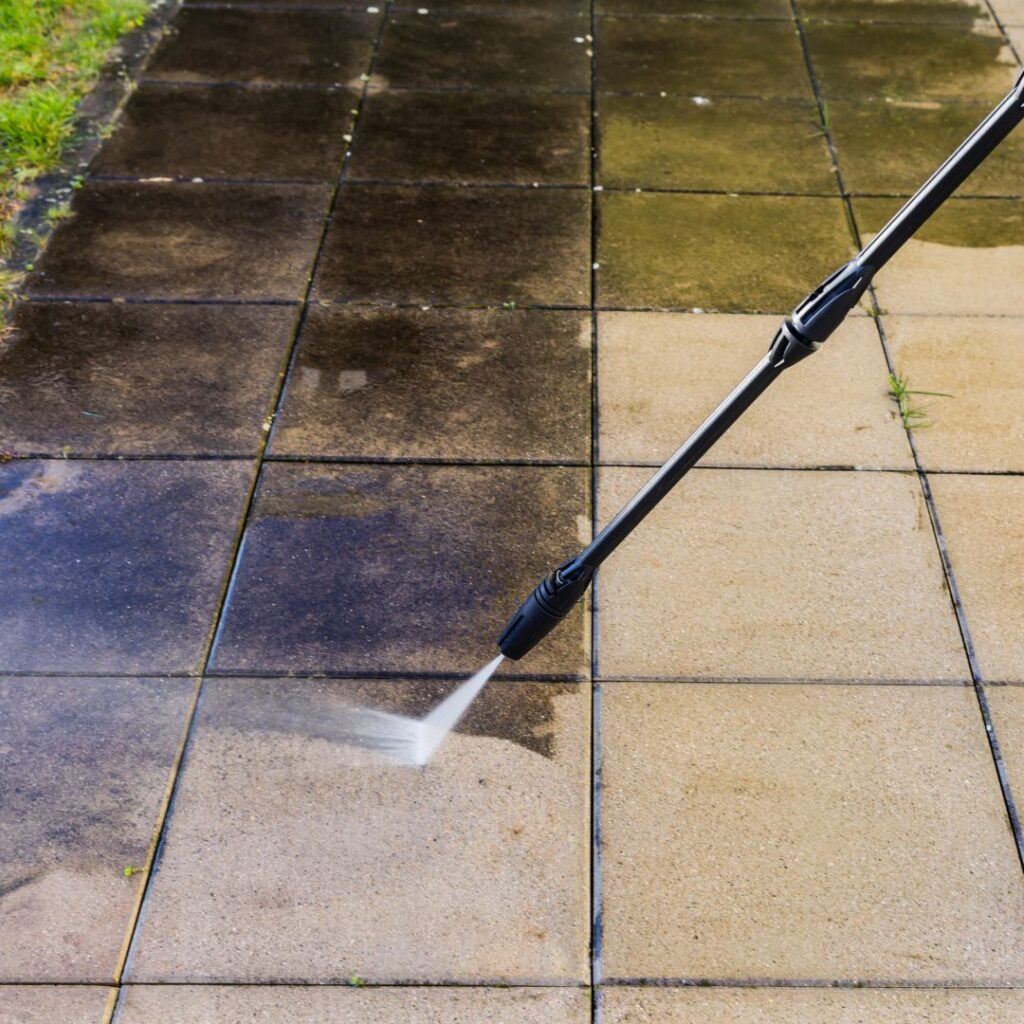
The numbers on a pressure washer specification tell you more than the marketing does, provided you know which ones matter. Pressure is quoted in bar or pounds per square inch, and they convert simply: one bar is roughly fourteen and a half PSI, so a machine rated at a hundred and fifty bar produces around two thousand two hundred PSI. Domestic units typically sit around a hundred and twenty bar, professional ones somewhat higher. Flow rate is the figure that is quoted less and matters more. Domestic machines deliver six or seven litres a minute; professional units typically double that. Flow is what carries loosened material clear of the surface rather than smearing it, and it accounts for much of the visible difference in finish. Nozzle angles are numbers too. Zero degrees is a pencil jet with essentially no domestic use. Twenty-five is the general-purpose choice on hard surfaces. Forty is for rinsing and delicate work. Temperature matters where deposits are oily: sixty to eighty degrees at the nozzle dissolves fats, rubber and traffic film so that pressure can drop substantially. Dwell time is the cheapest number available. Fifteen to twenty minutes for a pre-treatment to work reduces the mechanical energy required afterwards, sometimes to a rinse. Working distance is measured in inches rather than specified, and it is established on a test area rather than assumed, because a jet loses coherence rapidly and the intensity at three inches is many times that at twelve. Duty cycle is the last figure and is rarely printed anywhere. A domestic machine is built for intermittent use and will overheat within a few hours of continuous work, while a professional triplex pump is designed to run all day. That distinction is why hire and purchase are not equivalent. Anyone in Caulcott comparing pressure washing near me should ask for the flow rate as well as the pressure.
Are you based in Caulcott or the Surrounding Areas?
Patio & Driveway Cleaning Caulcott
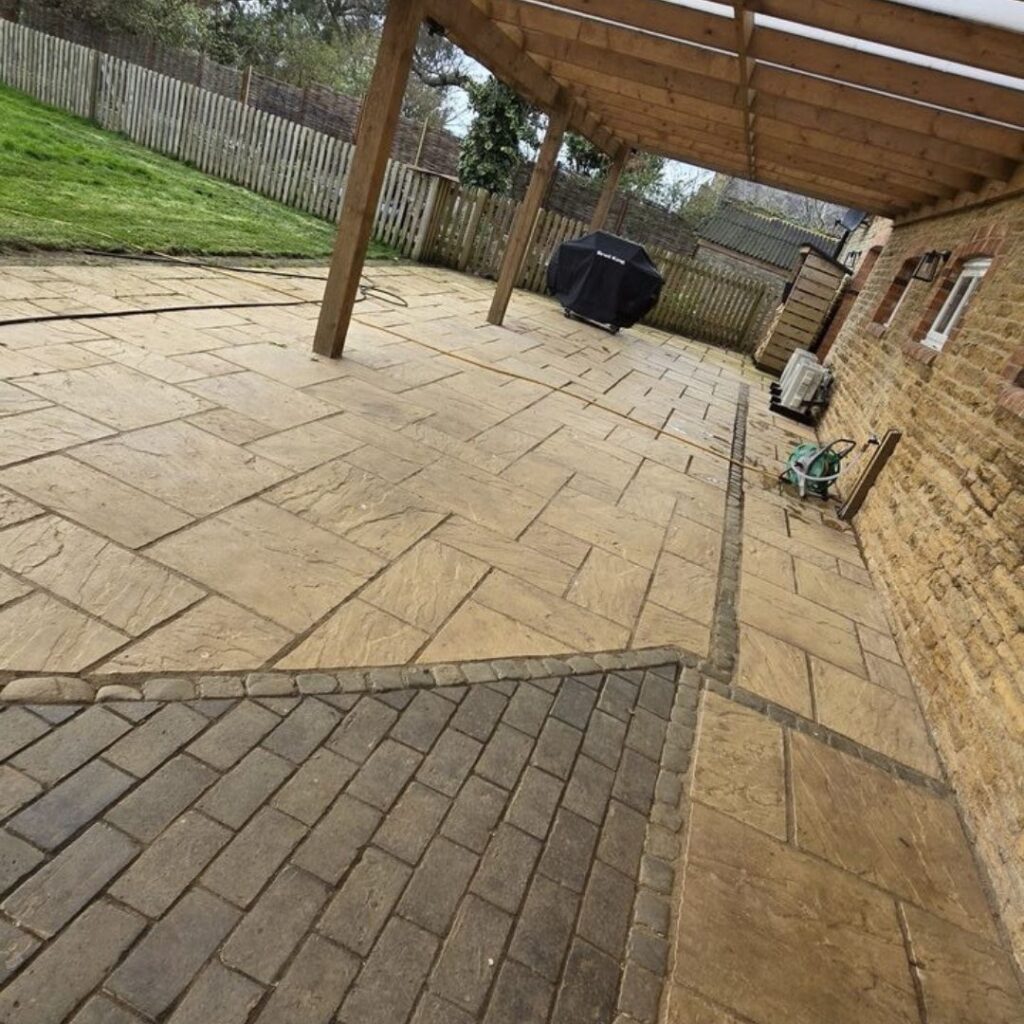
Paving decisions are considerably easier to judge against actual quantities than against general impressions of how a surface looks. Jointing sand should sit level to just below the chamfer of the block. Once joints drop below roughly two-thirds full, load transfer between units starts to fail, blocks begin to move fractionally under traffic and edges chip. That threshold is the single most useful number in driveway maintenance. Weed treatment needs applying somewhere between one and two weeks ahead of the cleaning for a systemic herbicide to reach and kill the root, rather than removing only the visible growth. Drying time before any re-sanding can happen runs from overnight in summer to several days in autumn, and kiln-dried sand will not flow into a damp joint at any time of year. Sealing then requires several clear dry days after that again, on a surface dry through its depth rather than on top, and a typical sealer lasts two to five years before reapplication. Cleaning intervals sit at roughly eighteen months to two years for an average surface, stretching to three where a drive is sunlit, well drained and laid in a dense material, and shortening to annual where it is shaded, porous and drains poorly. An annual biocide applied by the householder with a watering can costs very little and can remove the need for mechanical cleaning altogether. Sand settles and drops noticeably after the first heavy rainfall, which is why a top-up brushing a month later is worthwhile. Area is the figure most quotations lead with and it is the least informative of the lot, since two identical square metreages in different materials with different contamination represent completely different days of work. Homeowners in Caulcott booking driveway cleaning near me should measure the depth of their joints before deciding what they actually need.
Roof Cleaning Caulcott
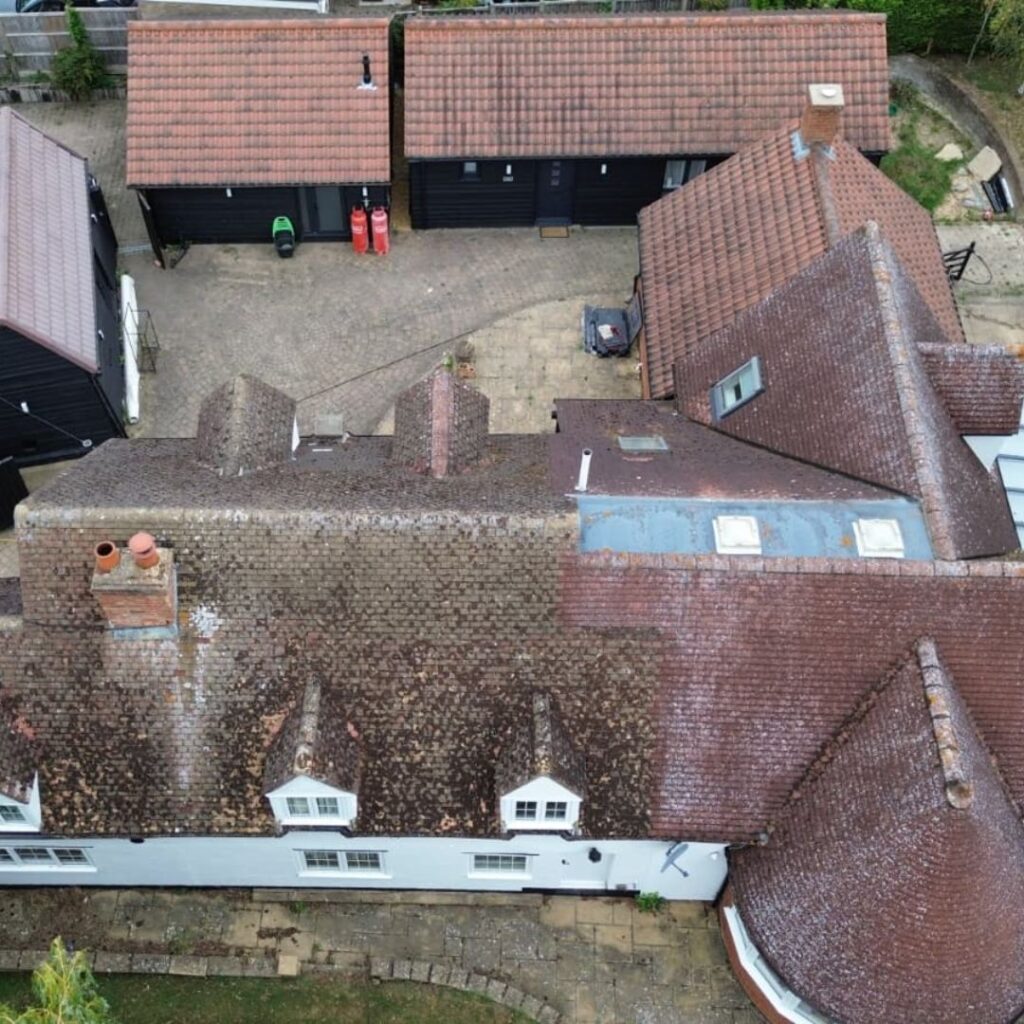
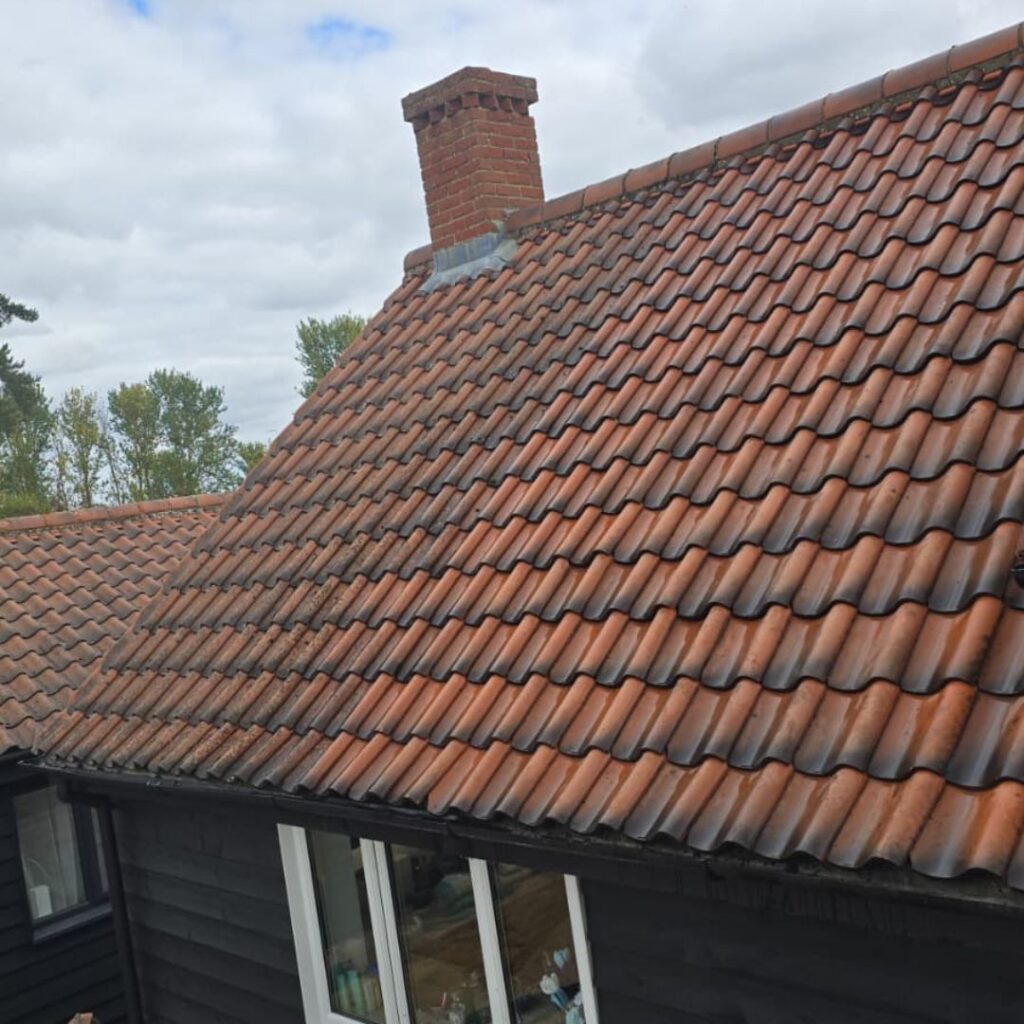
Roof figures are worth knowing because they set expectations that no amount of persuasion should override. Treatment intervals run to five to ten years where a biocide has done its work properly, against roughly two where a covering has been pressure washed and the spore population left intact. That difference is the entire argument between the two methods. The visible timescale is weeks rather than hours. A treated covering lightens progressively for a month or more as killed growth loses adhesion and weathers off, and it continues improving slowly beyond that. Pressure used is effectively nil. Biocide is applied at well under a hundred pounds per square inch against the two to three thousand a pressure washer produces, and no stage of correct roof cleaning involves force at all. The volume of material removed from a neglected covering is measured in sacks. Bulk moss from a whole roof commonly fills several, and every one of them has to be bagged and taken off site rather than left on a border. Guarantees typically run two to five years on treatment effectiveness, covering significant regrowth within that window rather than the age of the covering itself. Access cost is the variable that moves a quotation most. A mobile tower is a fraction of a scaffold, which brings an erection visit, a hire period and a dismantling visit. Working direction is always downward from the ridge, so debris falls clear of the laps. Weight is the figure that explains the urgency. A saturated moss mat holds a great deal of water, and that load is carried by rafters and battens specified for the covering alone, which is why treatment is a structural matter rather than a cosmetic one. Anyone in Caulcott searching roof cleaning near me should hold any quotation against those figures.
Solar Panel Cleaning Caulcott
Solar cleaning is the one area of exterior work where practically every claim made can be checked directly against a number. Soiling losses run between five and twenty-five per cent, with the higher end on shallow-pitched arrays where rainfall never runs off with enough force to carry residue away. Unlike deferred maintenance elsewhere, that percentage is lost every day rather than postponed. Total dissolved solids in the cleaning water should read close to zero parts per million on a TDS meter. Mains supply reads a great deal higher, and every one of those parts stays on the glass as the water evaporates. String wiring is the multiplier that explains all of the rest of it. Cells within a panel are connected in series, so current through the whole string is limited by its most obscured cell, meaning a bird dropping covering a fraction of one per cent of the array area can cost far more than that in output. Cleaning frequency sits at once annually for most domestic installations, twice yearly where trees or persistent bird activity are involved. Attendance runs to well under an hour on a typical domestic array, and the setting up takes longer than the washing. Pressure applied at any stage is zero, and the quantity of detergent used is none at all. Recovery in generation is usually visible in the monitoring data within a day of a clean, which is what makes the whole exercise checkable rather than a matter of faith. Panel count on a domestic array runs from eight to twenty-four in most cases, and it translates fairly directly into time on site since each module takes a broadly consistent amount of work. Owners in Caulcott should take a generation reading before and after rather than relying on how the glass happens to look.

Our Customers Say Everything there is to know about us
EXCELLENTTrustindex verifies that the original source of the review is Google. Fantastic service through out! Our roof looks brand new! Decided to also get the driveway done after seeing the results of first job and what a difference! All for a reasonable price as well. Definitely highly recommend 5*Posted on GoogleTrustindex verifies that the original source of the review is Google. Brendan of Stewart Exterior Cleaning was superb. He obviously knows a lot about looking after the exterior of a property and when he visited to clean our gutters, he clearly explained what was going on and gave excellent advice for the future. He was also friendly and enthusiastic, and gave us the sense he enjoys his work and taking care of his customers. He also mentioned some of his company's other services such as landscape gardening, which probably explains why he has so much expertise. But as it was winter and just before Christmas when he visited, it wasn't the right time for things for the garden, but we'd like to have him back in the spring, so he's probably got a customer for life now! Thanks so much, Brendan – it's very obvious why your business is thriving and we'll be back in touch in the future!Posted on GoogleTrustindex verifies that the original source of the review is Google. Brendan was very helpful and informative, he was quick and efficient in completing the job while answering any questions I had, I would definitely recommend his servicesPosted on GoogleTrustindex verifies that the original source of the review is Google. Returning customer of Stewart Exterior Cleaning. Brendan did a gutter clear for us recently and came back today to carry out a repair caused by high winds. Very friendly servicePosted on GoogleTrustindex verifies that the original source of the review is Google. Great service, roof looks newPosted on GoogleTrustindex verifies that the original source of the review is Google. Great service, couldn’t be happier with the end result. We initially had Brendan in to pressure wash and re-sand our driveway and after seeing the excellent job he did, we decided to have the roof and gutters cleaned as well. The transformation has completely refreshed our home and added fantastic curb appeal. Reliable, friendly, and great value for the service provided thanks again, Brendan!Posted on GoogleTrustindex verifies that the original source of the review is Google. Excellent job completed by Brendan. Was prompt and went above and beyond - given that there wasn’t a useable tap on sight! Also advised what do do after cleaning with regards to paving slabs. Would highly recommend, very excellent price and top notch service. Thank you BrendanPosted on GoogleTrustindex verifies that the original source of the review is Google. Excellent job done in a most friendly and efficient manner. Would highly recommend Brendan and his company to anybody looking to have their gutters cleared and fascia’s cleaned. Well done Stewart Exterior Cleaning.Posted on GoogleTrustindex verifies that the original source of the review is Google. I spotted Brendan working at neighbours property and asked him for a quote to pressure wash my pathway and patio. We agreed a price and the work was carried out a few days later. Brendon is hardworking, friendly and diligent and I’m very happy with the outcome and overall experience.Posted on GoogleTrustindex verifies that the original source of the review is Google. Fantastic service from Stewart Cleaning Ltd. Great work, tidy and very accommodating. Would definitely recommend and will definitely be using these guys again. Thank you! Noticed my dirty windows and even cleaned them despite it not being part of the booked job! Many many thanks.
Gutter Cleaning Caulcott
Gutter maintenance has a set of figures behind it that make the case more clearly than any description of damage. Visit frequency is one a year where no trees are within falling distance, and two where there are or where the roof covering carries significant moss. The autumn visit comes after leaf fall has finished, usually November rather than October; the spring visit deals with what washed down over winter. Attendance runs to one or two hours on a standard house where access is clear, considerably longer where a narrow side return, a locked gate or a planted border restricts standing positions. Reach is the specification that matters most on the equipment itself. Standard pole sets handle two storeys comfortably; three-storey work needs a longer set that flexes at full extension and is markedly slower to handle. The material removed from a neglected run is dense and heavy, because moss holds water indefinitely and consolidates with grit and silt into something closer to a poorly graded soil than to loose debris. The downpipe count is usually rather higher than people expect once rear elevations and outbuildings are included, and each is flushed individually. Camera footage bracketing the work either side is the only real verification available, since nothing in the channel is visible from the ground. Cost comparison is the figure that decides it: a scheduled clearance against the cost of replacing a rotten fascia and soffit run, which is several hundred pounds a side before any decoration. Bracket spacing is the number that explains sagging runs: fixings are set at intervals designed for the channel and the water passing through it, not for a consolidated deposit weighing many times that. Once a section deflects it holds standing water permanently. Householders in Caulcott should count their downpipes before comparing quotations.

Render Cleaning Caulcott
Render work is best judged against a handful of specific figures rather than against promises. Application pressure is the first and the most decisive. Soft washing operates at well under a hundred pounds per square inch, against two to three thousand for a pressure washer. Any quotation that will not state the figure is worth questioning. Clearing time is roughly six weeks. Growth killed at cellular level dies back, loses adhesion and weathers off gradually, so the elevation lightens progressively rather than transforming on the day. A deadline should therefore be counted backwards by six weeks, not six days. Treatment intervals run three to five years on most elevations, at the shorter end where a wall is both shaded and sheltered and at the longer end on a sunlit face or a silicone-based system designed to shed water. Finish thickness is the number that explains the caution. A thin-coat system over external wall insulation has only a few millimetres of finish over insulation board, with no rigid substrate behind it, which is why nothing mechanical touches it. Dilution is set to the particular system rather than to a standard rate, stronger on robust absorbent sand-and-cement and considerably gentler on acrylic topcoats. Test area time is around ten minutes, and it is the cheapest insurance on any coloured or painted render. Carbonation of the surface is why new render stays clean for its first two or three years and then rather abruptly does not. Coverage rate is the last figure and it is quick: a full elevation, and on many properties a whole house, is soft washed within a single day, because the application itself is the short part of the process and everything before it is preparation. Anyone in Caulcott comparing render cleaning near me should ask for the pressure figure in writing.