Exterior Cleaning Claydon | Pressure Washing Claydon
- Residential & Commercial Cleaning Specialists
- 5-Star Rated Service & Customer Care
- Eco-Friendly Cleaning Solutions
- Expert Team Covering Claydon
Get a FREE Quote
Exterior Cleaning Claydon
Exterior cleaning is the practice of returning every outward-facing surface of a building to the condition it was in when the work was first completed. Brickwork, render, timber, uPVC, roof coverings, paving and glass all weather at different speeds, and each one demands a different pressure, a different chemical and a different sequence. Stewart Exterior Cleaning treats a property as a single system rather than a list of separate jobs. The roof is dealt with before the walls and the walls before the hard landscaping, so that dirty run-off never spoils work already finished. That ordering is the difference between a clean that survives one season and one that holds for years. Most of what accumulates outdoors is biological rather than industrial. Algae, lichen, moss and airborne spores settle on shaded elevations, on damp paving and in the shallow texture of coatings, feeding on moisture the surface holds. Left alone they thicken, retain more water and begin to break down the material beneath them. Mortar softens, paint blisters, timber takes on rot and sealed joints fail. Cleaning early is therefore a maintenance decision rather than a cosmetic one, and it is almost always cheaper than the repair it prevents. A first visit begins with a survey. Every surface is identified, the substrate condition assessed, and any loose pointing, hairline cracking or perished sealant recorded before water is introduced anywhere. Access is planned, drains and air bricks are covered, and planting close to the working zone is sheeted or soaked. Only then is a method chosen: low-pressure soft washing for anything porous or coated, controlled mechanical pressure for hard surfaces, and pure water through telescopic poles for work at height. Households in Claydon searching for exterior cleaning near me usually have one visible problem in mind, but a proper survey tends to uncover two or three more in their early stages. Tackling them in one visit costs considerably less than repeated call-outs. Every job closes with a walk round, a full rinse of paths and honest guidance on how soon each surface will need attention again.
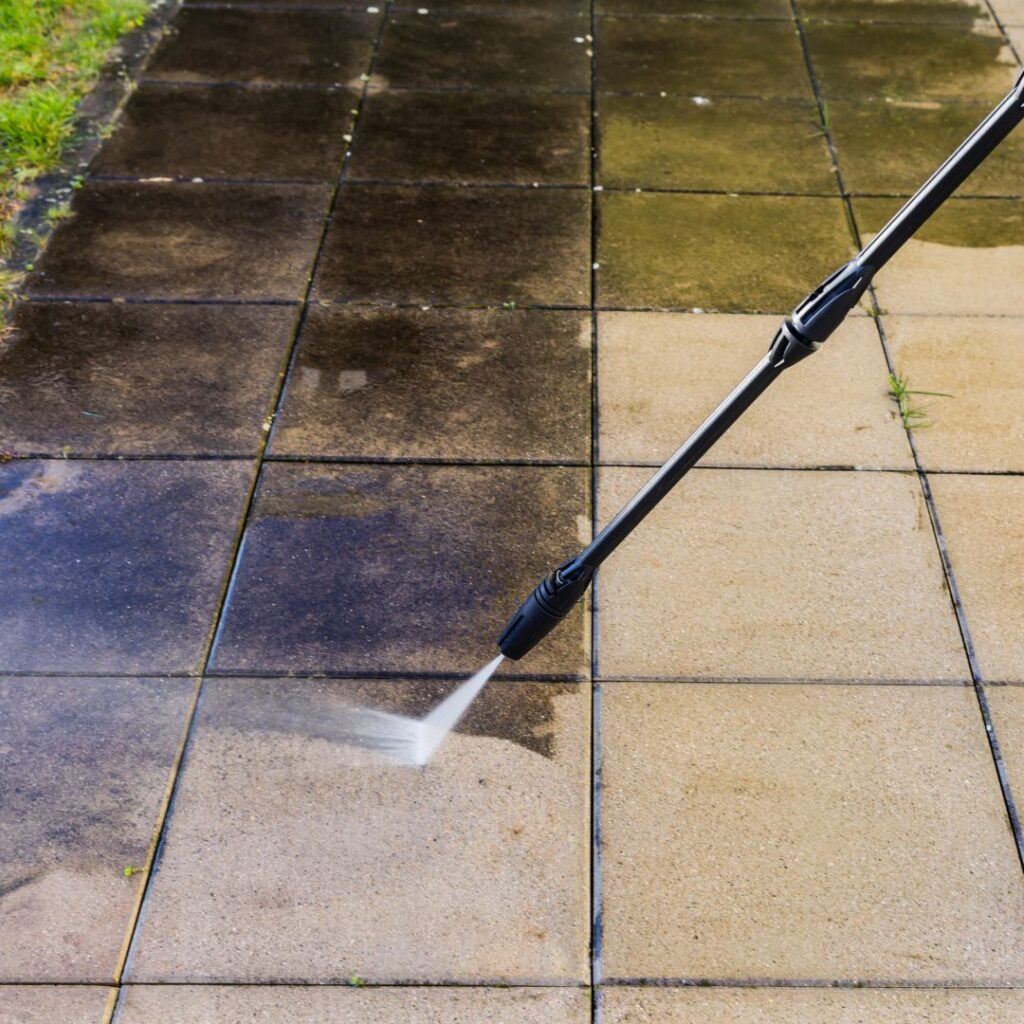
Pressure Washing Claydon
Pressure washing is the highest-energy method available to an exterior cleaning contractor, and it is effective precisely because it is uncompromising. Water leaving a nozzle at two to three thousand pounds per square inch will strip ingrained dirt, algae, tyre marks and old coatings from stone, concrete and engineering brick in a single pass. The same energy directed at soft mortar, painted timber or a decorative render finish will destroy it. Skill in this trade lies less in operating the machine than in knowing where it does not belong. Three variables govern the result. Pressure determines cutting power, flow rate determines how quickly loosened debris is carried away, and nozzle angle determines how that energy is distributed across the surface. A zero-degree pencil jet concentrates everything into a point and will scar concrete instantly; a twenty-five or forty-degree fan spreads the same force safely across a wider band. Rotary and turbo heads combine a narrow jet with rapid circular motion, cutting hard deposits without dwelling long enough in one place to cause damage. Hot water changes the equation again. Heat dissolves oils, greases, chewing gum and rubber deposits that cold water simply pushes around, allowing lower pressures to achieve the same outcome. Where a surface can tolerate mechanical energy but not high force, a heated system offers the safer route. Flat surface cleaners enclose two spinning jets beneath a shrouded head, producing a consistent overlapping pass without the striping that free-hand lancing leaves behind on large open areas. Preparation matters as much as technique. Debris is swept clear, stubborn organic growth is pre-treated so the water has less work to do, gullies are checked for capacity and adjacent windows and doors are shut. Around properties in Claydon that means allowing for older, softer materials and dropping the pressure accordingly. Anyone looking up pressure washing near me should ask what pressure will be used on which surface before booking, because the honest answer varies considerably from one part of a property to another.
Are you based in Claydon or the Surrounding Areas?
Patio & Driveway Cleaning Claydon
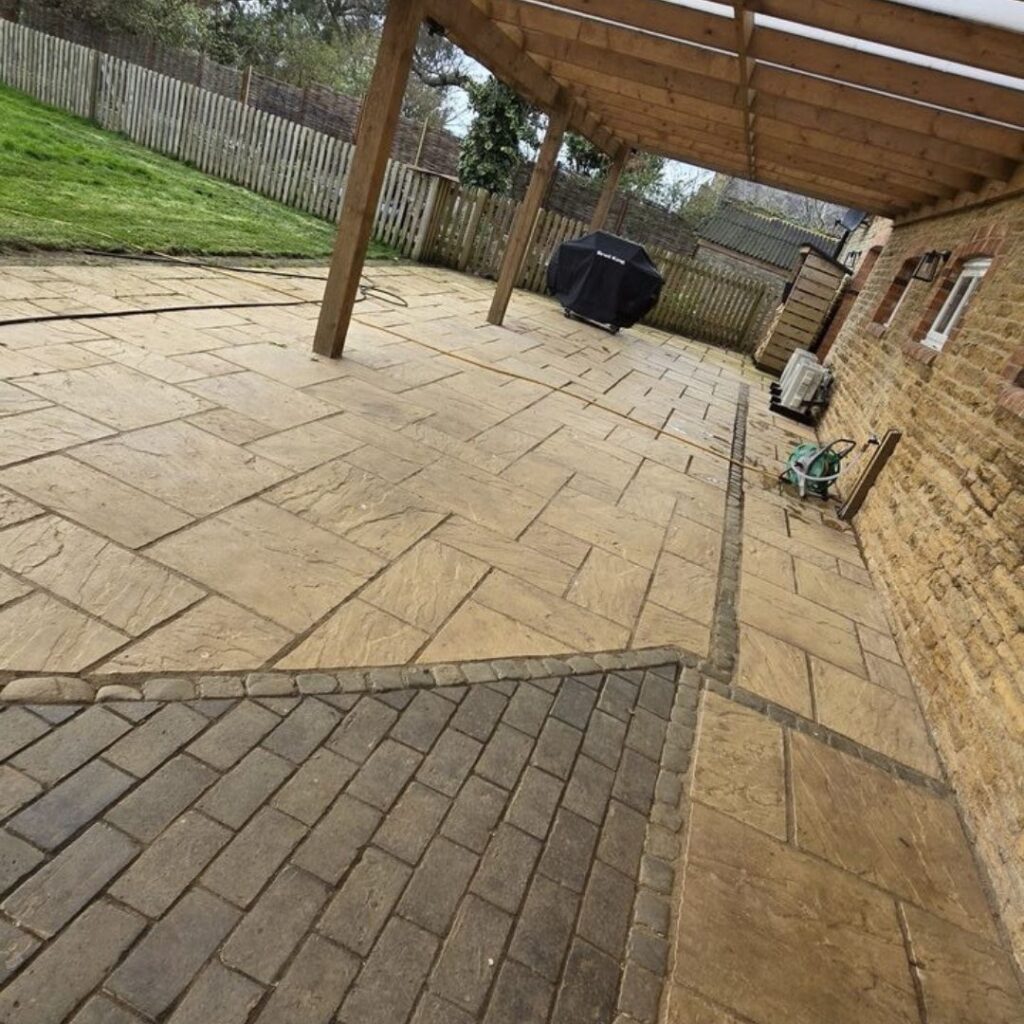
Hard landscaping takes more abuse than any other part of a property. Patios and driveways carry weight, hold standing water, sit in shade for much of the day and collect leaf litter, fuel residue and organic growth in every joint. The result is a surface that darkens gradually, turns slippery in autumn and eventually looks decades older than it is. Patio cleaning and driveway cleaning restore the original colour and, more importantly, the original grip underfoot. The method follows the material. Block paving responds well to a rotary surface cleaner, which lifts the biofilm evenly without gouging individual blocks or ripping out excessive amounts of jointing sand. Once the surface is clean and dry, kiln-dried sand is swept back into the joints and compacted, because those joints are what lock the pavement together. Without replacement the blocks loosen, rock underfoot and let weeds establish far more quickly. Natural stone such as sandstone or limestone is more absorbent and takes lower pressure with a longer chemical dwell instead. Imprinted and pattern-stamped concrete needs particular care, as its colour lives in a thin surface layer and an aggressive jet takes it straight off. Tarmac is cleaned at reduced pressure to avoid loosening the binder and exposing loose stone. Stains are handled separately from general soiling. Engine oil and diesel are drawn out with a degreasing poultice rather than blasted, since pressure alone drives the contamination deeper. Rust marks from garden furniture or metal fixings need a targeted acidic treatment applied to a controlled area, and red lichen requires a biocide with time to work rather than brute force. Sealing is optional and it is worth being clear about what it does. A quality sealer slows the return of algae, resists staining and makes routine sweeping more effective, but it does not make a surface maintenance-free and it must be applied to a genuinely dry substrate. An honest contractor will always say when a driveway in Claydon is a better candidate for repointing or re-sanding than for sealing.
Roof Cleaning Claydon
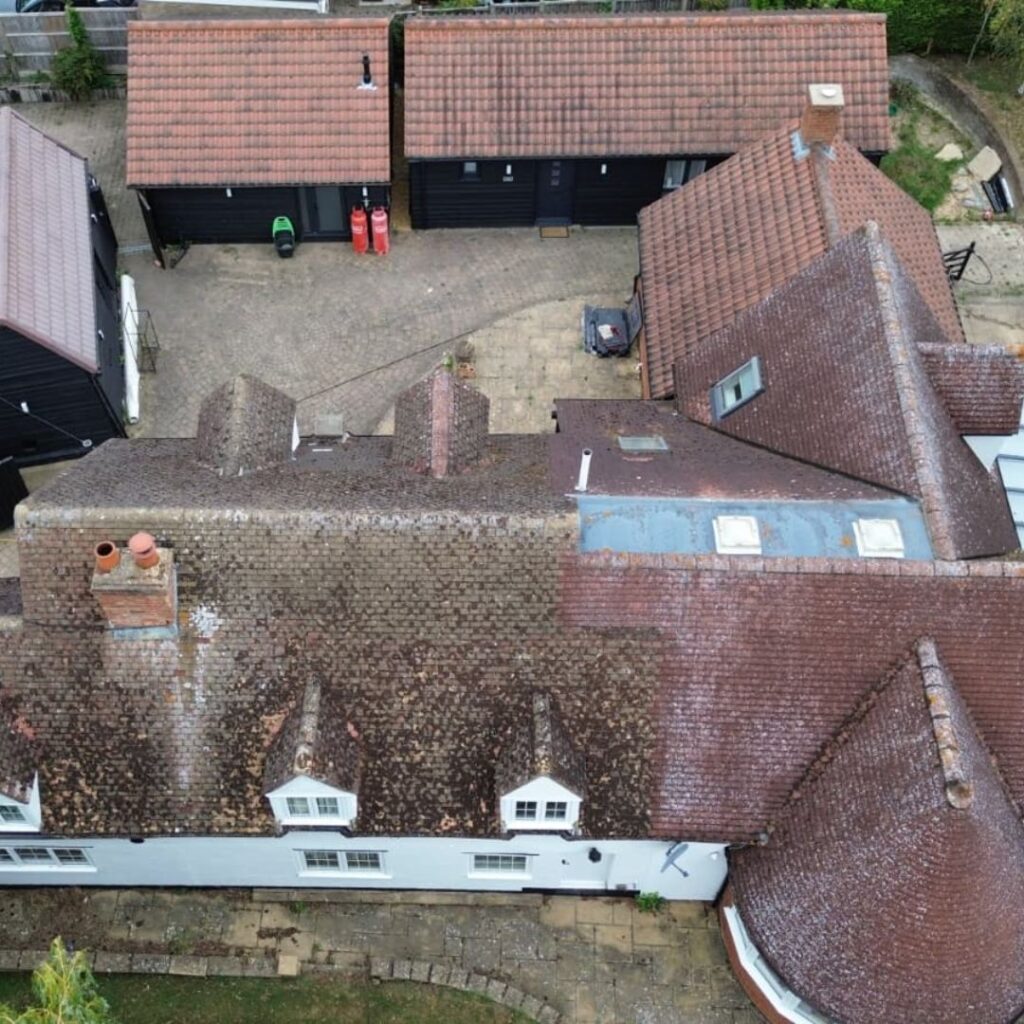
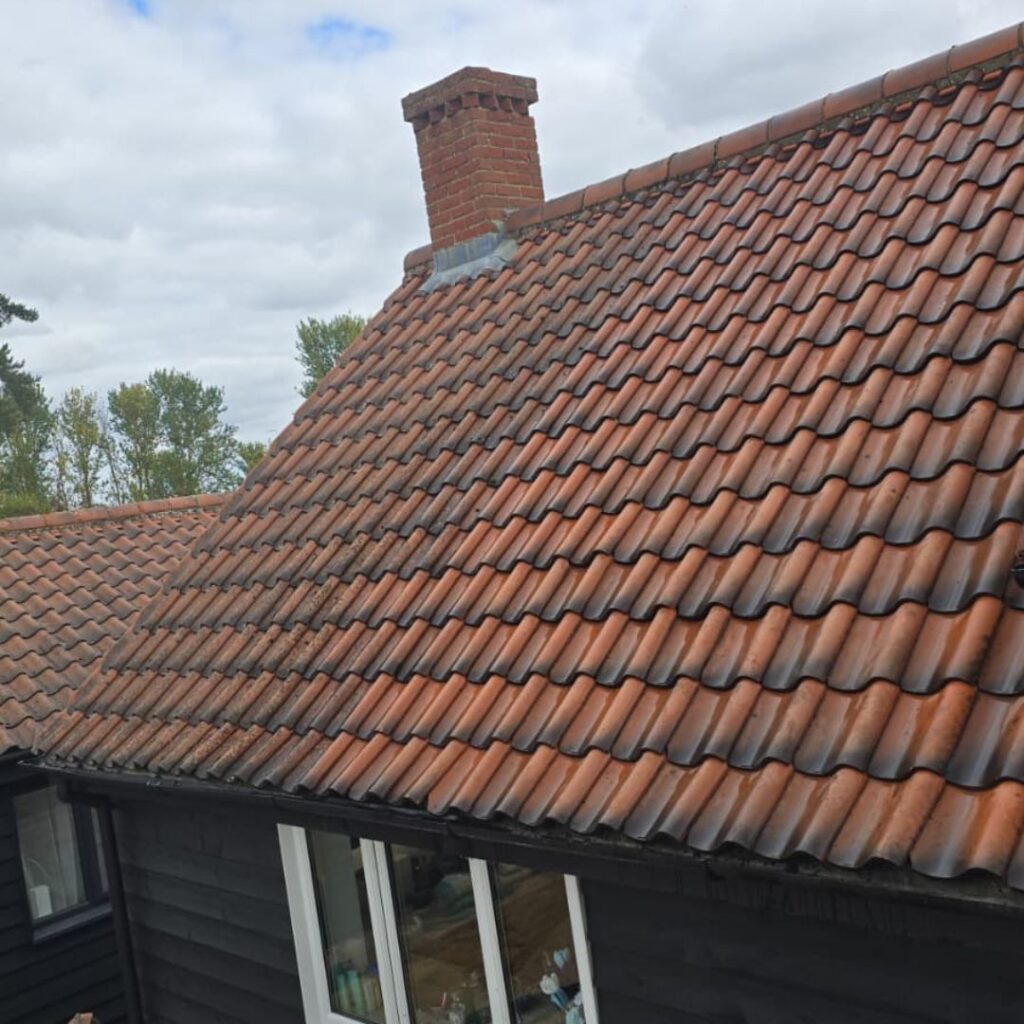
A roof is the surface that suffers most and gets inspected least. Moss establishes in the overlaps between tiles, holds water against the covering through every frost cycle and slowly forces the material apart. Lichen etches into concrete and clay alike. Fallen clumps of growth wash into gutters and valleys, block outlets and push water back under the covering, where it soaks battens and felt long before anything shows on a ceiling below. By the time a stain appears indoors, the damage has usually been developing for several seasons. The single most important rule of roof cleaning is that a roof is not pressure washed. High-pressure water strips the protective granular coating from concrete tiles, lifts the surface of clay, drives moisture beneath laps and can shift tiles out of alignment entirely. It leaves a roof that looks improved for a year and then deteriorates faster than before. The correct approach is mechanical removal of the bulk growth followed by a chemical treatment that deals with what remains. Heavy moss is scraped away by hand or with a soft brush, working from the ridge downwards so material falls clear of the covering rather than being pushed under it. Gutters and valleys are cleared as the work proceeds, since the volume of debris removed from an average roof is considerable. The covering is then treated with a biocide applied at low pressure. The solution needs weeks rather than hours to work, killing spores at root level so regrowth is slowed rather than immediately re-established. Roofs treated this way continue to improve in appearance for months after the visit. Access governs everything. Scaffold, tower or roof ladder is selected according to pitch, height and the condition of the covering, and no operative walks on a roof that will not safely bear the load. While the work is underway, ridge bedding, flashing and any slipped or cracked units are noted and reported. Roof cleaning near me searches spike after storms in Claydon for good reason.
Solar Panel Cleaning Claydon
Solar panels are the one exterior surface with output that can be measured, which makes their cleaning easy to justify. A photovoltaic array converts light striking the cell, and anything sitting on the glass between the two reduces yield. Fine dust, pollen, agricultural residue, bird droppings and a creeping edge of moss along the frame all cut generation. Independent testing consistently puts losses from soiling between five and twenty-five per cent, with the worst figures on shallow-pitched arrays where rainfall never runs off hard enough to self-clean. Bird fouling is the most damaging form of soiling because it is opaque and it is localised. A single cell shaded by a dropping can drag down the output of the entire string it sits within, so a small area of contamination produces a loss out of all proportion to its size. Where fouling is persistent, the underlying cause is worth addressing as well as the symptom. The cleaning method is deliberately restrained. Panels are washed with purified, deionised water delivered through a soft-bristled brush on a telescopic pole, which allows the work to be carried out from ground level in most cases. Deionised water carries no dissolved minerals, so it lifts soiling and then dries without leaving the spotting and film that mains water deposits. No detergent is used, because residues attract dust and can degrade the anti-reflective coating applied to modern panel glass. Pressure is never applied to a panel: forcing water at the frame seals is the fastest route to moisture ingress and a failed unit. Frames and the channel where glass meets frame are cleaned too, since that is where debris collects and moss takes hold, and standing water there works against the seal over time. Stewart Exterior Cleaning recommends recording generation figures before and after a visit, as the difference is usually visible in the monitoring data within a day. Arrays serving properties around Claydon typically benefit from annual attention.

Our Customers Say Everything there is to know about us
EXCELLENTTrustindex verifies that the original source of the review is Google. Fantastic service through out! Our roof looks brand new! Decided to also get the driveway done after seeing the results of first job and what a difference! All for a reasonable price as well. Definitely highly recommend 5*Posted on GoogleTrustindex verifies that the original source of the review is Google. Brendan of Stewart Exterior Cleaning was superb. He obviously knows a lot about looking after the exterior of a property and when he visited to clean our gutters, he clearly explained what was going on and gave excellent advice for the future. He was also friendly and enthusiastic, and gave us the sense he enjoys his work and taking care of his customers. He also mentioned some of his company's other services such as landscape gardening, which probably explains why he has so much expertise. But as it was winter and just before Christmas when he visited, it wasn't the right time for things for the garden, but we'd like to have him back in the spring, so he's probably got a customer for life now! Thanks so much, Brendan – it's very obvious why your business is thriving and we'll be back in touch in the future!Posted on GoogleTrustindex verifies that the original source of the review is Google. Brendan was very helpful and informative, he was quick and efficient in completing the job while answering any questions I had, I would definitely recommend his servicesPosted on GoogleTrustindex verifies that the original source of the review is Google. Returning customer of Stewart Exterior Cleaning. Brendan did a gutter clear for us recently and came back today to carry out a repair caused by high winds. Very friendly servicePosted on GoogleTrustindex verifies that the original source of the review is Google. Great service, roof looks newPosted on GoogleTrustindex verifies that the original source of the review is Google. Great service, couldn’t be happier with the end result. We initially had Brendan in to pressure wash and re-sand our driveway and after seeing the excellent job he did, we decided to have the roof and gutters cleaned as well. The transformation has completely refreshed our home and added fantastic curb appeal. Reliable, friendly, and great value for the service provided thanks again, Brendan!Posted on GoogleTrustindex verifies that the original source of the review is Google. Excellent job completed by Brendan. Was prompt and went above and beyond - given that there wasn’t a useable tap on sight! Also advised what do do after cleaning with regards to paving slabs. Would highly recommend, very excellent price and top notch service. Thank you BrendanPosted on GoogleTrustindex verifies that the original source of the review is Google. Excellent job done in a most friendly and efficient manner. Would highly recommend Brendan and his company to anybody looking to have their gutters cleared and fascia’s cleaned. Well done Stewart Exterior Cleaning.Posted on GoogleTrustindex verifies that the original source of the review is Google. I spotted Brendan working at neighbours property and asked him for a quote to pressure wash my pathway and patio. We agreed a price and the work was carried out a few days later. Brendon is hardworking, friendly and diligent and I’m very happy with the outcome and overall experience.Posted on GoogleTrustindex verifies that the original source of the review is Google. Fantastic service from Stewart Cleaning Ltd. Great work, tidy and very accommodating. Would definitely recommend and will definitely be using these guys again. Thank you! Noticed my dirty windows and even cleaned them despite it not being part of the booked job! Many many thanks.
Gutter Cleaning Claydon
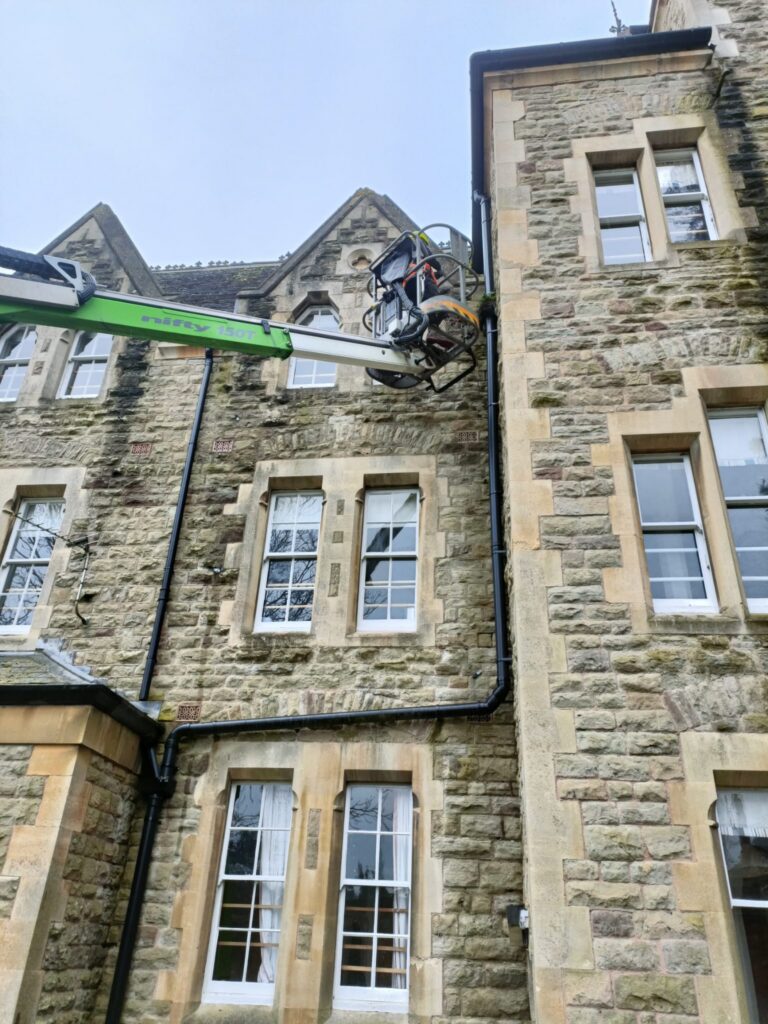
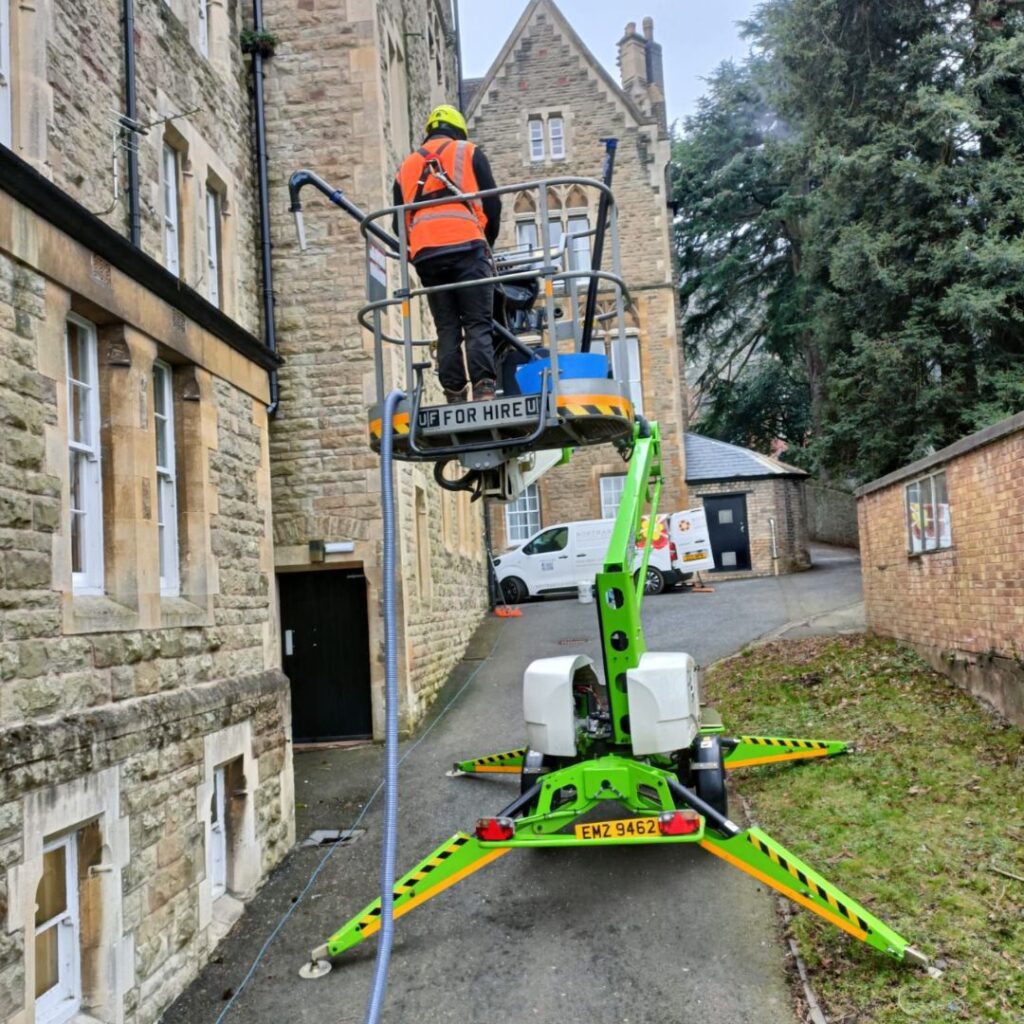
Guttering is a small component with a disproportionate ability to cause expensive damage. A blocked run does not simply overflow at the front; water backs up along the channel, spills against the wall behind, saturates the fascia board and finds its way into the eaves. Persistent overflow soaks brickwork, drives damp through to internal plaster, rots timber and, in freezing conditions, expands within the joints of the guttering itself until brackets pull away from the fascia. Blockages build gradually. Leaf fall is the obvious contributor, but moss washed down from the roof covering forms the denser and more stubborn deposits, compacting into a sludge that ordinary rainfall cannot shift. Nesting material, roofing grit and windblown seed add to it. Once a layer establishes, silt collects against it, plants root in the debris and a gutter effectively becomes a planter running the length of the roof line. Most work is now carried out with a high-reach vacuum system. Carbon fibre poles carry a suction head up to gutter level and pull debris directly into a sealed drum at ground level, which keeps ladders off soft ground and means no material is dropped onto planting or paving below. A camera on the pole head lets the interior of the run be inspected before and after, so the condition of joints and brackets can actually be seen rather than assumed. Where a vacuum cannot reach, or where compacted material has set hard, ladder or tower access is used for hand clearing. Downpipes are checked as a matter of course, since a spotless gutter feeding a blocked outlet still overflows. Each is flushed through and clearance confirmed at the gully. Falls are assessed too: guttering that has sagged between brackets holds standing water permanently and will re-block within months regardless of how well it has been cleaned. Properties in Claydon with mature trees close by generally warrant two visits a year rather than one.

Render Cleaning Claydon
Render presents a particular challenge because it is a designed finish rather than a raw material. Silicone, monocouche, polymer and traditional sand-and-cement systems all rely on a controlled surface texture and, in the modern coloured products, on pigment held within a thin outer layer. That texture is exactly what makes render vulnerable: countless small pores hold moisture, and moisture is what algae, lichen and mould need to colonise a wall. The visible result is familiar. North and east elevations green over first, dark streaks run down from window sills and beneath copings, and a wall that was uniform when new develops patchy grey and black staining. On lighter colours the effect is dramatic within a few years. Beyond appearance, an organic layer holding water against a rendered wall works against the breathability the system depends on, and freeze-thaw action within a saturated surface leads to crazing and eventual delamination. Render is never pressure washed. A jet removes surface growth and a quantity of the finish along with it, leaving a lighter, roughened patch that soils faster than the wall around it and cannot be blended back in. Soft washing is the correct method. A biocidal solution is applied at very low pressure, typically under a hundred pounds per square inch, and left to work on the organic material at cellular level. Growth dies back, weathers off and continues to clear for weeks after the visit, with no mechanical contact against the finish at any stage. Before treatment, the wall is checked for cracks, blown sections and failed sealant around openings, because introducing any liquid to a compromised surface causes problems rather than solving them. Windows, doors, planting and paving are protected throughout, and the solution is mixed to a strength suited to the specific render system rather than applied at one blanket rate. Anyone in Claydon comparing render cleaning near me should confirm that soft washing, not jetting, is what has been quoted.