Exterior Cleaning Clifton | Pressure Washing Clifton
- Residential & Commercial Cleaning Specialists
- 5-Star Rated Service & Customer Care
- Eco-Friendly Cleaning Solutions
- Expert Team Covering Clifton
Get a FREE Quote
Exterior Cleaning Clifton
People book exterior cleaning for quite different reasons, and the reason usually determines what actually needs doing. Selling a property is comfortably the most common trigger. Green streaked render, a mossy roof and a stained driveway read as neglect to a prospective buyer and to a surveyor, and the inference drawn is that maintenance elsewhere has been equally lax. The remedy here is presentation-led: elevations, hard landscaping and rainwater goods addressed together, timed several weeks ahead of photographs so that chemical treatments have had time to work. Buying a property produces very nearly the opposite brief. A new owner wants to know what they have taken on, which makes the survey element the point of the visit — mortar condition, render integrity, covering condition, whether the rainwater goods have been maintained. Cleaning follows the findings rather than leading them. A survey or a mortgage valuation flagging something specific is a third route into the work. Here the work is specific and the report matters more than the appearance. Landlords and letting agents generally want a schedule rather than a single job, since the properties are not observed daily and problems are reported late. An annual or biennial visit with photographs catches deterioration early and costs less than reactive repair. Then there are the people who have simply looked up and noticed. This is the most satisfying category, because the property is usually five to seven years into neglect rather than fifteen, and everything found is still straightforwardly retrievable. Whatever the reason, the method does not change: highest surfaces first, materials matched to methods, chemistry where the substrate is porous or coated, mechanical work only where it is genuinely appropriate. Stewart Exterior Cleaning starts with a survey in every case. Households in Clifton searching exterior cleaning near me should say which of these applies.
Pressure Washing Clifton
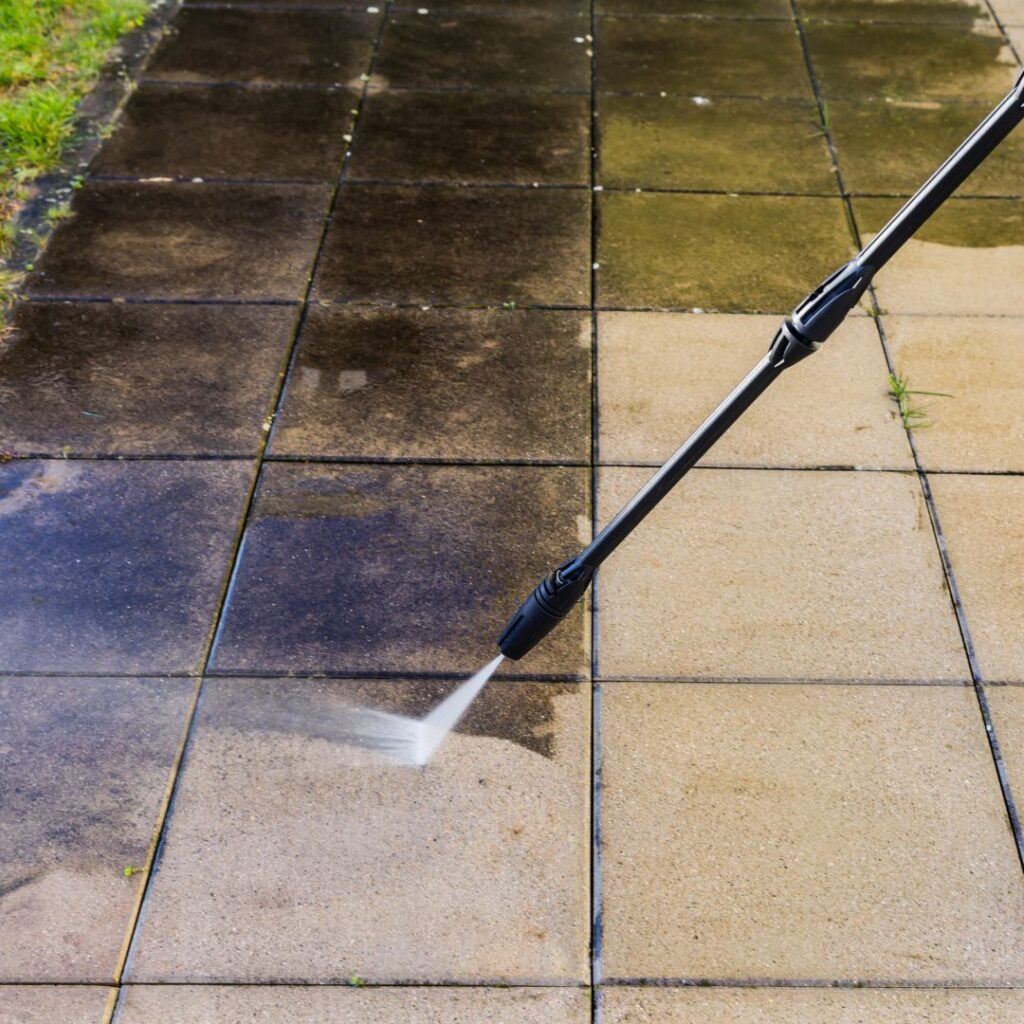
What a pressure washer is actually needed for on a domestic property is narrower than most people assume, and identifying those jobs precisely makes the money go further. Areas that take vehicles are the clearest case of all. Hard standing that takes cars accumulates oil, diesel, rubber and traffic film, none of which responds to biocide because none of it is alive. This is where heat earns its keep, since hot water dissolves those deposits chemically and allows lower pressures to achieve more. A degreasing agent left to dwell first reduces the mechanical work further. Heavily silted paving makes up the second legitimate case. Joints packed with years of composted organic material need that material physically extracted, since it is effectively soil and will germinate anything landing on it. Chemistry kills what is growing but does not remove the growing medium. Deeply ingrained surfaces make up the third category. Old concrete carrying decades of general soiling, steps that have gone slippery, dense stone paving with lichen bonded tightly to it — all of these need mechanical energy at some stage, though always after a pre-treatment has been left to work. What does not need a pressure washer at any point is everything else: render, roof coverings, timber, lime mortar, coated concrete, uPVC and glass. Those are soft washed or cleaned with pure water at low pressure, and using force on them removes finish rather than dirt. Where the machine is used, a flat surface cleaner keeps the energy consistent across the area, a working distance is established on a test section, and the discharge is planned into a foul drain or an interceptor rather than allowed to find a watercourse. Anyone in Clifton comparing pressure washing near me should be clear about which of those three jobs they actually have.
Are you based in Clifton or the Surrounding Areas?
Patio & Driveway Cleaning Clifton
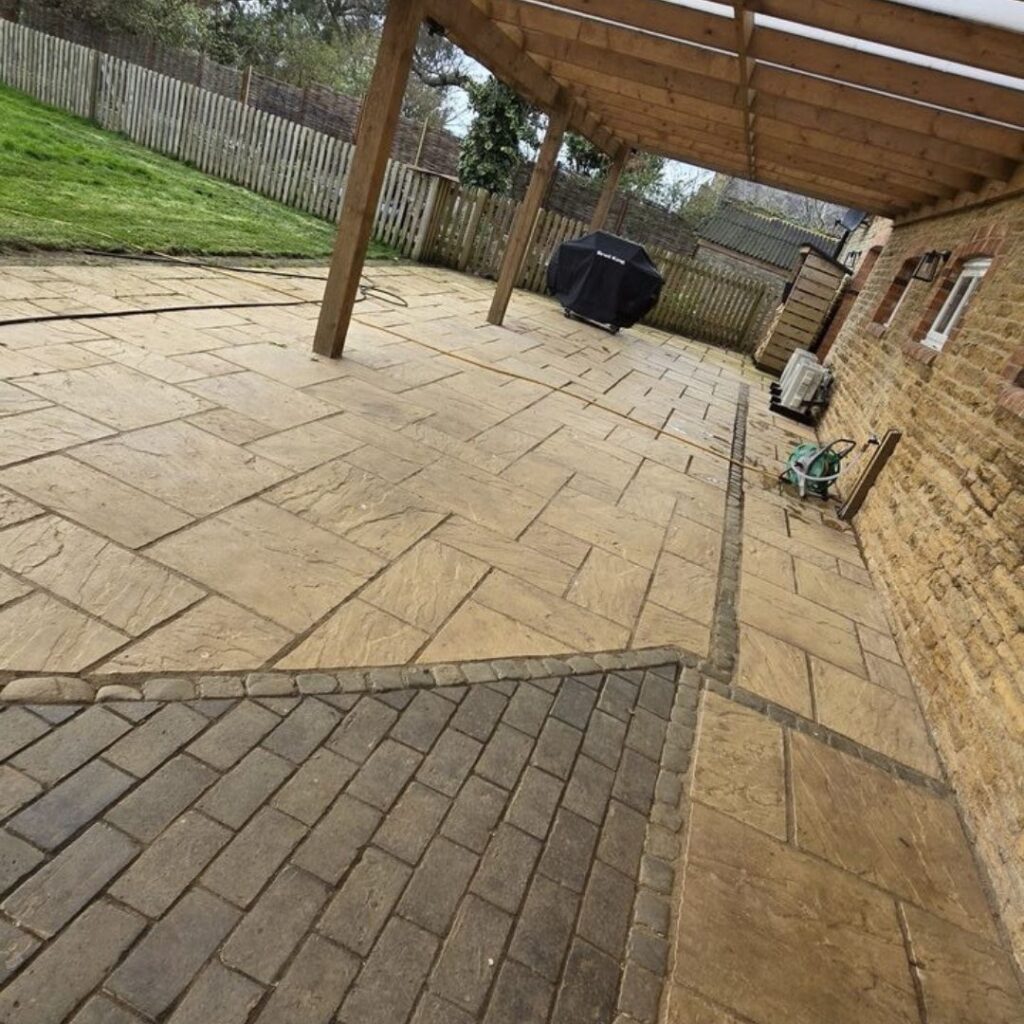
Different paving problems call for different work, and understanding which one is present prevents money being spent on the wrong remedy. Purely cosmetic surface soiling — general grime, a light algal film, darkened joints — responds to straightforward cleaning and will look transformed. This is much the easiest case, and it is what most people assume they are dealing with. Established biological growth is a stage further. Moss packed into joints, red lichen bonded to slabs, weeds rooted through the surface. Here the sequence matters more than the machine: a systemic herbicide applied a week or two ahead so weeds die at the root, a biocide with genuine dwell time on moss and lichen, and only then mechanical extraction of the composted material sitting in the joints. Specific stains amount to separate work again, priced and treated individually. Oil needs a degreasing poultice that draws contamination back out of the pores, since pressure drives it deeper. Rust needs a controlled acidic treatment on a defined area. Tannin from leaf fall responds to an alkaline cleaner. None of these is addressed by a general clean, and they should be identified at survey. Structural faults form the fourth category, and cleaning does not touch any of them. Blocks that rock, slabs with blown pointing, an edge restraint that has moved, a low spot that ponds because the fall has settled. These are revealed by cleaning rather than caused by it, and the honest advice is that the affected area needs lifting and relaying. Reinstatement of the joints closes out any of the first three. Kiln-dried sand goes back into block paving joints once the surface is thoroughly dry, brushed diagonally and worked until full, which frequently means a return visit. Homeowners in Clifton booking driveway cleaning near me should describe which category they think applies.
Roof Cleaning Clifton
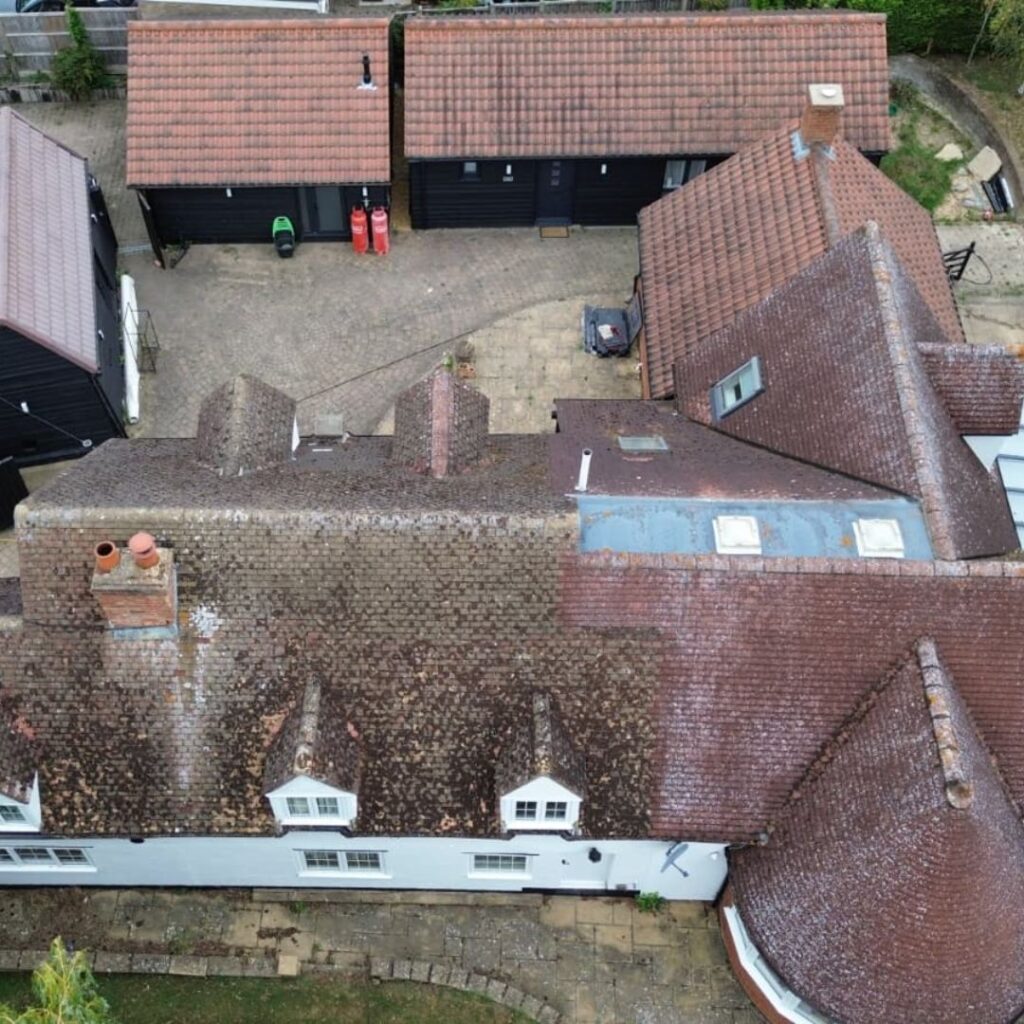
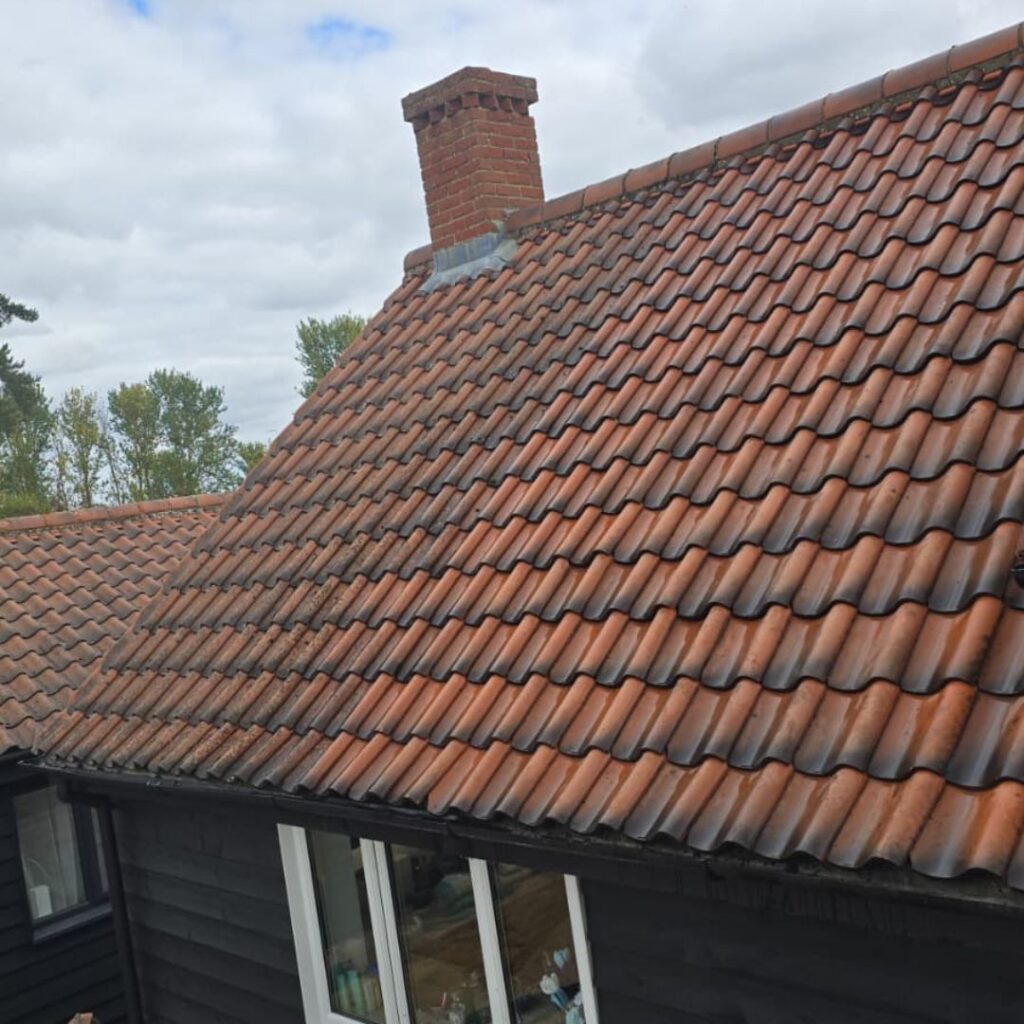
What someone wants from a roof determines the scope of the visit, and the three common briefs are quite different jobs. Appearance is the first of them, and the most frequently requested. A property being sold or photographed needs the covering visibly improved, and the important thing to understand is timing: correct treatment works over weeks, not hours, as killed growth dies back and weathers off. Booking six weeks ahead produces a good result, booking six days ahead produces a wet roof. Anyone promising an immediate transformation is describing pressure washing, which achieves it and then leaves a covering that colonises faster than before. Protection of the covering is the second brief, and it is much the better reason. Moss in the laps holds water against the units, draws it sideways into the overlaps by capillary action, adds saturated weight and expands in frost to open the joints. Growth shed into valleys and gutters blocks drainage and forces water back under the covering. Treatment interrupts all of that, and the sooner it happens the less there is to interrupt. Assessment is the third brief, and it is frequently the most valuable of the three. While access is in place, ridge bedding, flashings, mortar fillets, verge pointing and any slipped or cracked units can be examined properly and photographed. Plenty of visits find something worth knowing about that had nothing to do with the moss. The working method serves all three of those briefs identically. Bulk growth is removed by hand with soft-bladed tools worked downward from the ridge so material falls clear of the laps, gutters and valleys are cleared in parallel, and a biocide is applied at low pressure and left to act. No stage involves force. Anyone in Clifton searching roof cleaning near me should say which of the three matters most.
Solar Panel Cleaning Clifton
Solar owners tend to come to cleaning by one of three routes, and each suggests a slightly different approach. The largest group have noticed a drop in generation and want to know why. Here the first task is establishing whether soiling is actually the cause, and the pattern tells you: soiling produces a gradual decline over months, worst during dry spells, affecting the system proportionally. A component fault appears as a step change on a single day and often affects one string while others perform normally. Cleaning is worth doing either way, but expectations should match the diagnosis. The second group have never had the array touched since installation and have simply realised it. These usually show the classic pattern — a defined band of residue along the lower edge of each panel where run-off slows against the frame, sitting directly over the bottom row of cells, and often moss establishing in the frame channel. Because cells are wired in series, that band costs far more than its area suggests, so the first clean typically produces the most noticeable result. The third group are on a schedule already and simply want it maintained properly. Annual attention keeps soiling from ever reaching the stage where losses become significant, and each visit is quick. The method is the same throughout. Purified deionised water is fed through a carbon fibre telescopic pole to a soft brush, agitating the glass lightly and rinsing continuously, drying completely clear because nothing is dissolved in it. No detergent, no pressure at the seals, nobody on the modules, work timed for cooler conditions, frame channels cleared in the same pass. Recording generation figures either side of the visit gives a direct measure of the benefit. Owners in Clifton usually see the difference in monitoring data within a day.

Our Customers Say Everything there is to know about us
EXCELLENTTrustindex verifies that the original source of the review is Google. Fantastic service through out! Our roof looks brand new! Decided to also get the driveway done after seeing the results of first job and what a difference! All for a reasonable price as well. Definitely highly recommend 5*Posted on GoogleTrustindex verifies that the original source of the review is Google. Brendan of Stewart Exterior Cleaning was superb. He obviously knows a lot about looking after the exterior of a property and when he visited to clean our gutters, he clearly explained what was going on and gave excellent advice for the future. He was also friendly and enthusiastic, and gave us the sense he enjoys his work and taking care of his customers. He also mentioned some of his company's other services such as landscape gardening, which probably explains why he has so much expertise. But as it was winter and just before Christmas when he visited, it wasn't the right time for things for the garden, but we'd like to have him back in the spring, so he's probably got a customer for life now! Thanks so much, Brendan – it's very obvious why your business is thriving and we'll be back in touch in the future!Posted on GoogleTrustindex verifies that the original source of the review is Google. Brendan was very helpful and informative, he was quick and efficient in completing the job while answering any questions I had, I would definitely recommend his servicesPosted on GoogleTrustindex verifies that the original source of the review is Google. Returning customer of Stewart Exterior Cleaning. Brendan did a gutter clear for us recently and came back today to carry out a repair caused by high winds. Very friendly servicePosted on GoogleTrustindex verifies that the original source of the review is Google. Great service, roof looks newPosted on GoogleTrustindex verifies that the original source of the review is Google. Great service, couldn’t be happier with the end result. We initially had Brendan in to pressure wash and re-sand our driveway and after seeing the excellent job he did, we decided to have the roof and gutters cleaned as well. The transformation has completely refreshed our home and added fantastic curb appeal. Reliable, friendly, and great value for the service provided thanks again, Brendan!Posted on GoogleTrustindex verifies that the original source of the review is Google. Excellent job completed by Brendan. Was prompt and went above and beyond - given that there wasn’t a useable tap on sight! Also advised what do do after cleaning with regards to paving slabs. Would highly recommend, very excellent price and top notch service. Thank you BrendanPosted on GoogleTrustindex verifies that the original source of the review is Google. Excellent job done in a most friendly and efficient manner. Would highly recommend Brendan and his company to anybody looking to have their gutters cleared and fascia’s cleaned. Well done Stewart Exterior Cleaning.Posted on GoogleTrustindex verifies that the original source of the review is Google. I spotted Brendan working at neighbours property and asked him for a quote to pressure wash my pathway and patio. We agreed a price and the work was carried out a few days later. Brendon is hardworking, friendly and diligent and I’m very happy with the outcome and overall experience.Posted on GoogleTrustindex verifies that the original source of the review is Google. Fantastic service from Stewart Cleaning Ltd. Great work, tidy and very accommodating. Would definitely recommend and will definitely be using these guys again. Thank you! Noticed my dirty windows and even cleaned them despite it not being part of the booked job! Many many thanks.
Gutter Cleaning Clifton
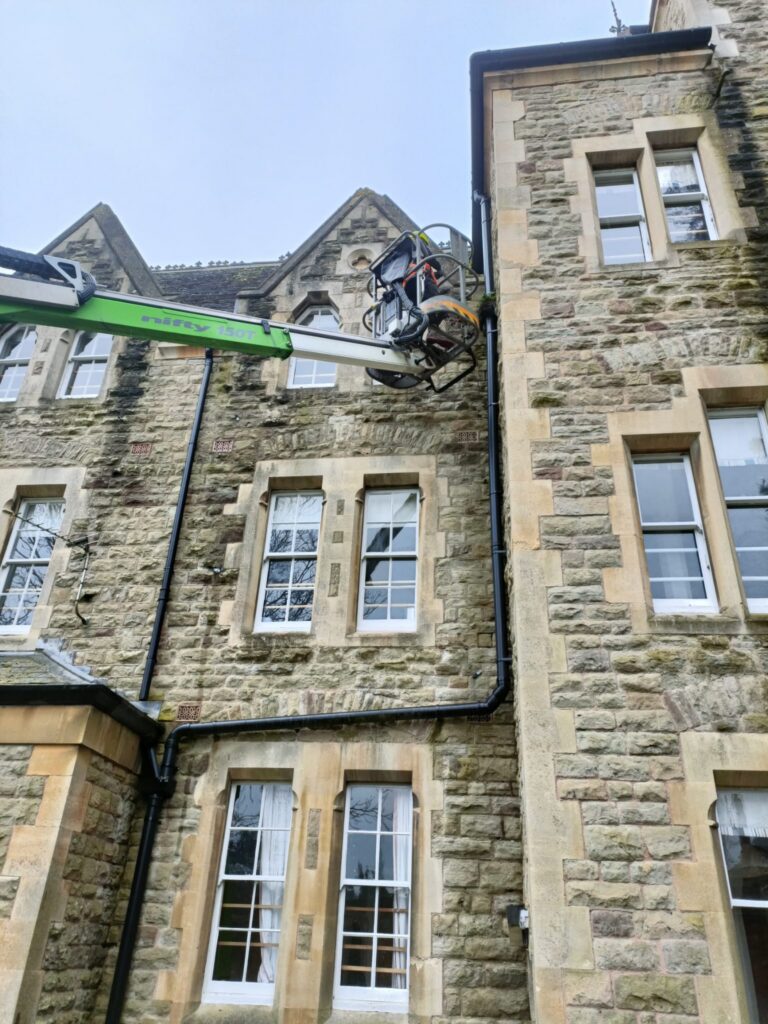
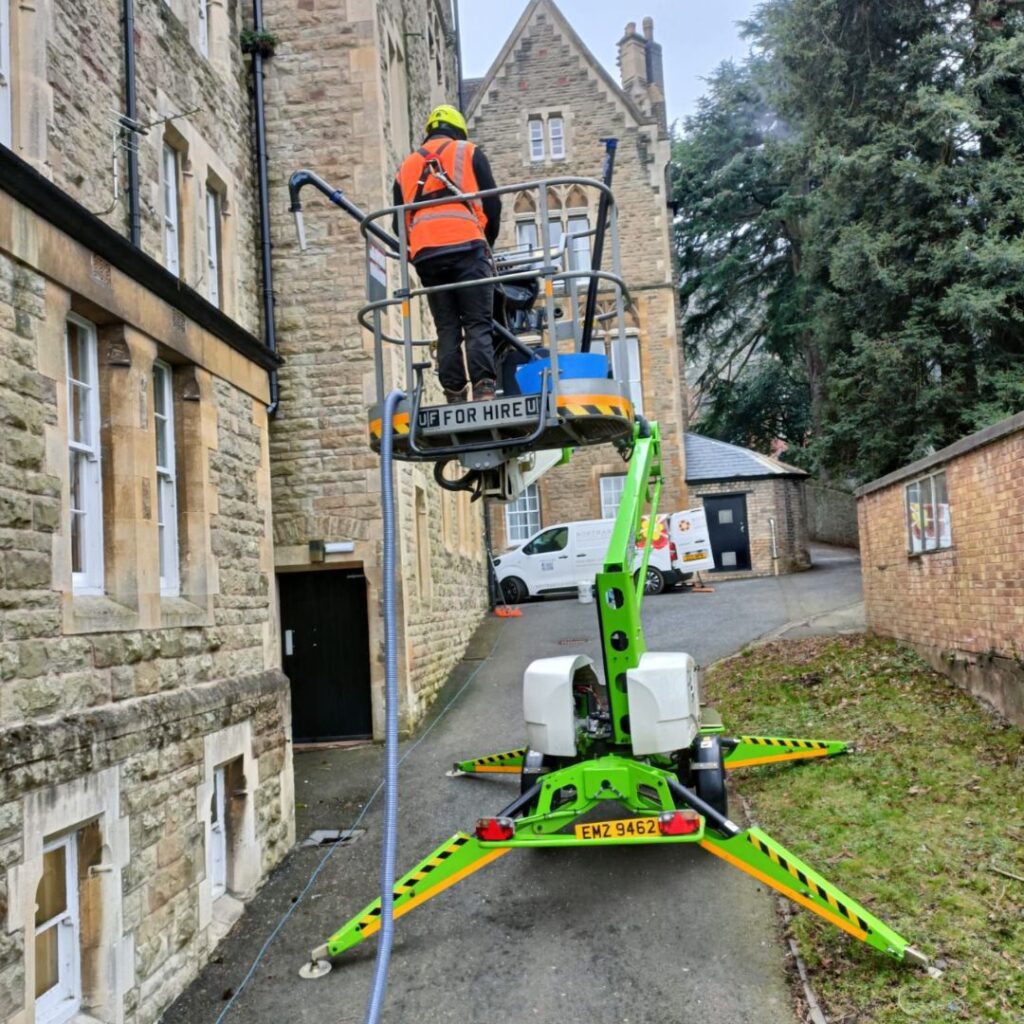
Gutters get attention for one of two reasons, and the difference between them is roughly the difference between maintenance and repair. The planned route is a scheduled clearance, once or twice a year depending on tree cover nearby and how much moss the roof covering happens to carry. Nothing is wrong, the system is simply being kept working, and the visit is quick because the deposits have not had time to compact. This is comfortably the cheaper way to own guttering. The reactive route starts with a symptom. Water spilling over the front lip in heavy rain. A green algae stripe developing down an outside wall. Dripping from a joint. Damp appearing high on an internal wall, or paint lifting beneath a particular run. Plants growing along the gutter line. By this point the deposit has usually set hard, the run may have sagged under the weight, and the fascia behind has been wet for a considerable time. Both routes are handled in exactly the same way on the day. High-reach vacuum equipment draws material into a sealed drum at ground level through carbon fibre poles, with a camera at the head showing the interior of the run before and after so joints, brackets and residual silt can be assessed rather than assumed. Where deposits resist suction, tower or ladder access completes it by hand. Downpipes are flushed individually and discharge confirmed at the gully, since a clear channel feeding a blocked outlet fails identically. Hoppers and offset bends are checked separately, as they collect material invisibly. The reactive route tends to produce findings that the planned one never does: sagging runs that will re-block regardless, perished seals, loose brackets, rot showing at the fascia. Those are reported with photographs. Properties in Clifton generally cost less to maintain on the planned route.

Render Cleaning Clifton
Render gets cleaned for reasons ranging from the cosmetic to the genuinely urgent, and the brief shapes both the timing and the scope. Presentation is the most common of them by a wide margin. A property being marketed or photographed needs its elevations uniform, and the critical point is lead time. Soft washing works over weeks: growth is killed at root level and then dies back, loses adhesion and weathers off in rain and wind, so the wall lightens progressively for a month or more. Six weeks ahead produces the result; six days ahead produces a damp wall and disappointment. A contractor promising an instant transformation is describing jetting, which strips the finish along with the growth. Maintenance is the better reason, though it prompts fewer calls. Organic growth holds moisture against a porous, textured surface, and a render system that cannot dry cannot perform as designed. Freeze-thaw within a permanently damp surface produces crazing and, in time, sections that sound hollow when tapped. Treating at the light-green-cast stage costs a fraction of treating at the established-lichen stage. Diagnosis is the third reason people make the call. Someone has noticed staining and wants to know what it means. Even greening across a shaded elevation is straightforward colonisation. Defined vertical streaks mark a repeated water path from a gutter joint or a sill without a drip detail, and will return after every clean until that is fixed. A white bloom is efflorescence, a salt deposit that does not respond to biocide at all. The method suits all three: a biocidal solution applied at well under a hundred pounds per square inch through a fan tip or pole-mounted lance, with dilution set to the render system, then left to work. Anyone in Clifton comparing render cleaning near me should mention their deadline at the outset.