Exterior Cleaning Cornwell | Pressure Washing Cornwell
- Residential & Commercial Cleaning Specialists
- 5-Star Rated Service & Customer Care
- Eco-Friendly Cleaning Solutions
- Expert Team Covering Cornwell
Get a FREE Quote
Exterior Cleaning Cornwell
Expectations about how a property will look afterwards are where most disappointment in exterior cleaning originates, and setting them accurately is part of the job. The first thing to understand is that cleaning restores a surface to its current condition, not to its original one. A concrete drive that has lost its fine surface layer over thirty years cleans to a clean exposed-aggregate finish, which is genuinely the best available outcome and looks different from the smooth grey surface it once had. Saying so beforehand prevents an argument afterwards. The second is that wet surfaces look nothing like dry ones. Everything appears darker, richer and more uniform while it is damp, and paving in particular can look transformed on the day and then noticeably lighter and patchier two days later as it dries out unevenly. Judging a result on the afternoon of the work is judging the wrong thing. The third is that chemically treated surfaces are not finished when the contractor leaves. A soft-washed wall or a treated roof continues clearing for weeks as killed growth dies back and weathers off, so the day of the visit shows the least of it. The fourth is that not everything is dirt. Efflorescence is a salt deposit. Exposed aggregate is wear. Staining from a defective gutter is a symptom of a fault above. None of the three responds to cleaning in the way general soiling does. The fifth is that uniformity is the real measure of quality rather than brightness. A surface cleaned to a consistent standard looks right, while one cleaned brilliantly in places and adequately in others looks worse than if nothing had been done at all. Stewart Exterior Cleaning explains all five at survey. Households in Cornwell searching exterior cleaning near me are better served by an accurate picture than an optimistic one.
Pressure Washing Cornwell
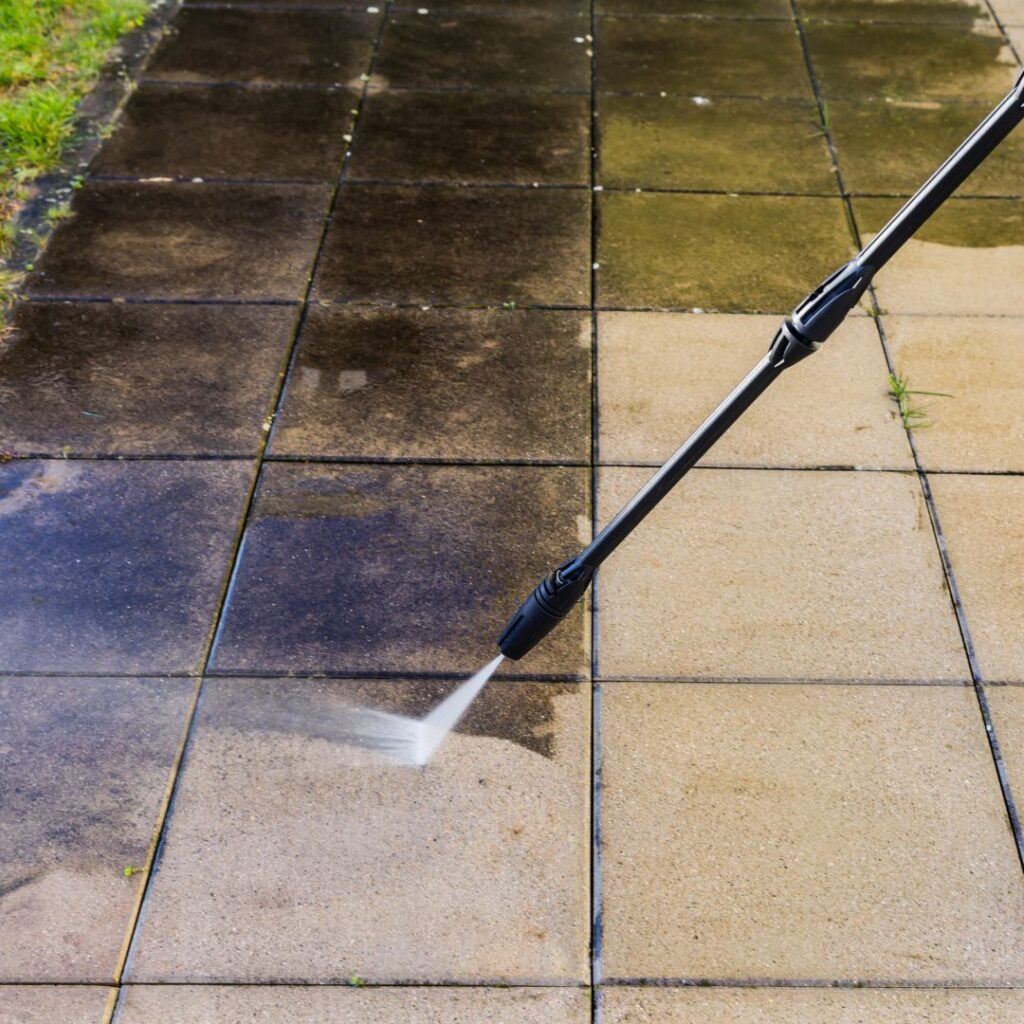
Colour returning to a hard surface is what people are actually buying, and understanding how it works explains both the successes and the limits. Most of what darkens paving is not staining within the material but a layer sitting on top of it: biofilm, atmospheric grime, silt and dead organic matter bound together into a film that absorbs light rather than reflecting it. Remove that film and the original colour of the unit reappears, which is why a well-cleaned drive can look startlingly different from the one beside it. Where the colour has genuinely gone from the material itself, cleaning cannot bring it back. Concrete blocks carry their pigment in the top few millimetres, and decades of wear, frost and abrasion fade it. Pattern-imprinted concrete holds colour in a thin surface skin that pressure removes entirely. Natural stone weathers and mellows, which most people prefer anyway. Evenness matters more than brightness. A surface cleaned to a consistent finish looks right; one cleaned brilliantly in places and adequately in others looks worse than if it had been left alone. This is why a flat surface cleaner, with its fixed working height and constant energy delivery, produces better results than free-hand lancing, and why edges and awkward corners are matched to the main area rather than cleaned as hard as possible. Drying reveals the truth. A surface holds water for two or three days after cleaning and looks darker and more uniform throughout that period, so the honest assessment comes later in the week. Colour also changes with the weather for weeks afterwards, deepening in rain and lightening in dry spells, which is normal rather than a sign of anything wrong. Sealing deepens the colour permanently on porous materials, which some people want and others very much do not. Homeowners in Cornwell booking patio cleaning near me should ask to see a dry finished area before deciding.
Are you based in Cornwell or the Surrounding Areas?
Patio & Driveway Cleaning Cornwell
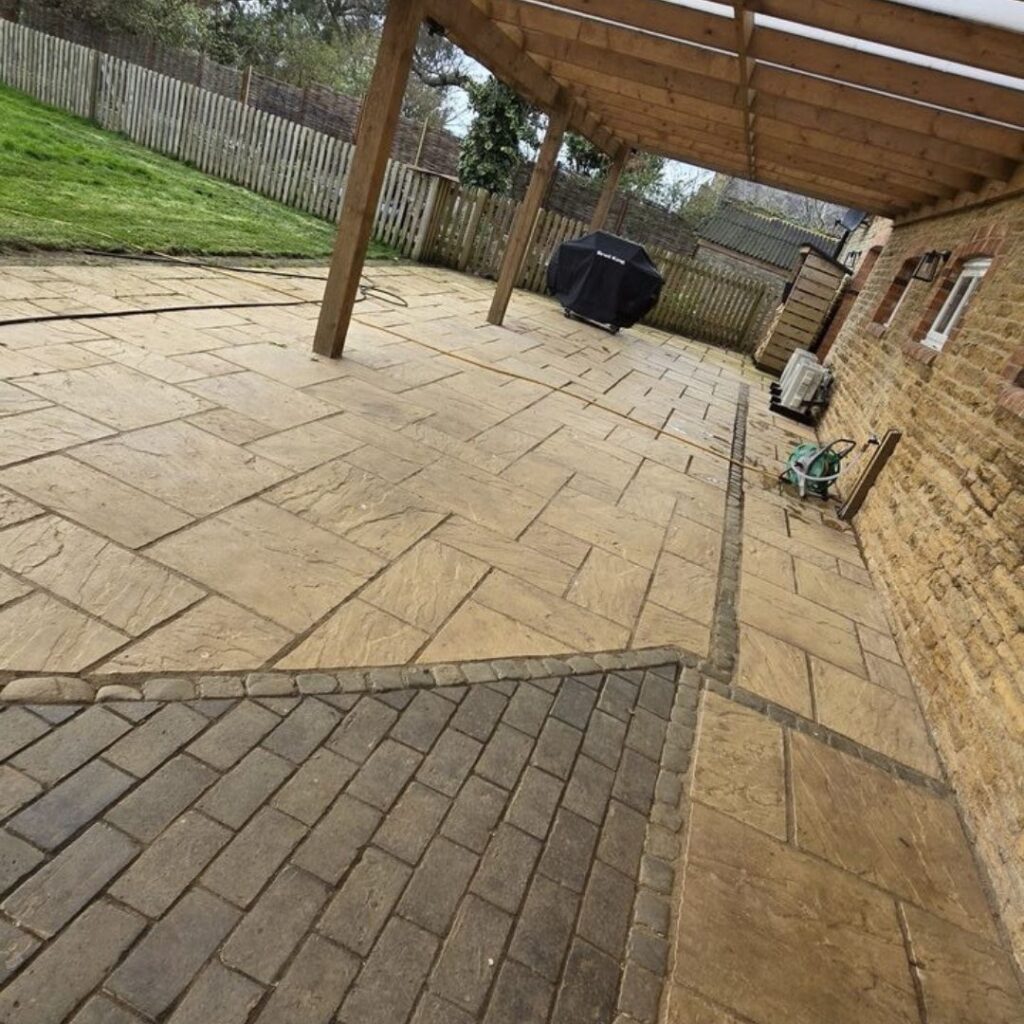
What a cleaned driveway will actually look like depends on the material, and being specific about each avoids the commonest misunderstanding in the trade. Concrete block paving generally cleans well and returns close to its original colour, provided the pigment in the upper few millimetres has not worn away. Older blocks that have faded through decades of frost and traffic will look clean but not new, and the difference between the trafficked centre and the sheltered edges may become more visible rather than less once the dirt has gone. Clay pavers are fired through, so their colour is not a surface layer and does not fade. These clean up exceptionally well. Plain concrete depends entirely on whether the laitance survives. Where the fine surface layer is intact, the result is close to the original. Where decades of weathering have removed it, the aggregate is exposed and the honest outcome is a clean exposed-aggregate finish. Natural stone cleans to its weathered colour rather than its quarried one, and that is usually the right result. Removing the patina entirely would take the surface with it. Pattern-imprinted concrete depends on its sealer. A surface with sound sealer cleans and reseals beautifully; one where the sealer has failed and the colour skin has worn shows patchiness that resealing improves but does not eliminate. Resin-bound surfaces return to their aggregate colour once the surface film is removed, cleaned at reduced pressure to protect the binder. Gravel and loose aggregate margins are worth mentioning too, since they cannot be cleaned in any meaningful sense and are usually better topped up or replaced. Kiln-dried sand goes back into block paving joints once the surface is dry, and the joints look markedly neater for it. Householders in Cornwell booking driveway cleaning near me should ask what their material will realistically achieve.
Roof Cleaning Cornwell
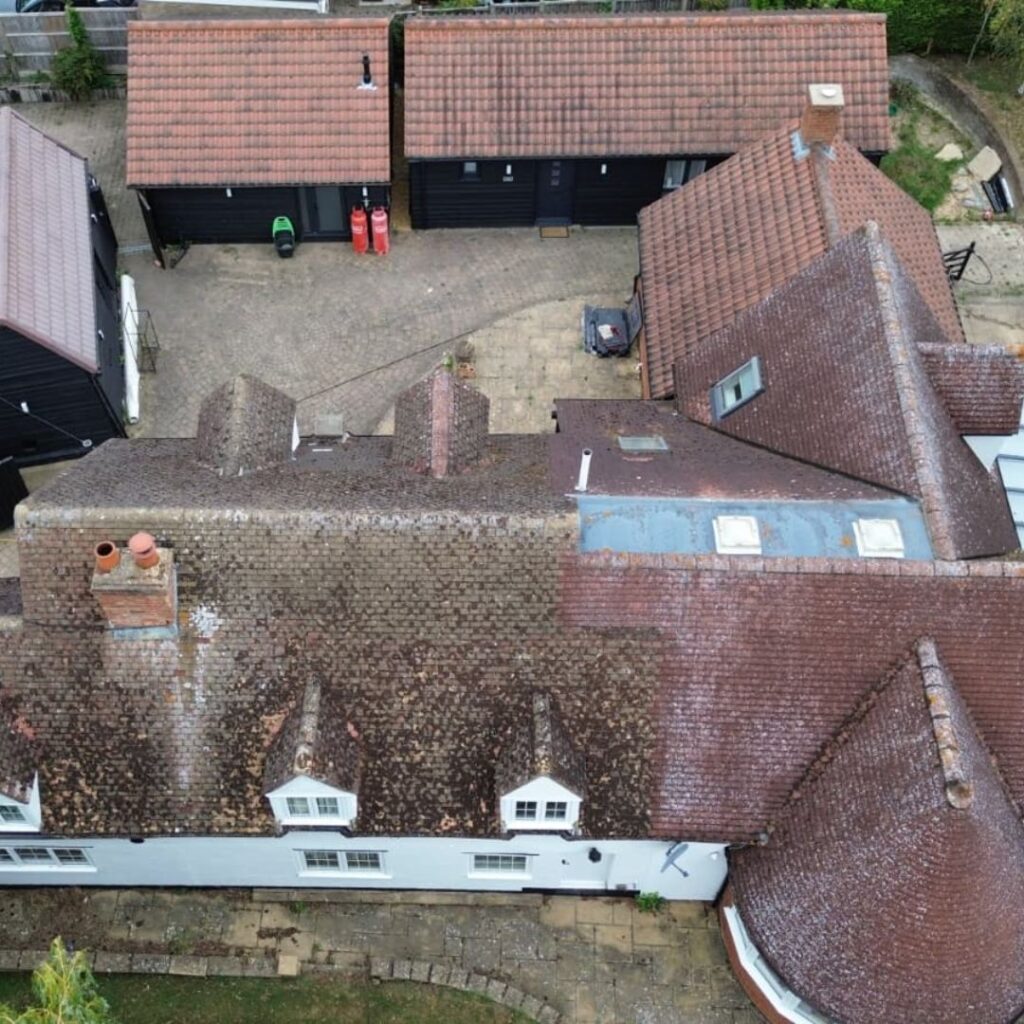
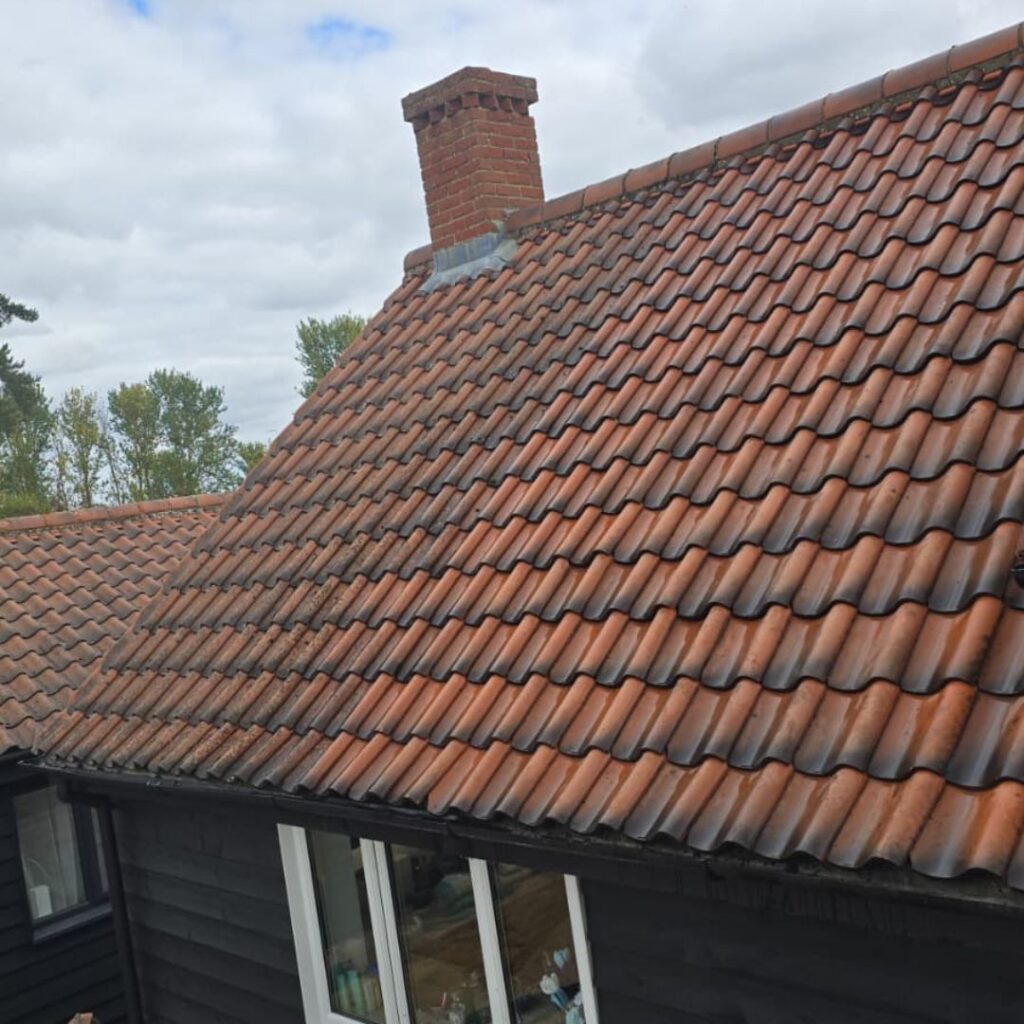
How a roof looks after treatment is the single most misunderstood outcome in exterior work, and the explanation is worth giving properly. On the day, a correctly treated covering looks damp and only modestly changed. The heavy moss has gone from the laps, the ridge and the valleys, because that is removed by hand, but the general discolouration across the tiles remains largely as it was. Nothing dramatic has happened, and to an owner expecting a transformation that is disconcerting. Over the following weeks the change arrives. The biocide continues acting on the remaining growth, killing it at root level, and the dead material loses adhesion and weathers off in rain and wind. The covering lightens progressively for a month or more, and it goes on improving slowly beyond that. The rate of change is not uniform either. Heavier growth clears faster because there is more of it to lose adhesion, while thin surface staining takes longest. The end state is a covering that looks its age and its material rather than one that looks new. Concrete tiles that have lost their granular surface will still be greyer and more open than they were when laid. Clay that has crazed with age still shows it. Slate returns to slate. What goes is the organic layer, and what remains is the honest condition of the covering. A roof that has been transformed by the end of the working day has been pressure washed, and that appearance is bought at the cost of the tile surface itself, with faster colonisation and a shorter interval before it all returns. Photographs taken at six weeks tell the true story rather than photographs taken at six hours. Anyone in Cornwell searching roof cleaning near me should agree with the contractor when the result will be assessed.
Solar Panel Cleaning Cornwell
Judging solar panel cleaning by appearance is unreliable, and the reason has to do with how glass behaves rather than how clean it is. Panels are viewed from below, at an oblique angle, usually against the sky, and in those conditions reflected light dominates everything. An array with a uniform layer of dust can look perfectly presentable from a driveway while losing a tenth of its output. Equally, a freshly cleaned array in flat overcast light looks much the same as it did before. What can be seen, in the right light, is the band along the lower edge of each panel where run-off slows against the frame and deposits everything it has carried down the glass. In strong side light that shows as a duller strip. Moss encroaching from the frame channel is visible once it has grown far enough onto the glass, and bird fouling is obvious at any distance. Water spotting is the appearance fault that matters most and it is entirely avoidable. Mains water dries leaving its dissolved minerals behind as visible spots and a fine film, which is both unsightly and functionally harmful, since the film scatters light and holds the next layer of dust. Deionised water leaves nothing at all, so the glass dries completely clear. Uniformity is the visual test worth applying where the light allows it: a properly cleaned array looks consistent across every module rather than showing variation between the ones that were easy to reach and the ones that were not. The honest assessment, though, is numerical. A generation reading on a clear day before the visit and a comparable one afterwards gives a direct measure, usually visible within a day. Detergent is avoided partly for the same reason: residue attracts soiling and can affect the anti-reflective coating. Owners in Cornwell should judge by the data rather than the view.

Our Customers Say Everything there is to know about us
EXCELLENTTrustindex verifies that the original source of the review is Google. Fantastic service through out! Our roof looks brand new! Decided to also get the driveway done after seeing the results of first job and what a difference! All for a reasonable price as well. Definitely highly recommend 5*Posted on GoogleTrustindex verifies that the original source of the review is Google. Brendan of Stewart Exterior Cleaning was superb. He obviously knows a lot about looking after the exterior of a property and when he visited to clean our gutters, he clearly explained what was going on and gave excellent advice for the future. He was also friendly and enthusiastic, and gave us the sense he enjoys his work and taking care of his customers. He also mentioned some of his company's other services such as landscape gardening, which probably explains why he has so much expertise. But as it was winter and just before Christmas when he visited, it wasn't the right time for things for the garden, but we'd like to have him back in the spring, so he's probably got a customer for life now! Thanks so much, Brendan – it's very obvious why your business is thriving and we'll be back in touch in the future!Posted on GoogleTrustindex verifies that the original source of the review is Google. Brendan was very helpful and informative, he was quick and efficient in completing the job while answering any questions I had, I would definitely recommend his servicesPosted on GoogleTrustindex verifies that the original source of the review is Google. Returning customer of Stewart Exterior Cleaning. Brendan did a gutter clear for us recently and came back today to carry out a repair caused by high winds. Very friendly servicePosted on GoogleTrustindex verifies that the original source of the review is Google. Great service, roof looks newPosted on GoogleTrustindex verifies that the original source of the review is Google. Great service, couldn’t be happier with the end result. We initially had Brendan in to pressure wash and re-sand our driveway and after seeing the excellent job he did, we decided to have the roof and gutters cleaned as well. The transformation has completely refreshed our home and added fantastic curb appeal. Reliable, friendly, and great value for the service provided thanks again, Brendan!Posted on GoogleTrustindex verifies that the original source of the review is Google. Excellent job completed by Brendan. Was prompt and went above and beyond - given that there wasn’t a useable tap on sight! Also advised what do do after cleaning with regards to paving slabs. Would highly recommend, very excellent price and top notch service. Thank you BrendanPosted on GoogleTrustindex verifies that the original source of the review is Google. Excellent job done in a most friendly and efficient manner. Would highly recommend Brendan and his company to anybody looking to have their gutters cleared and fascia’s cleaned. Well done Stewart Exterior Cleaning.Posted on GoogleTrustindex verifies that the original source of the review is Google. I spotted Brendan working at neighbours property and asked him for a quote to pressure wash my pathway and patio. We agreed a price and the work was carried out a few days later. Brendon is hardworking, friendly and diligent and I’m very happy with the outcome and overall experience.Posted on GoogleTrustindex verifies that the original source of the review is Google. Fantastic service from Stewart Cleaning Ltd. Great work, tidy and very accommodating. Would definitely recommend and will definitely be using these guys again. Thank you! Noticed my dirty windows and even cleaned them despite it not being part of the booked job! Many many thanks.
Gutter Cleaning Cornwell
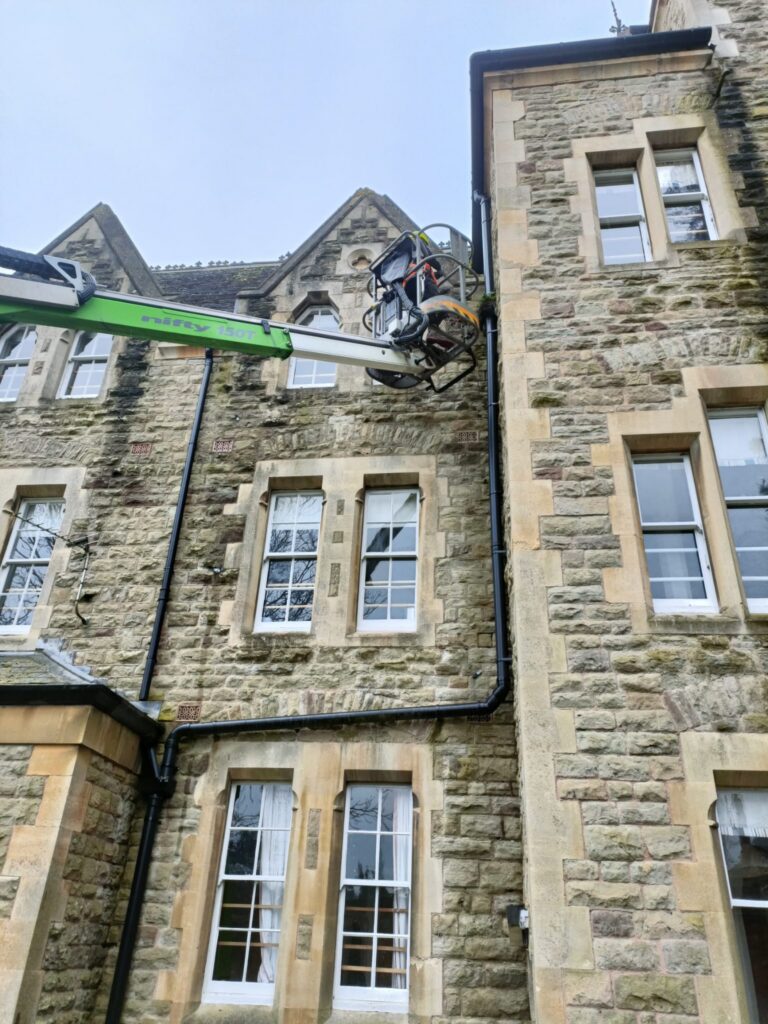
Guttering is judged by what it does rather than how it looks, and the visible improvements from a clearance are mostly on the surfaces around it. The channel itself is invisible from the ground, which is precisely why camera evidence matters. Footage from the pole head before and after shows the interior of the run, the depth of any remaining silt, the condition of joints and brackets and whether the section holds standing water. That is the actual result, and no amount of looking up from a driveway substitutes for it. What is visible is the fascia and soffit, and washing those while the access is in place makes a considerable difference to the appearance of a property. The green streaking they carry comes directly from overflow, and clearing the cause without cleaning the effect leaves the building looking much as it did. The wall beneath a problem run is the other visible element. A vertical algae stripe marks months of overflow, and while clearing the gutter stops it worsening, the stripe itself needs soft washing to remove and will not disappear on its own. Downpipes are worth noticing too, since they collect the same streaking as the fascia and are usually washed at the same time from the same pole. What clearance will not do is restore aged rainwater goods to their original appearance. uPVC yellows and becomes brittle with ultraviolet exposure, and cast iron shows its age and its paint history. Both clean up but neither looks new, and where a run has sagged permanently under a heavy deposit, cleaning does not straighten it. The real measure is behaviour in heavy rain: water entering the channel and running away with nothing spilling, dripping or tracking down the wall behind. Householders in Cornwell should watch a downpour rather than inspect a photograph.

Render Cleaning Cornwell
What a rendered elevation will look like after treatment depends on distinguishing three quite different causes of discolouration, and each behaves differently. Biological growth clears completely. Algae, lichen, moss and mould are killed at root level by the biocidal solution and then weather off progressively over the following weeks, so the wall returns to the colour of the render itself. This is the majority of what is usually present and it produces the transformation people are hoping for, just on a longer timescale than expected. Atmospheric grime lifts well too, though it tends to leave the wall looking its age rather than looking new. A ten-year-old render finish has weathered, and removing what sits on it reveals a mellowed version of the original colour rather than the shade it was on the day it was applied. Staining from a water path is the third and is only partly a cleaning matter. Defined vertical streaks from a gutter joint, a blocked run, an unprotected sill or a failed coping will clean off, and will then return, because the cause remains. Correcting the defect above is what actually resolves it. Efflorescence is the fourth and does not respond to biocide at all, being a salt deposit left as moisture migrates through the wall and evaporates at the surface. Previous pressure damage is the fifth and is permanent. Pale scoured patches and exposed base coat cannot be blended back in, and further cleaning makes the contrast more obvious rather than less. Timing affects the verdict as much as the method. Assessed at six weeks the result is a fair reflection of the work; assessed on the afternoon of the visit it is not. The realistic outcome is a uniform, mellowed elevation rather than a wall that looks freshly rendered. Anyone in Cornwell comparing render cleaning near me should ask which of the five causes they have.