Exterior Cleaning Fewcott | Pressure Washing Fewcott
- Residential & Commercial Cleaning Specialists
- 5-Star Rated Service & Customer Care
- Eco-Friendly Cleaning Solutions
- Expert Team Covering Fewcott
Get a FREE Quote
Exterior Cleaning Fewcott
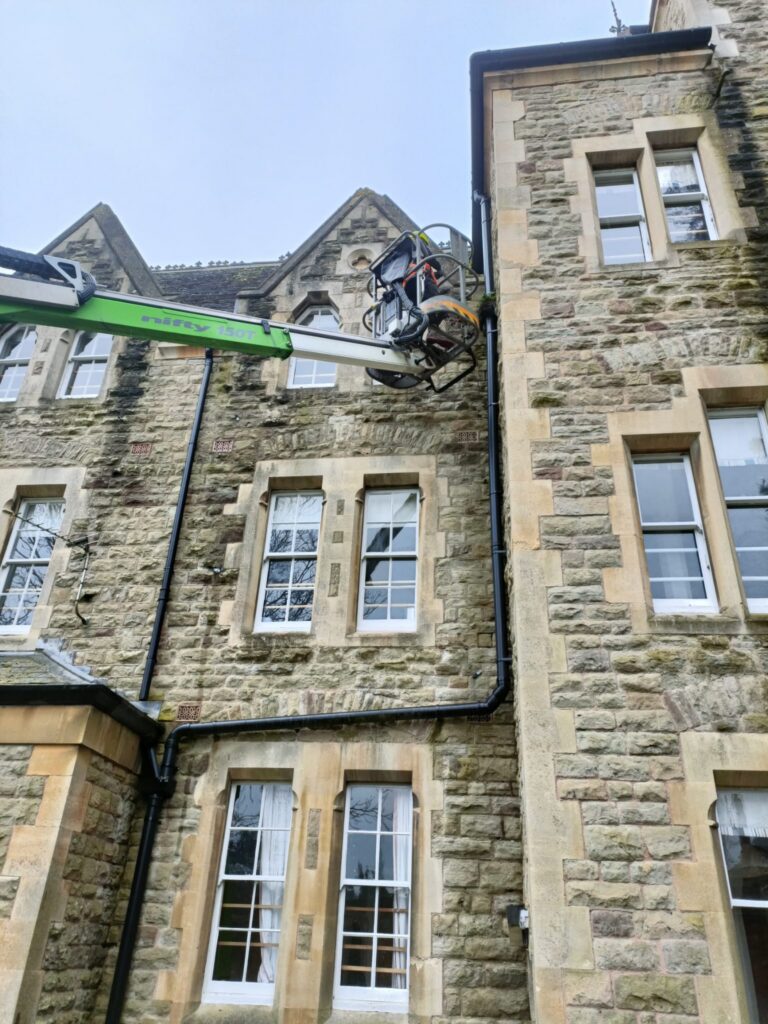
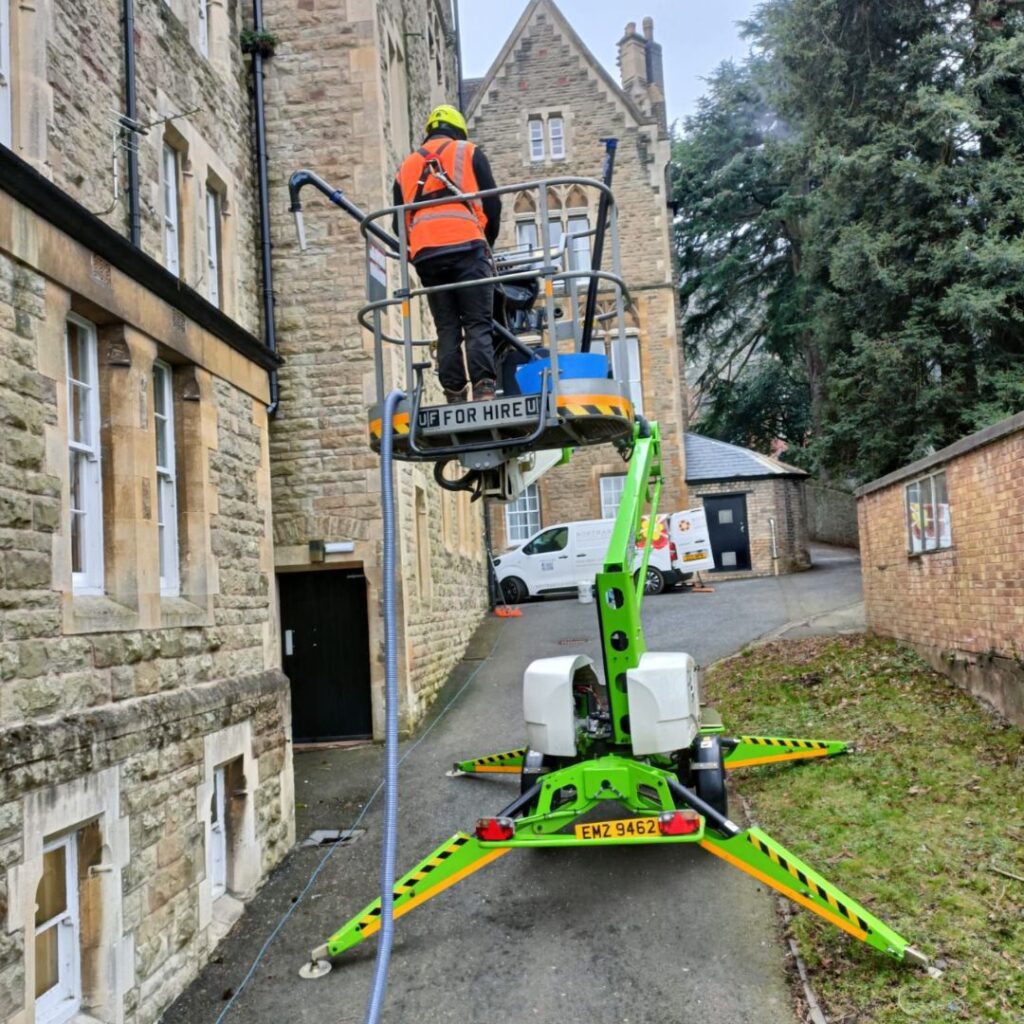
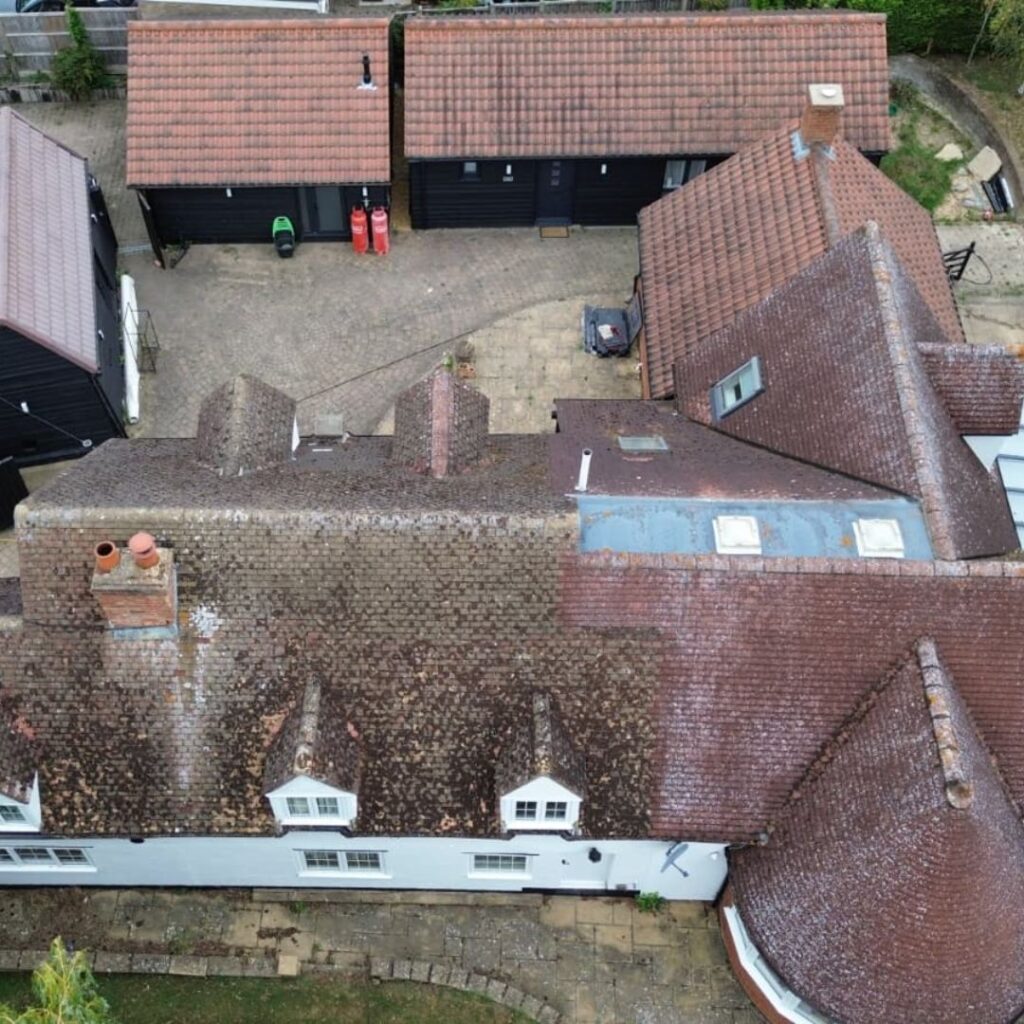
The height and layout of a building change an exterior cleaning job more than almost anything else about it, and the differences are worth understanding before comparing quotations. A bungalow is the simplest case and often the cheapest per square metre. Everything is within pole reach from the ground, no access equipment is needed, and the roof pitch is usually shallow enough to work from a mobile tower where hand removal is required. The complication is that low buildings are frequently surrounded by mature planting that has grown up over decades, which shades the elevations, restricts standing positions and keeps everything damp. A two-storey house is the standard case. Pole systems reach the gutters and the gable, a tower handles most roof work, and the whole property is usually manageable in a day or two. Three storeys changes things materially. Pole sets at full extension flex, are heavy to handle and are noticeably slower, and roof access almost always means scaffold rather than a tower, which brings an erection visit, a hire period and a dismantling visit. Layout matters as much as height. A detached property with clear access on all four elevations is straightforward. A terrace or a house with a narrow side return, a locked rear access or a boundary tight against a wall restricts where equipment can stand, and restricted standing positions are the single biggest driver of time on site. Extensions, conservatories and outbuildings add junctions, roof planes and fragile surfaces to protect. What ties all of it together is that access is the expensive component and cleaning is not, so anything that makes equipment harder to position costs more than anything that makes the surface harder to clean. Stewart Exterior Cleaning prices from the layout rather than from the floor area. Households in Fewcott searching exterior cleaning near me should mention access constraints at the outset.
Pressure Washing Fewcott
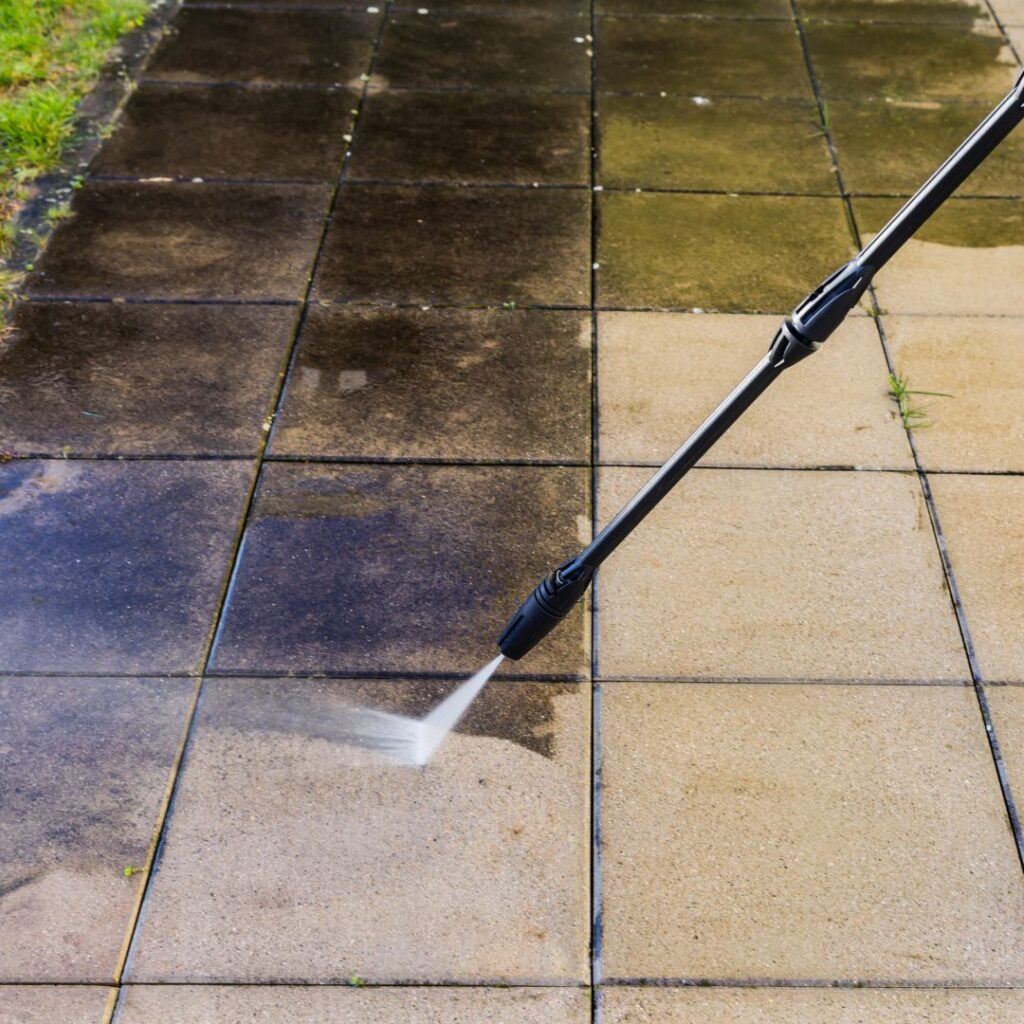
Ground-level layout governs mechanical cleaning far more than the size of the area does, and it is the reason two identical driveways can differ substantially in price. An open rectangle is the best case. A flat surface cleaner can be walked across it in continuous overlapping passes, the energy stays constant, the finish is even and the work proceeds at a predictable rate. Interruptions change that entirely. Planters, manhole covers, tree pits, a central island, an inspection chamber and steps all mean the surface cleaner has to be lifted and repositioned, and the ground around each has to be finished by hand with a lance matched carefully to the machine pass. Hand work runs several times slower per square metre. Narrow returns are worse still. A side passage may be too tight for a surface cleaner at all, so the whole length is done by lance, and it is usually the most heavily colonised part of the property because it never sees sun and rarely sees air. Level changes complicate the drainage. Water runs downhill, and on a sloping drive the run-off from the top carries silt across everything below it, so the sequence has to work down the slope rather than across it. Distance from the water supply matters, since hose runs across a property are a trip hazard and long runs drop pressure. And the position of the foul drain determines whether discharge is straightforward or requires containment and recovery. Storage against a wall is the last constraint and the most easily fixed. Bins, log stores, ladders, stacked timber and garden furniture all occupy exactly the ground a machine or an operator needs, and an hour clearing beforehand saves considerably more on the day. Anyone in Fewcott booking pressure washing near me should describe the shape of the area rather than only its overall size.
Are you based in Fewcott or the Surrounding Areas?
Patio & Driveway Cleaning Fewcott
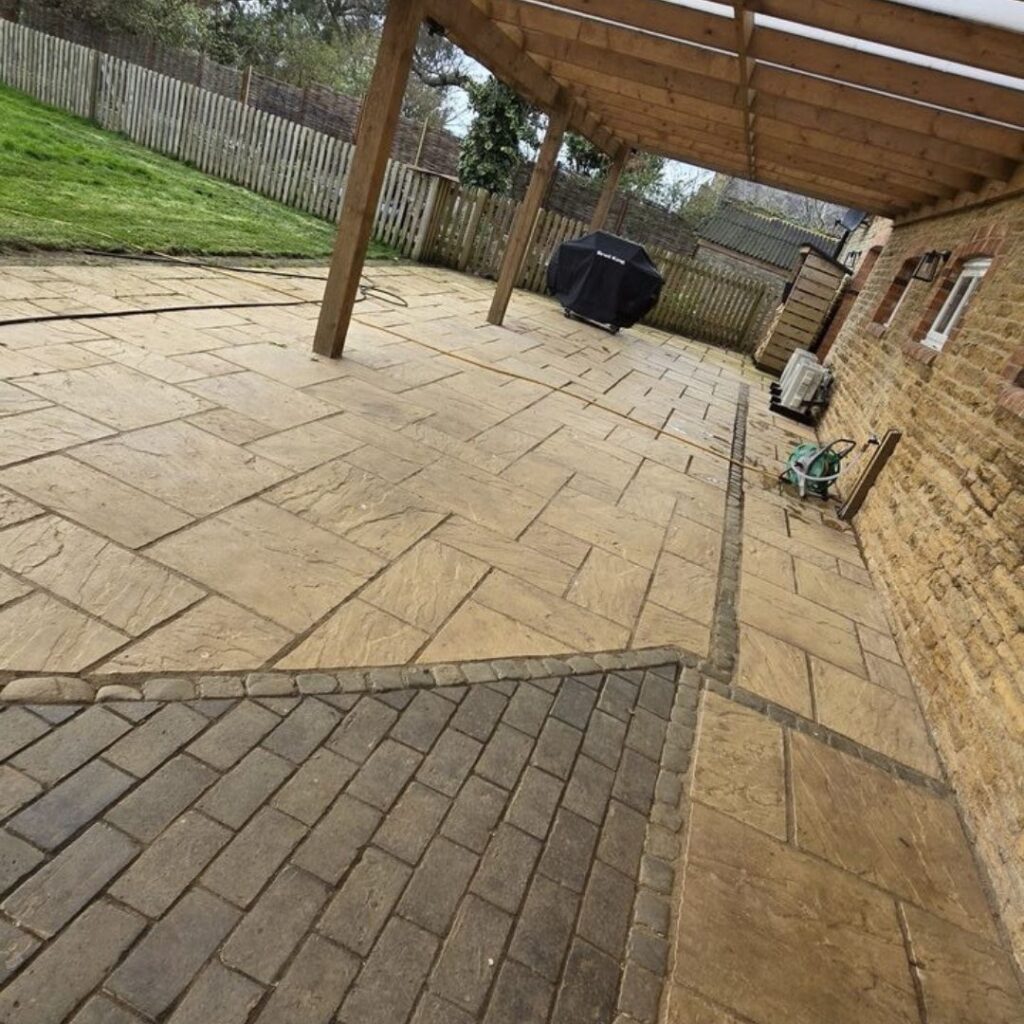
How a driveway and patio are laid out determines the sequence of the work, and getting that sequence right is what produces an even result. Slope comes first. On any sloping surface the work runs from the top down, so that silt and released material carried by run-off always lands on ground not yet finished. Working uphill means cleaning the same area twice, and doing it badly the second time. Connected areas are treated as one job even where they are quoted separately. A drive that runs into a path that runs into a patio has to be worked in a continuous sequence, because a clean surface adjoining a dirty one draws the eye straight to the boundary between them. Enclosed areas need different handling. A courtyard, a walled patio or a narrow side passage has poor airflow, dries slowly and colonises heavily, and it also traps spray, so protection of adjacent walls and glazing matters more than in an open space. Steps and level changes are worked individually, and the nosings take the most attention since they carry both the wear and the slip risk. Drainage geometry sets the constraints. Every gully and channel drain is located, covered during the work and cleared afterwards, and where a fall has been lost to settlement the resulting low spot is reported rather than washed repeatedly. Access for equipment through gates and side passages needs checking, since a machine on a trolley and a surface cleaner both need a reasonable opening. What is adjacent completes the picture. Planting, glazing, a conservatory, painted joinery and parked vehicles all determine how much protection has to go up before anything starts, and on an enclosed site that preparation takes longer than the cleaning itself. Homeowners in Fewcott booking driveway cleaning near me should mention gate widths and side access at survey.
Roof Cleaning Fewcott
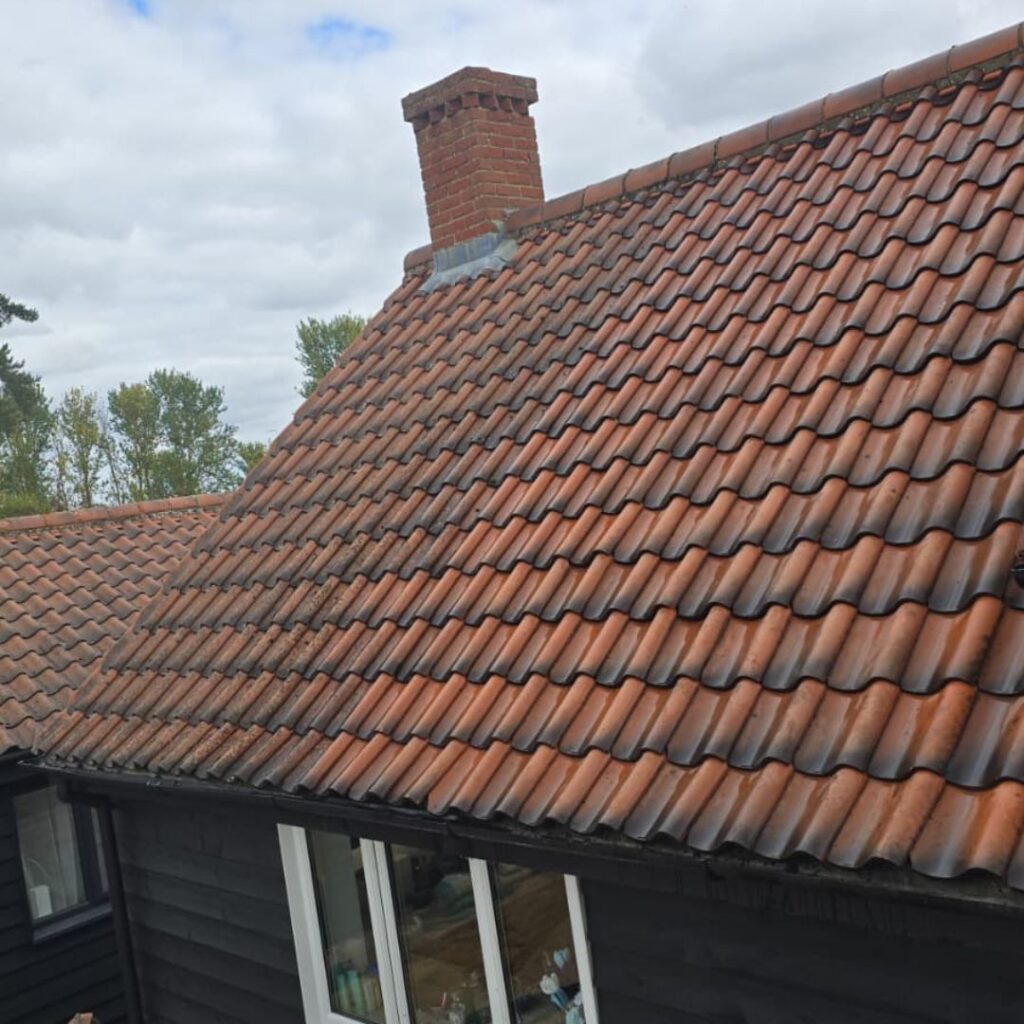
Roof geometry drives both the method and the cost, and it is worth understanding what makes one roof more work than another of the same area. Pitch is the first factor. A shallow covering may be worked from a mobile tower with the operator reaching only the lower courses; a steep one requires scaffold with edge protection or is treated entirely from poles at ground level. Pitch also affects how much growth establishes, since a steeper plane sheds water faster and stays drier. Complexity is the second and matters more than area. A simple gable roof has two planes and no junctions. A property with extensions, dormers, a hipped section, roof lights and a chimney has multiple planes, several valleys and a set of abutments, and every one of those junctions is a detail requiring hand work and a place where flashings need inspecting. Valleys are the expensive feature. Where two planes meet, the drainage of both concentrates into a narrow channel, and obstruction there pushes water beneath the covering at the junction. Height determines access, and the step from a tower to a scaffold is the largest single jump in a roof quotation. Ground conditions around the building matter as much as the roof itself, since a tower needs firm level standing and soft or sloping ground rules it out. What sits beneath each plane completes the picture: conservatory roofs, glazing and planting all need protecting from falling moss. Orientation is the last variable and it predicts the workload better than anything else. The plane receiving least sun carries the heaviest growth and needs the most hand removal, while a well-lit plane on the same building may need very little beyond treatment. Anyone in Fewcott searching roof cleaning near me should expect a per-plane assessment rather than a single figure for the whole covering.
Solar Panel Cleaning Fewcott
Where an array sits on a building affects the visit more than the number of panels does. Height above the ground is the first consideration, and the good news is that pole-fed cleaning reaches the great majority of domestic arrays from the ground regardless of storey. Two-storey work is routine. Three storeys needs a longer pole set that flexes at full extension and is slower to handle, and at that point wind becomes a limiting factor far sooner. The pitch of the array matters for two separate reasons. A shallow array is easier to reach along its full length from a single position, and it also soils faster, since rainfall never runs off with enough force to carry residue away and the band along the lower edge of each panel builds more quickly. Orientation determines what accumulates. A rear-facing array over a garden with mature trees collects leaf debris and attracts the bird activity that produces the most costly fouling; one over open ground collects dust and pollen instead. Standing position is the practical constraint. Poles need firm level ground with a clear vertical line to the array, and an installation above a conservatory, a planted border or a narrow return can be awkward to reach cleanly. Overhead cables rule out pole use entirely in their vicinity. Mounting type completes the picture. A retrofit array on rails has a debris-collecting gap beneath it; an in-roof system sits flush with weather detailing around its perimeter that must not be disturbed. Roof condition around the array matters too. Tiles carrying moss shed spores and debris directly onto the panels and into the frame channels, so an array on a mossy covering soils faster than the same array on a treated one. Owners in Fewcott should mention the standing ground available beneath the array when booking.

Our Customers Say Everything there is to know about us
EXCELLENTTrustindex verifies that the original source of the review is Google. Fantastic service through out! Our roof looks brand new! Decided to also get the driveway done after seeing the results of first job and what a difference! All for a reasonable price as well. Definitely highly recommend 5*Posted on GoogleTrustindex verifies that the original source of the review is Google. Brendan of Stewart Exterior Cleaning was superb. He obviously knows a lot about looking after the exterior of a property and when he visited to clean our gutters, he clearly explained what was going on and gave excellent advice for the future. He was also friendly and enthusiastic, and gave us the sense he enjoys his work and taking care of his customers. He also mentioned some of his company's other services such as landscape gardening, which probably explains why he has so much expertise. But as it was winter and just before Christmas when he visited, it wasn't the right time for things for the garden, but we'd like to have him back in the spring, so he's probably got a customer for life now! Thanks so much, Brendan – it's very obvious why your business is thriving and we'll be back in touch in the future!Posted on GoogleTrustindex verifies that the original source of the review is Google. Brendan was very helpful and informative, he was quick and efficient in completing the job while answering any questions I had, I would definitely recommend his servicesPosted on GoogleTrustindex verifies that the original source of the review is Google. Returning customer of Stewart Exterior Cleaning. Brendan did a gutter clear for us recently and came back today to carry out a repair caused by high winds. Very friendly servicePosted on GoogleTrustindex verifies that the original source of the review is Google. Great service, roof looks newPosted on GoogleTrustindex verifies that the original source of the review is Google. Great service, couldn’t be happier with the end result. We initially had Brendan in to pressure wash and re-sand our driveway and after seeing the excellent job he did, we decided to have the roof and gutters cleaned as well. The transformation has completely refreshed our home and added fantastic curb appeal. Reliable, friendly, and great value for the service provided thanks again, Brendan!Posted on GoogleTrustindex verifies that the original source of the review is Google. Excellent job completed by Brendan. Was prompt and went above and beyond - given that there wasn’t a useable tap on sight! Also advised what do do after cleaning with regards to paving slabs. Would highly recommend, very excellent price and top notch service. Thank you BrendanPosted on GoogleTrustindex verifies that the original source of the review is Google. Excellent job done in a most friendly and efficient manner. Would highly recommend Brendan and his company to anybody looking to have their gutters cleared and fascia’s cleaned. Well done Stewart Exterior Cleaning.Posted on GoogleTrustindex verifies that the original source of the review is Google. I spotted Brendan working at neighbours property and asked him for a quote to pressure wash my pathway and patio. We agreed a price and the work was carried out a few days later. Brendon is hardworking, friendly and diligent and I’m very happy with the outcome and overall experience.Posted on GoogleTrustindex verifies that the original source of the review is Google. Fantastic service from Stewart Cleaning Ltd. Great work, tidy and very accommodating. Would definitely recommend and will definitely be using these guys again. Thank you! Noticed my dirty windows and even cleaned them despite it not being part of the booked job! Many many thanks.
Gutter Cleaning Fewcott
The shape of a building determines how long a gutter clearance takes, and the run length matters less than the access to it. Storey height sets the equipment. Two-storey work is standard and quick. Three storeys needs a longer pole set, which is heavier, flexes noticeably at full extension and takes considerably longer per metre, and wind becomes a stopping condition much sooner. Standing positions are the real constraint throughout. Poles need firm level ground directly beneath the run with a clear vertical line to it, so a border planted tight against a wall, a conservatory, a greenhouse, a parked vehicle or a narrow side passage all remove the positions that would otherwise be used. Layout complexity multiplies the work. A simple rectangular building has four runs and perhaps three downpipes. One with extensions, a bay, a porch and an outbuilding has runs at several different heights, hoppers and swan necks at the transitions, and downpipes discharging into gullies scattered around the plot. Valley and parapet gutters, found on larger and older buildings, carry far more water than an eaves run and block with worse consequences. Enclosed courtyards and passages between buildings are the hardest, since there may be nowhere to stand and no way to angle a pole. Overhead cables are an absolute constraint rather than an inconvenience, since carbon fibre conducts. Roof pitch above the run is a factor as well, since a shallow covering sheds debris into the guttering more slowly but also dries more slowly, and a covering carrying heavy moss sets the schedule regardless of what is growing at ground level. Where a run sits above a conservatory or a fragile lean-to, the standing position has to be planned rather than improvised. Householders in Fewcott should count the downpipes and check the side access before comparing quotations.

Render Cleaning Fewcott
Elevation height and shape determine how a render treatment is delivered, and the differences are mostly about reach and steadiness. Single-storey walls are the most straightforward of the lot. A fan tip at low pressure covers them evenly from the ground, the operator has full control of the pattern, and the whole elevation can be wetted consistently. Two-storey walls and gables need a pole-mounted lance. That is entirely workable and it introduces two constraints: wind, which makes an even application impossible at full extension, and the operator’s ability to see the surface properly from directly beneath it, which is why elevations are worked systematically rather than by eye. Three-storey and tall gables are slower again, and on some properties a tower becomes the better option simply for control of the application rather than for reach. The shape of the wall matters quite as much as its height. A flat elevation is quick. One broken by a bay, a porch, a canopy, a chimney breast or a change of plane has multiple sheltered angles that colonise heavily and need working individually. Enclosed elevations are the worst and the most in need of treatment. A wall facing a boundary a few feet away, or the inside face of a courtyard, has almost no airflow, dries very slowly and carries the heaviest growth on the property, while offering the least room to stand and apply. Protection scales with height too, since overspray from a gable reaches further than from a single-storey wall. What is beneath each elevation matters as well, since beds, glazing, a pond or paving all need soaking, sheeting or rinsing as the work proceeds, and on a tall wall the area receiving drift is considerably larger. Anyone in Fewcott comparing render cleaning near me should describe the tallest and the most enclosed elevations when asking for a price.