Exterior Cleaning Great Bourton | Pressure Washing Great Bourton
- Residential & Commercial Cleaning Specialists
- 5-Star Rated Service & Customer Care
- Eco-Friendly Cleaning Solutions
- Expert Team Covering Great Bourton
Get a FREE Quote
Exterior Cleaning Great Bourton
Booking exterior cleaning without knowing what actually happens on the day is uncomfortable, so it is worth setting out the sequence in full. Contact is followed by a site visit rather than a phone quote, because photographs conceal the details that determine method and price: mortar condition, substrate type, access constraints, drainage arrangements and the condition of anything the work will be carried out over. The survey produces a written scope. It names each surface, the method proposed for it, the equipment required and the order the work will follow. Where a surface should not be cleaned, or where the honest recommendation is repair before cleaning, that is stated as clearly as everything else. Access requirements are confirmed at this stage, along with water and power arrangements and any parking or vehicle movement needed. On the day, protection comes before anything else. Drains are covered or filtered, vents and external electrics masked, planting soaked and sheeted, doors and windows checked shut. Work then proceeds from the highest point down. Anything at height is completed first, then the elevations, then the ground surfaces, so that dislodged material always falls onto areas not yet finished. Debris is bagged and removed rather than swept into a border. Aftercare is explained at handover rather than left to guesswork. Chemically treated surfaces are not finished on the day, and saying so avoids disappointment: a soft-washed wall or a treated roof keeps clearing for weeks as dead growth weathers off. Re-sanded block paving should not be pressure washed by anyone for a good while. Newly cleaned paving stays slightly damp and can be slippery until it dries fully. A follow-up check confirms the result once treatments have run their course. Stewart Exterior Cleaning finds that customers around Great Bourton who searched exterior cleaning near me and expected a single-visit transformation are consistently happier once the timescale has been explained honestly at the outset.
Pressure Washing Great Bourton
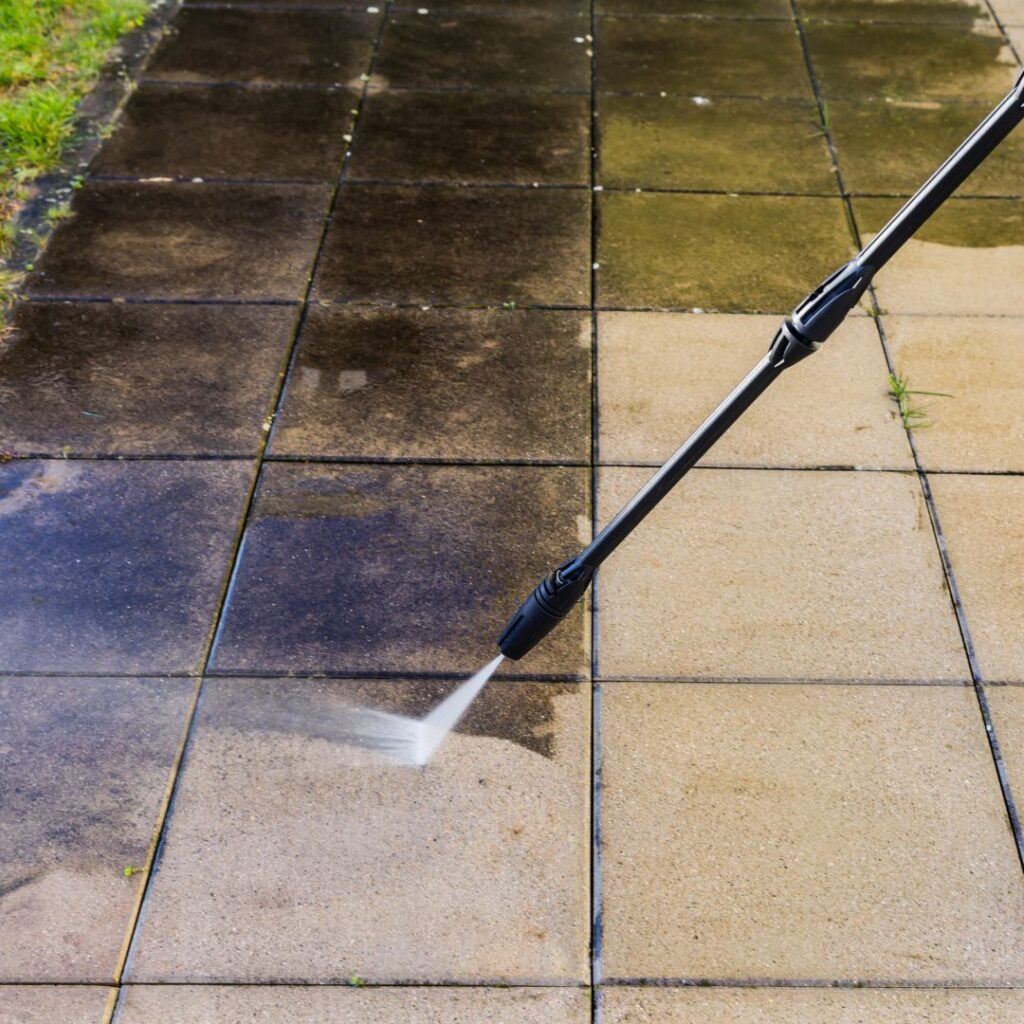
Water at pressure does two things at once: it delivers energy to break the bond between soiling and surface, and it provides volume to flush the released material away. Getting the balance right is the whole discipline. Too much energy and the surface itself is removed along with the dirt. Too little volume and the loosened material simply redistributes across the area, drying into a patchy film that looks worse than the original. The variables available are pressure, flow, temperature, nozzle geometry and dwell. Increasing any one of them allows another to be reduced. Heat is the most useful trade, because hot water breaks down fats, oils, rubber and gum chemically, meaning the same result can be achieved at substantially lower force. On a hard standing marked with vehicle deposits, a heated system at moderate pressure outperforms a cold machine at maximum pressure and does considerably less damage. Nozzle selection is the cheapest and most overlooked control. A twenty-five degree fan is the general-purpose choice for hard surfaces. A forty degree fan is used for rinsing and for anything more delicate. Rotary nozzles combine a narrow jet with fast circular motion, giving cutting power without allowing the jet to dwell in one spot. A zero degree jet has almost no legitimate use on a domestic property and is the tool most often responsible for the permanent lines cut into concrete. Pre-treatment reduces the pressure needed further still. Applying a biocidal or alkaline cleaner and allowing it to work for fifteen or twenty minutes softens the biofilm so that a moderate rinse removes it. This is standard practice on any surface where the substrate is a concern, and it is why the pressure washing near me quotes that involve chemistry usually cost more and last longer. On older hard landscaping around Great Bourton, that pre-treatment stage is what makes mechanical work viable at all.
Are you based in Great Bourton or the Surrounding Areas?
Patio & Driveway Cleaning Great Bourton
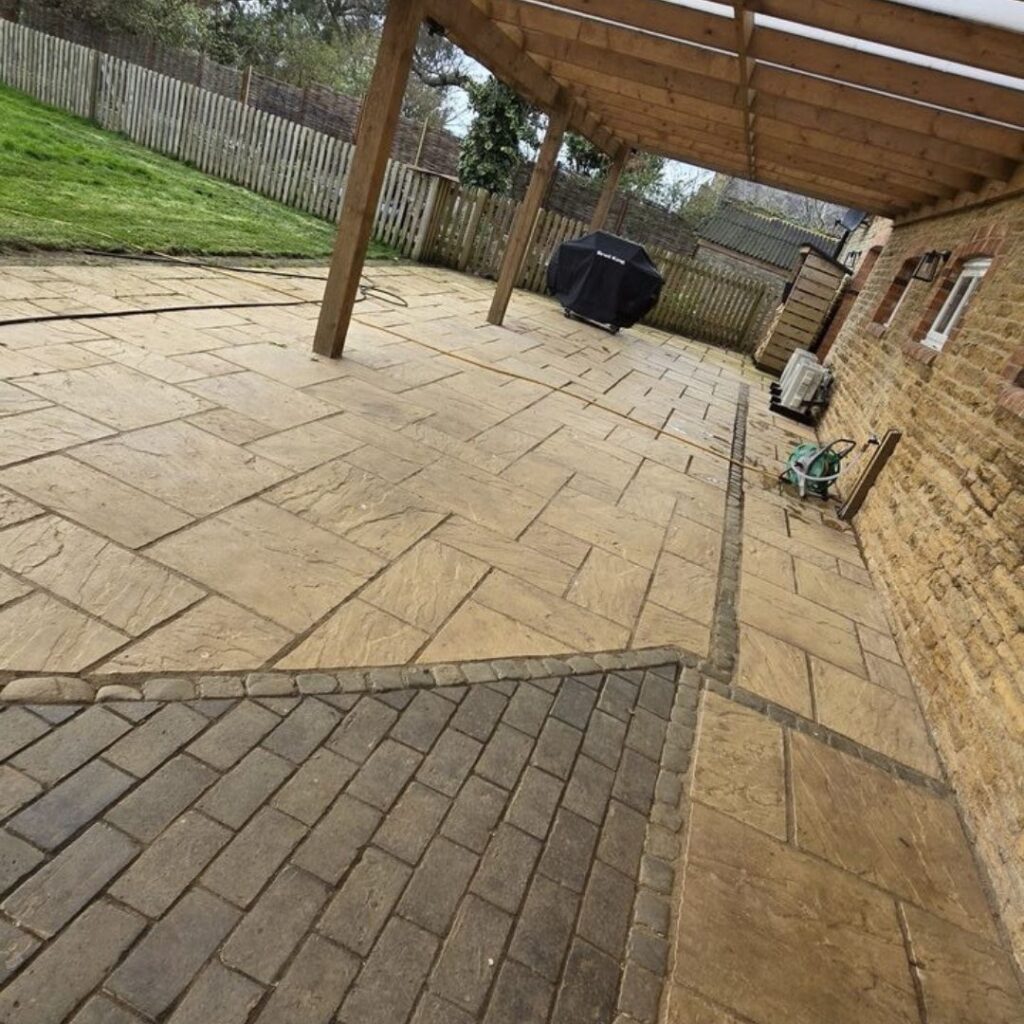
The difference between a driveway that stays clean for three years and one that greens over in eight months is rarely the quality of the wash. It is drainage, shade, surface porosity and what was done at the end of the job. Understanding those four factors makes the whole exercise more predictable. Drainage comes first. Water that lingers on a surface feeds everything that grows on it. Where paving has settled, where a channel drain has silted up, or where a downpipe discharges directly onto a slab rather than into a gully, algae will return regardless of how thoroughly the surface was cleaned. Part of any competent patio cleaning job is identifying those causes and either correcting or reporting them. Shade is the second factor and cannot be altered easily, though it can be managed. A north-facing frontage or an area enclosed by hedging holds moisture for far longer, and those areas need either a shorter cleaning interval or a protective treatment after cleaning. Cutting planting back to improve airflow makes a measurable difference at no cost. Porosity is a property of the material. Concrete and sandstone absorb readily and take longer to dry; granite, porcelain and dense clay pavers shed water and stay cleaner. Knowing which is present determines both method and realistic expectations, and it is why identical treatments on two properties produce different intervals. Finishing determines the rest. Block paving must be re-sanded once dry, with kiln-dried sand brushed diagonally into the joints and worked until they are full. Failing to do this is the commonest shortcut in the trade and it costs the customer far more than the sand. Where sealing is genuinely appropriate — a dry substrate, sound joints, a surface that benefits from it — it slows recolonisation and makes future cleaning easier. Where it is not, saying so serves a customer in Great Bourton better than selling it anyway.
Roof Cleaning Great Bourton
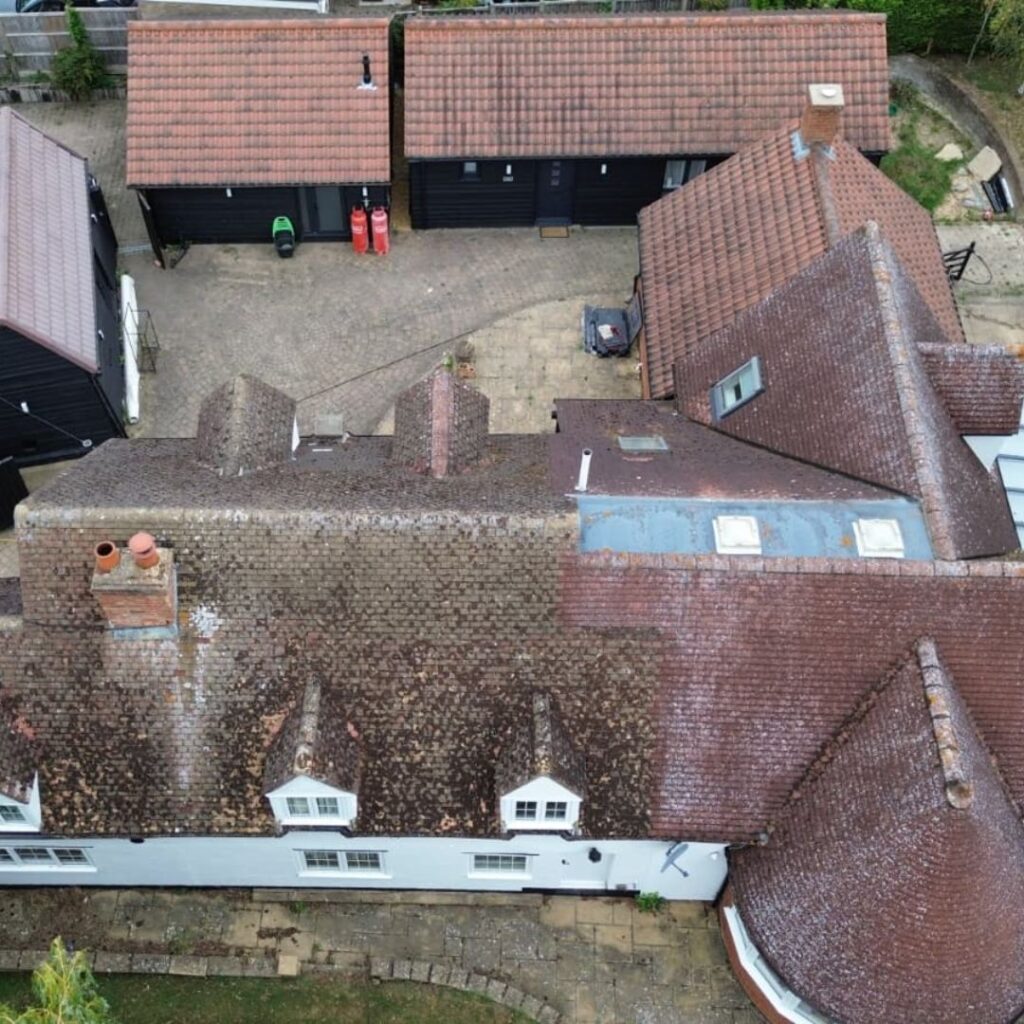
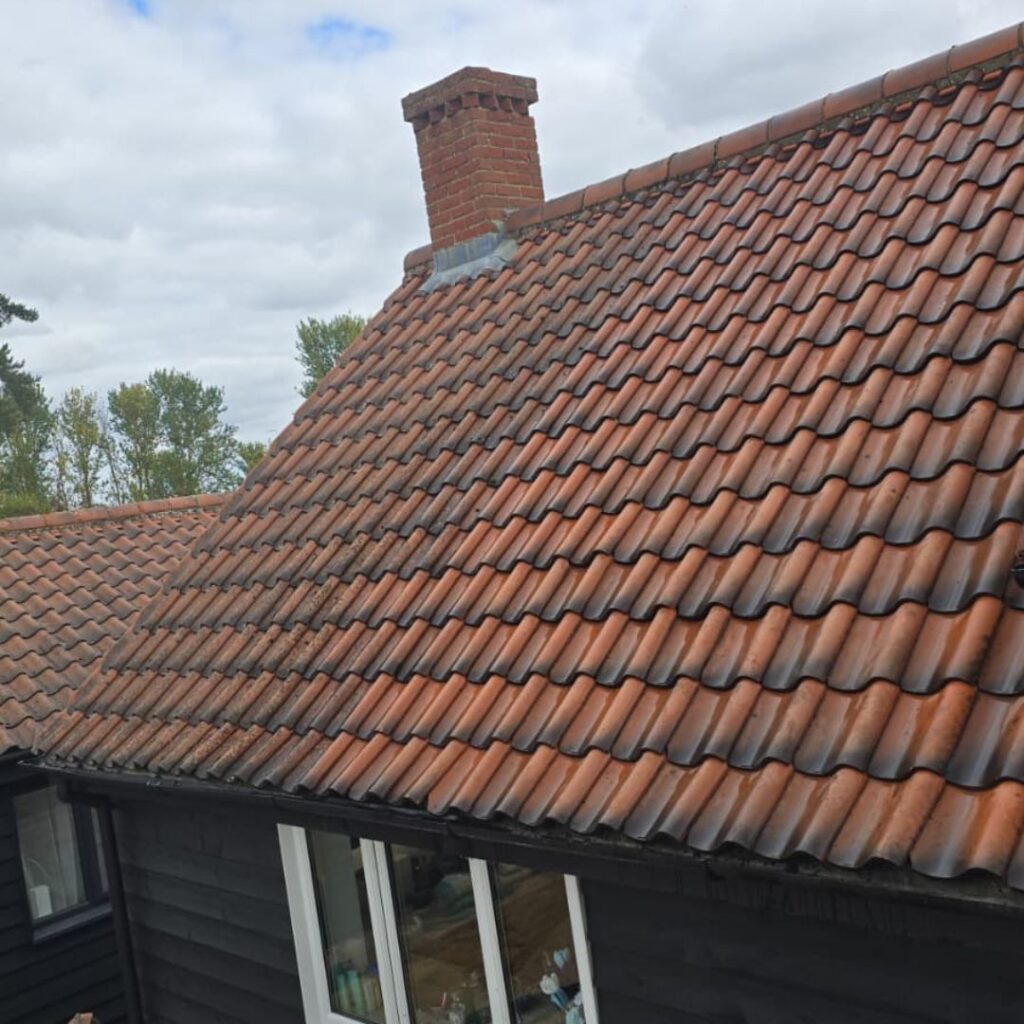
Moss on a roof is not a cosmetic issue with a structural footnote; the structural consequences are the point. A dense mat of growth holds a remarkable quantity of water, and that weight is carried by rafters and battens designed for the covering alone. It bridges the laps between tiles, allowing water to travel sideways and upward by capillary action into places the covering was never intended to keep dry. In frost, water trapped within growth wedged into a joint expands and slowly prises the units apart. What it does to drainage is equally significant. Growth continually sheds into gutters and valleys. A valley partially blocked by moss forces water to spread across the covering rather than run down its centre, and on a heavy fall that water backs up under the tiles at the very point where two roof planes meet. That is a common origin for a leak diagnosed, wrongly, as a failed tile. Correct roof cleaning addresses all of it. Bulk growth is lifted mechanically at low impact, working from the ridge downwards so material falls clear rather than being pushed under the laps. Valleys, gutters and hoppers are cleared as the work proceeds. A biocide is then applied at low pressure and allowed to act over weeks, killing spores at root level so that regrowth is genuinely slowed rather than starting again the following spring. High pressure is never used. On concrete tiles it strips the granular surface layer, leaving porous concrete that colonises faster than before. On clay it damages the fired surface. On slate it drives water under the courses. A roof that has been jetted looks impressive for a season and then deteriorates at speed, which is why the practice persists among contractors who do not return. Roofs around Great Bourton that sit under overhanging branches accumulate growth noticeably faster, and roof cleaning near me searches tend to follow the first heavy autumn.
Solar Panel Cleaning Great Bourton
An array that has never been cleaned rarely looks dirty from the ground, which is the central difficulty. Panels are viewed at an angle, usually from a distance, and a uniform layer of dust, pollen and atmospheric residue is effectively invisible from below while still reducing output measurably. The first indication is normally a drop in generation figures rather than anything visual. The financial case follows from that. A domestic array losing ten per cent of its output to soiling is giving away a proportion of everything it would otherwise generate and, where an export arrangement is in place, a proportion of that income too. Cleaning costs a fixed amount; soiling costs a percentage every day it remains. On a system of any reasonable size the arithmetic favours regular cleaning quite comfortably. Method matters because panels are more fragile than they appear. Solar panel cleaning is carried out with purified, deionised water fed through a telescopic pole to a soft-bristled brush, agitating the glass lightly and rinsing without leaving residue. Deionised water contains no dissolved minerals, so it evaporates clear rather than depositing the spots and film that mains water leaves behind on glass. No detergents are used at any stage, because surfactant residue attracts dust and can affect the anti-reflective coating on the panel surface. Equally important is what is not done. Panels are not pressure washed, are not scraped, and are not walked on. The seal between glass and frame is the vulnerable point, and forcing water at it invites moisture ingress and a failed unit. Metal tools and abrasive pads have no place near the glass. Work is timed for cooler parts of the day so that cold water never meets hot glass. Frame channels are cleared as part of the same visit, since debris caught there holds water permanently and provides a foothold for moss. Systems installed on properties in Great Bourton generally suit an annual schedule.

Our Customers Say Everything there is to know about us
EXCELLENTTrustindex verifies that the original source of the review is Google. Fantastic service through out! Our roof looks brand new! Decided to also get the driveway done after seeing the results of first job and what a difference! All for a reasonable price as well. Definitely highly recommend 5*Posted on GoogleTrustindex verifies that the original source of the review is Google. Brendan of Stewart Exterior Cleaning was superb. He obviously knows a lot about looking after the exterior of a property and when he visited to clean our gutters, he clearly explained what was going on and gave excellent advice for the future. He was also friendly and enthusiastic, and gave us the sense he enjoys his work and taking care of his customers. He also mentioned some of his company's other services such as landscape gardening, which probably explains why he has so much expertise. But as it was winter and just before Christmas when he visited, it wasn't the right time for things for the garden, but we'd like to have him back in the spring, so he's probably got a customer for life now! Thanks so much, Brendan – it's very obvious why your business is thriving and we'll be back in touch in the future!Posted on GoogleTrustindex verifies that the original source of the review is Google. Brendan was very helpful and informative, he was quick and efficient in completing the job while answering any questions I had, I would definitely recommend his servicesPosted on GoogleTrustindex verifies that the original source of the review is Google. Returning customer of Stewart Exterior Cleaning. Brendan did a gutter clear for us recently and came back today to carry out a repair caused by high winds. Very friendly servicePosted on GoogleTrustindex verifies that the original source of the review is Google. Great service, roof looks newPosted on GoogleTrustindex verifies that the original source of the review is Google. Great service, couldn’t be happier with the end result. We initially had Brendan in to pressure wash and re-sand our driveway and after seeing the excellent job he did, we decided to have the roof and gutters cleaned as well. The transformation has completely refreshed our home and added fantastic curb appeal. Reliable, friendly, and great value for the service provided thanks again, Brendan!Posted on GoogleTrustindex verifies that the original source of the review is Google. Excellent job completed by Brendan. Was prompt and went above and beyond - given that there wasn’t a useable tap on sight! Also advised what do do after cleaning with regards to paving slabs. Would highly recommend, very excellent price and top notch service. Thank you BrendanPosted on GoogleTrustindex verifies that the original source of the review is Google. Excellent job done in a most friendly and efficient manner. Would highly recommend Brendan and his company to anybody looking to have their gutters cleared and fascia’s cleaned. Well done Stewart Exterior Cleaning.Posted on GoogleTrustindex verifies that the original source of the review is Google. I spotted Brendan working at neighbours property and asked him for a quote to pressure wash my pathway and patio. We agreed a price and the work was carried out a few days later. Brendon is hardworking, friendly and diligent and I’m very happy with the outcome and overall experience.Posted on GoogleTrustindex verifies that the original source of the review is Google. Fantastic service from Stewart Cleaning Ltd. Great work, tidy and very accommodating. Would definitely recommend and will definitely be using these guys again. Thank you! Noticed my dirty windows and even cleaned them despite it not being part of the booked job! Many many thanks.
Gutter Cleaning Great Bourton
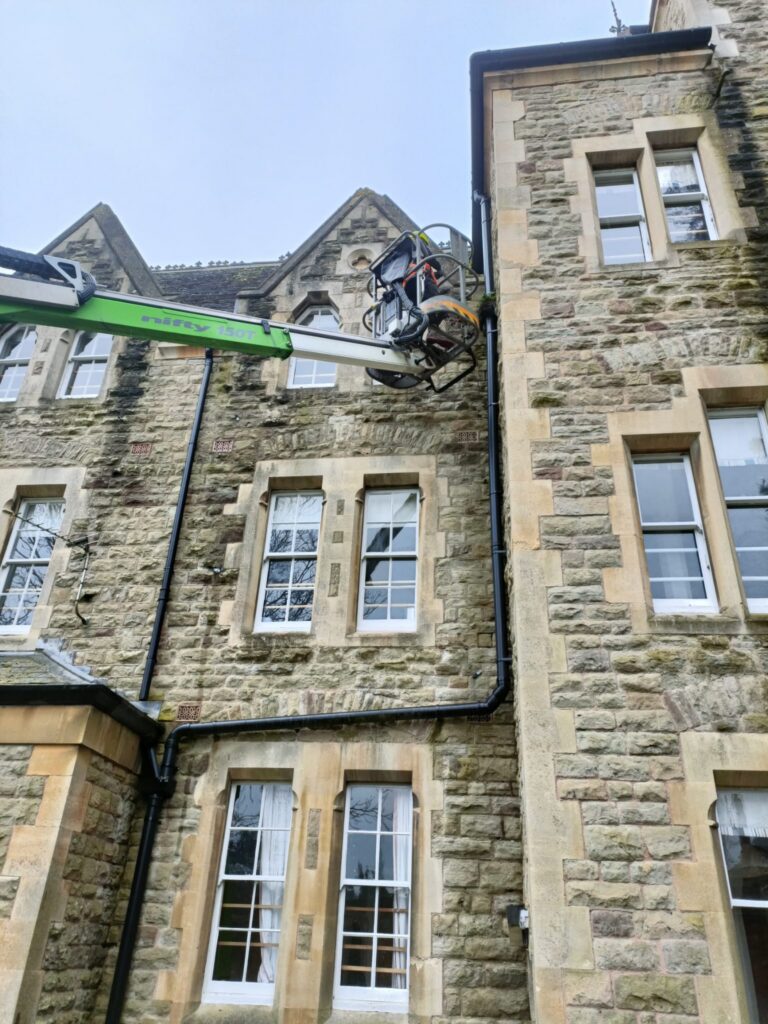
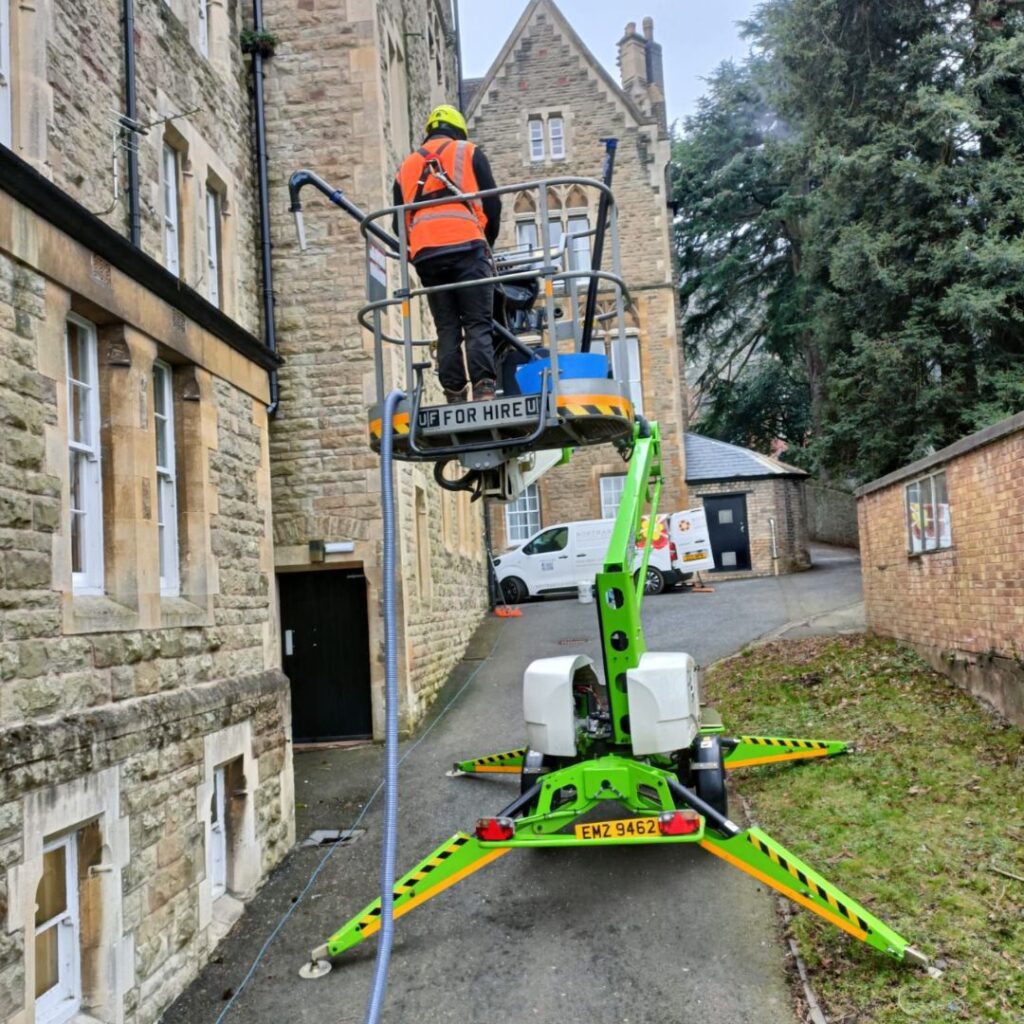
Rainwater goods are engineered to move a specific volume of water away from a building within a specific time, and every part of that system depends on the others. The gutter collects, the outlet transfers, the downpipe carries and the gully or soakaway disposes. An obstruction anywhere along that chain causes failure at the weakest point, which is almost always the joint between gutter and fascia. The consequences develop quietly. Overflowing water saturates the fascia board, which is usually timber behind a uPVC cover, and rot progresses out of sight for years. Water running down an elevation soaks masonry to a depth that internal plaster eventually registers as damp. Where overflow lands on paving, it undermines the bedding and creates a permanently green, permanently slippery strip. In freezing weather, water standing in a blocked channel expands, opens the joints and pushes brackets away from their fixings. Thorough gutter cleaning treats the system as a whole. Debris is drawn out with a high-reach vacuum, pulling compacted moss and silt directly into a sealed drum at ground level so nothing is dropped onto beds or paving below. A camera on the pole head gives a clear view along the run, allowing joint condition, bracket security and residual silt to be assessed properly rather than guessed at from the ground. Downpipes are then flushed individually and clearance verified at the discharge point. Hoppers and swan necks are checked, since these are the classic collection points on older installations and are invisible from below. Where a run has sagged and holds standing water permanently, that is reported, because it will re-block within months no matter how well it has been cleared. Fascia and soffit surfaces are washed while access is in place. The green streaking they carry is a direct product of the overflow, and cleaning it while ignoring the cause simply resets the clock. Properties in Great Bourton with deep eaves and mature planting need this attention most regularly.

Render Cleaning Great Bourton
Render cleaning has a reputation problem, largely because a proportion of the trade still treats a rendered wall as though it were a concrete path. The results are visible on plenty of properties: pale scoured patches where a lance was held too close, exposed aggregate where the finish coat has gone entirely, and dark rings around each cleaned area where the surrounding wall was never touched. None of that is repairable by further cleaning. The reason render is vulnerable comes down to how it is built. Modern systems place their colour and their weather protection in a thin outer layer over a base coat, and the texture of that layer is deliberate. Removing even a fraction of a millimetre changes both the colour and the porosity, so the damaged area weathers differently from that point onwards. Traditional sand-and-cement render has no colour layer to lose but is highly absorbent, and pressure drives water deep into it. Soft washing avoids the problem entirely by replacing force with chemistry. A biocidal solution is applied at very low pressure, thoroughly wetting the surface, and then left to work through the organic growth. The material dies at root level and weathers off over subsequent weeks, so the wall continues to improve well after the visit. Regrowth is slow because the spores have been killed rather than merely displaced. Assessment beforehand prevents the other common failure. Cracks, hollow-sounding sections and perished sealant around openings are identified before any liquid is applied, since a compromised render will take water into the substrate behind it. Where such defects exist, repair is recommended before cleaning rather than after. Preparation covers the rest: windows and doors sealed, planting soaked and sheeted, paving rinsed down as the work proceeds. Homeowners in Great Bourton comparing render cleaning near me should ask directly whether soft washing or jetting is being quoted, and treat any hesitation over that answer as informative.