Exterior Cleaning Great Tew | Pressure Washing Great Tew
- Residential & Commercial Cleaning Specialists
- 5-Star Rated Service & Customer Care
- Eco-Friendly Cleaning Solutions
- Expert Team Covering Great Tew
Get a FREE Quote
Exterior Cleaning Great Tew
A great many decisions get made on site during an exterior cleaning job, and knowing what they are makes it easier to judge whether they are being made well. The first is sequence, and it is fixed rather than optional. Work runs from the highest surface downward, so anything at height is completed before the elevations and the elevations before the ground. Reversing that means finished work is contaminated by run-off from above and has to be repeated. The second is method per surface. Every material gets assessed individually for density, porosity, whether the finish lives in a thin surface layer and whether the joints are sound. Pass all four and mechanical cleaning is appropriate. Fail any and chemistry replaces force. The third is dilution. Biocidal solutions are mixed to suit the substrate, stronger on robust absorbent materials and considerably gentler on thin coatings, and that judgement follows from correctly identifying what the surface is. The fourth is dwell. Chemistry needs minutes rather than seconds, and building that waiting time into the schedule is what allows lower pressures everywhere else. Cutting it short is the commonest reason a good product produces a poor result. The fifth is when to stop. Some surfaces should not be cleaned until a repair has been made, because introducing liquid to a compromised substrate makes matters worse. The sixth is discharge, decided before the first trigger pull rather than during. The seventh is what to do with a finding that changes the job halfway through, and the answer is to stop and discuss it rather than press on or quietly leave it out of the report. Stewart Exterior Cleaning makes all seven decisions explicit rather than by habit. Households in Great Tew searching exterior cleaning near me are entitled to ask how each was decided on their property.
Pressure Washing Great Tew
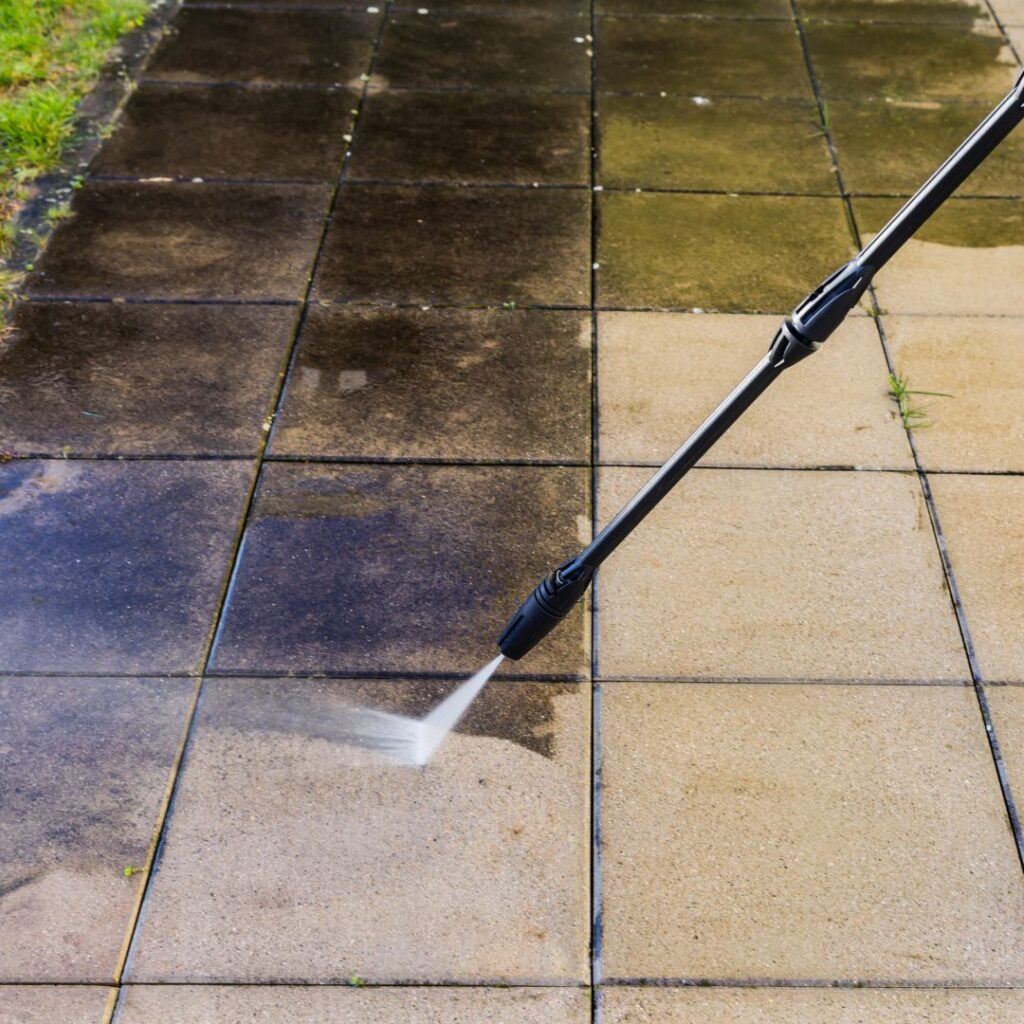
Choosing settings for mechanical cleaning is a sequence of judgements rather than a single dial, and a competent operator makes each one deliberately. Machine selection comes first. Cold or heated, and at what flow. Heat is chosen where oils, rubber, gum or heavy traffic film are present, because it breaks the bond chemically and allows the pressure to be dropped substantially. Flow is prioritised over headline pressure wherever the deposit is silt or biofilm rather than something bonded. Attachment follows. A flat surface cleaner for any open area of paving, because its shroud fixes the distance from the surface and keeps the energy constant regardless of how the operator holds it. A lance for edges, steps and details, matched carefully to the pass the surface cleaner has produced. Nozzle selection then narrows it further. Twenty-five degrees for general hard surface work, forty for rinsing and anything more delicate, and a rotary head where cutting power is needed without allowing the jet to dwell. A zero-degree jet has essentially no legitimate use on a domestic property. Working distance is established on a test area rather than assumed, and it is then held consistently, with passes overlapping by roughly half their width and running in one direction throughout. Pre-treatment is decided alongside all of this, since a biocide or degreaser left to dwell for fifteen or twenty minutes reduces every setting above. Water temperature is settled at the same time, since a heated system is worth the running cost only where the deposit is genuinely oily rather than biological. And the last decision is whether to use the machine at all, which on render, coverings, timber and soft mortar is always no. Anyone in Great Tew booking pressure washing near me should expect each choice explained rather than a single pressure quoted.
Are you based in Great Tew or the Surrounding Areas?
Patio & Driveway Cleaning Great Tew
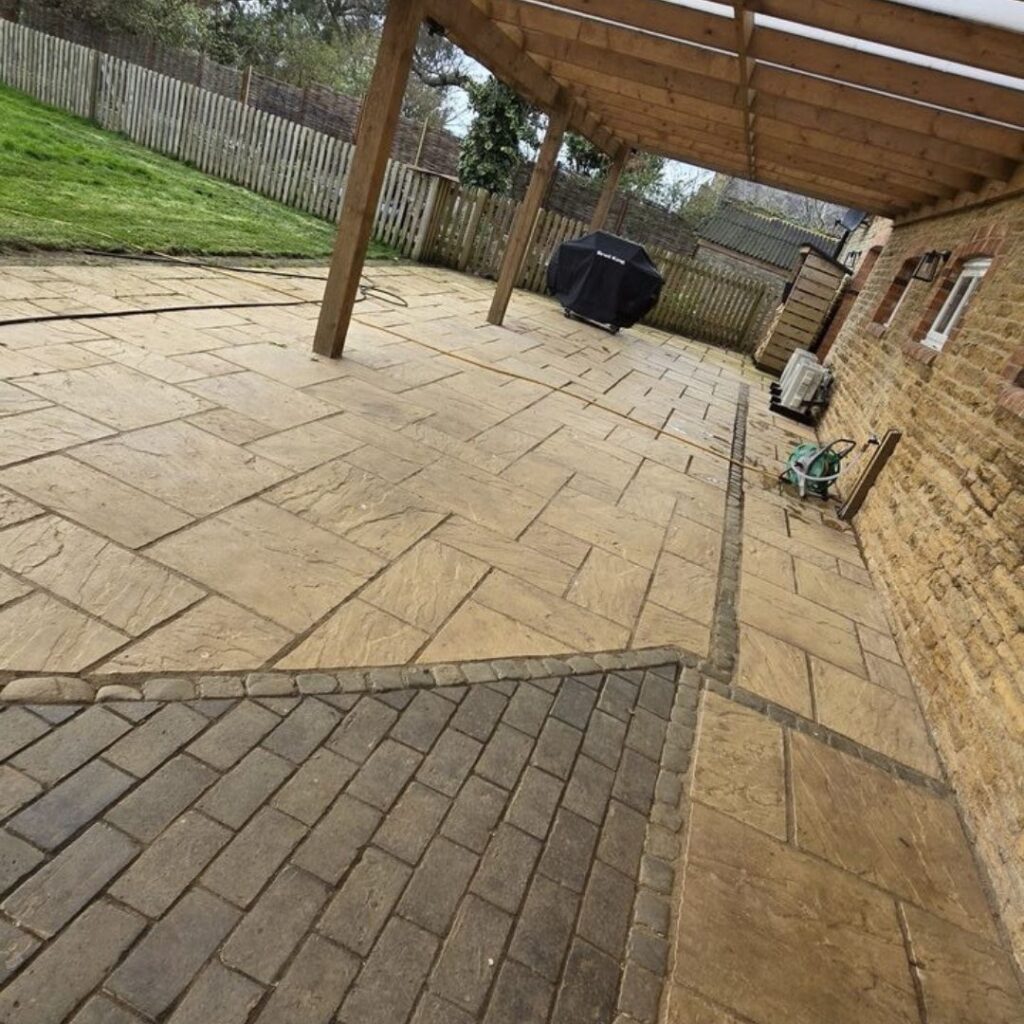
Working out how to treat a driveway involves a series of decisions taken in order, and getting the order right matters as much as the individual choices. Identify the material first. Concrete block, clay paver, natural stone, pattern-imprinted concrete, resin-bound and porcelain all take different pressures, and a property frequently has two or three of them. This single decision governs everything else. Assess the joints second. Full and sound, and the work is a surface clean. Depleted, and a full re-sand is required afterwards. Packed with dark composted material, and mechanical extraction is needed because that is a growing medium rather than dirt. Decide the vegetation strategy third, and do it early. Weeds need a systemic herbicide applied a week or two ahead so the root dies rather than the top, which means this decision has to be taken at survey rather than on the morning of the work. Identify the stains fourth and treat each separately: an emulsifying poultice for oil, a controlled acidic application for rust, an alkaline cleaner for leaf tannin, a biocide with real dwell for red lichen. Plan the drainage fifth. Which drains are foul, which are surface water, which gullies and channels need covering during work and clearing afterwards. Choose the pressure sixth, on a test area, and then hold it. Decide re-sanding timing last, which almost always means returning once the surface has dried thoroughly, since kiln-dried sand will not flow into a damp joint. Whether to clean the adjacent surfaces is a decision worth taking early too, since a freshly cleaned drive meeting an untouched path draws the eye straight to the boundary between them. Sealing, in the cases where it is appropriate at all, comes several dry days later again. Homeowners in Great Tew booking driveway cleaning near me should expect that sequence rather than a single visit.
Roof Cleaning Great Tew
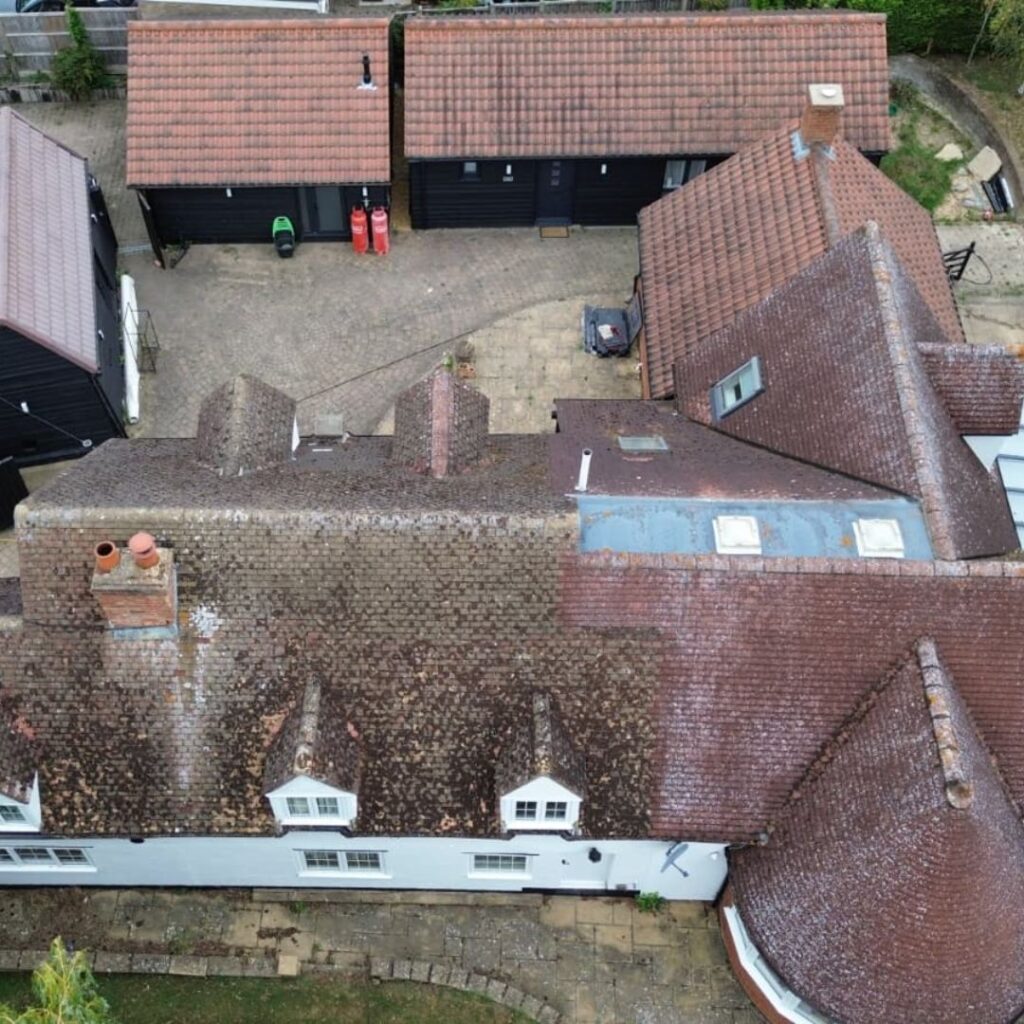
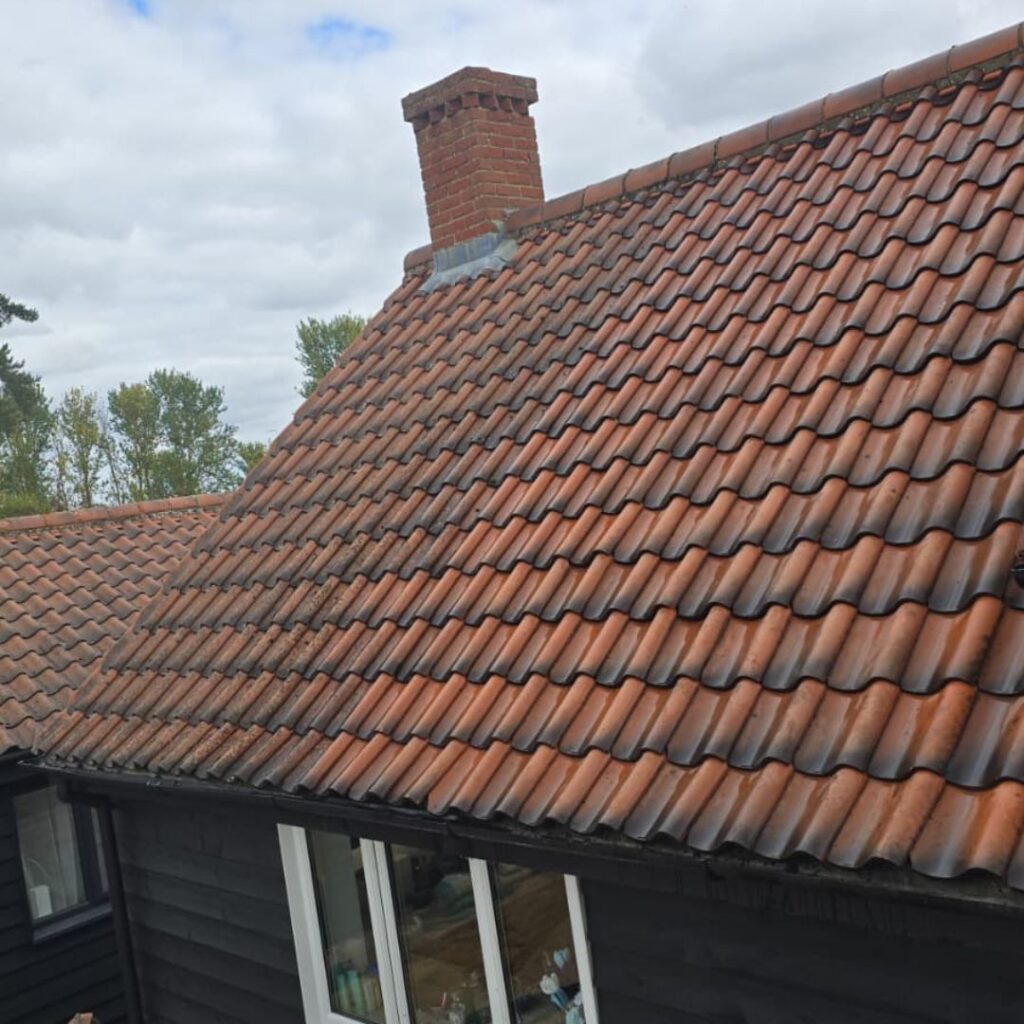
Roof work involves a handful of decisions that have to be made before anyone commits to a price, and each one is consequential. Access is the first and largest. Pitch, height, covering condition and available standing ground determine whether the work is done from a mobile tower, from scaffold with edge protection, from a roof ladder for limited work on a sound covering, or entirely from poles at ground level. Scaffold in particular changes both the cost and the calendar, since it brings an erection visit, a hire period and a dismantling visit. Whether the covering will bear weight is the second, and it is a separate question from access. Fibre cement, old slate with corroding fixings and brittle clay plain tiles are not walked on at all, whatever equipment is available. How much comes off by hand is the third. Light mottling in the laps needs treatment alone. Established moss standing proud of the surface needs substantial mechanical removal with soft-bladed tools, worked downward from the ridge, and produces a considerable volume of material to bag and remove. Biocide strength is the fourth, set to the covering type and the density of growth. Whether to clean at all is the fifth, and the answer is sometimes no. An old covering with corroded fixings and brittle units may be better inspected and left, with the honest recommendation being that money is better spent elsewhere. Parallel gutter clearance is the sixth and is not really a decision, since the volume coming off would block the drainage immediately. What protection is needed below is the seventh, since bulk moss lands on whatever is beneath and conservatory roofs, glazing and planting all need covering or avoiding before a tool touches the covering. Anyone in Great Tew searching roof cleaning near me should expect all seven of these addressed at survey rather than on the day.
Solar Panel Cleaning Great Tew
Solar work involves few decisions, but each of them shapes the visit and one of them can stop it entirely. Whether the array is safe to clean at all is the first of them. Cracked glass, a delaminating backsheet, a scorched cell or a burn mark at a junction box all stop the work immediately, because applying water to a compromised module is genuinely hazardous. That finding is photographed and referred to an installer rather than worked around. The access method is the second decision to settle. Pole-fed cleaning from ground level suits the great majority of domestic arrays and is chosen wherever the geometry allows, since it avoids ladder work at height, avoids loading the covering and keeps operatives away from a live installation. Where an array genuinely cannot be reached, a tower is used rather than a ladder. Standing position is the third and is dictated by firm ground, a clear vertical line to the array and the location of any overhead cable, since carbon fibre conducts. Timing is the fourth. Work happens in cooler parts of the day so that cold water never meets hot glass, and wind is a stopping condition rather than an inconvenience. Water purity is the fifth, checked with a TDS meter rather than assumed, since exhausted resin produces water that will spot the glass exactly as mains supply would. Whether the frame channel needs extra attention is the sixth, and on a first clean it usually does. Whether anything found needs referring on is the seventh, covering loose mounting hardware, chafed cabling and nesting beneath a retrofit array, none of which is touched but all of which is reported. A baseline generation reading is taken before any of it begins. Owners in Great Tew get a measurable result from a short visit.

Our Customers Say Everything there is to know about us
EXCELLENTTrustindex verifies that the original source of the review is Google. Fantastic service through out! Our roof looks brand new! Decided to also get the driveway done after seeing the results of first job and what a difference! All for a reasonable price as well. Definitely highly recommend 5*Posted on GoogleTrustindex verifies that the original source of the review is Google. Brendan of Stewart Exterior Cleaning was superb. He obviously knows a lot about looking after the exterior of a property and when he visited to clean our gutters, he clearly explained what was going on and gave excellent advice for the future. He was also friendly and enthusiastic, and gave us the sense he enjoys his work and taking care of his customers. He also mentioned some of his company's other services such as landscape gardening, which probably explains why he has so much expertise. But as it was winter and just before Christmas when he visited, it wasn't the right time for things for the garden, but we'd like to have him back in the spring, so he's probably got a customer for life now! Thanks so much, Brendan – it's very obvious why your business is thriving and we'll be back in touch in the future!Posted on GoogleTrustindex verifies that the original source of the review is Google. Brendan was very helpful and informative, he was quick and efficient in completing the job while answering any questions I had, I would definitely recommend his servicesPosted on GoogleTrustindex verifies that the original source of the review is Google. Returning customer of Stewart Exterior Cleaning. Brendan did a gutter clear for us recently and came back today to carry out a repair caused by high winds. Very friendly servicePosted on GoogleTrustindex verifies that the original source of the review is Google. Great service, roof looks newPosted on GoogleTrustindex verifies that the original source of the review is Google. Great service, couldn’t be happier with the end result. We initially had Brendan in to pressure wash and re-sand our driveway and after seeing the excellent job he did, we decided to have the roof and gutters cleaned as well. The transformation has completely refreshed our home and added fantastic curb appeal. Reliable, friendly, and great value for the service provided thanks again, Brendan!Posted on GoogleTrustindex verifies that the original source of the review is Google. Excellent job completed by Brendan. Was prompt and went above and beyond - given that there wasn’t a useable tap on sight! Also advised what do do after cleaning with regards to paving slabs. Would highly recommend, very excellent price and top notch service. Thank you BrendanPosted on GoogleTrustindex verifies that the original source of the review is Google. Excellent job done in a most friendly and efficient manner. Would highly recommend Brendan and his company to anybody looking to have their gutters cleared and fascia’s cleaned. Well done Stewart Exterior Cleaning.Posted on GoogleTrustindex verifies that the original source of the review is Google. I spotted Brendan working at neighbours property and asked him for a quote to pressure wash my pathway and patio. We agreed a price and the work was carried out a few days later. Brendon is hardworking, friendly and diligent and I’m very happy with the outcome and overall experience.Posted on GoogleTrustindex verifies that the original source of the review is Google. Fantastic service from Stewart Cleaning Ltd. Great work, tidy and very accommodating. Would definitely recommend and will definitely be using these guys again. Thank you! Noticed my dirty windows and even cleaned them despite it not being part of the booked job! Many many thanks.
Gutter Cleaning Great Tew
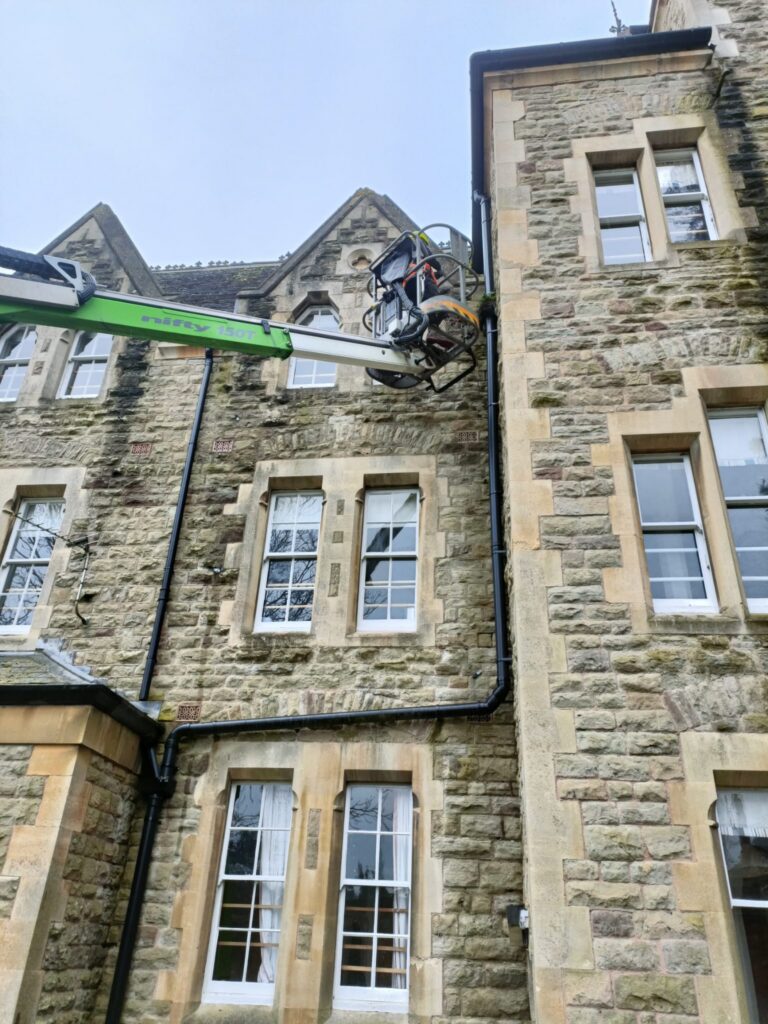
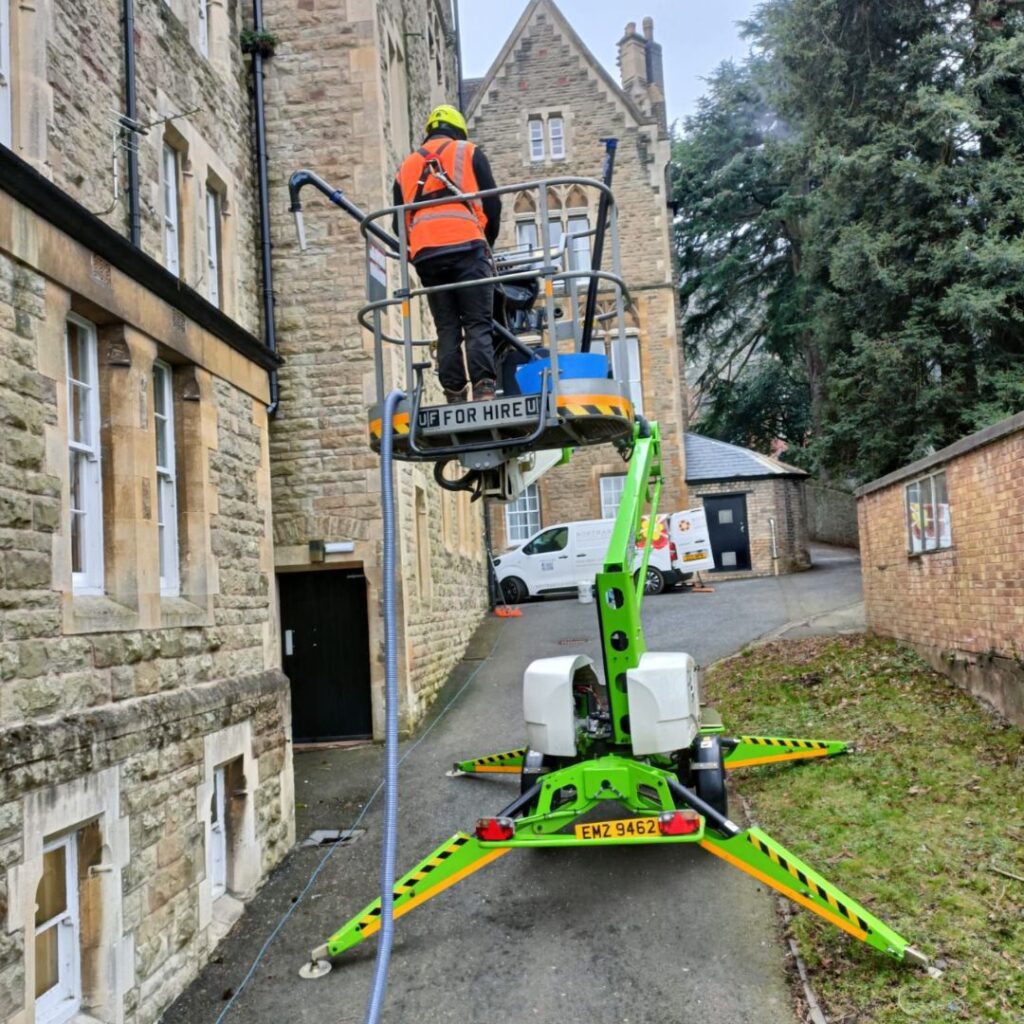
Gutter work involves fewer variables than most exterior jobs, but the decisions that do arise determine whether the clearance holds. Vacuum or hand clearance is the first, and it is settled by looking along the run before touching anything. Loose leaf litter and moderately compacted material comes out under suction from ground level. A deposit that has consolidated over years, particularly one bound by roots, sometimes resists and needs hand clearing from a tower or a properly footed ladder. Standing positions are the second and shape the whole day. Poles need firm level ground with a clear vertical line to the channel, so beds, glazing, conservatory roofs, parked vehicles and overhanging planting all constrain where the work can happen. Overhead cables rule out pole use in their vicinity entirely. The pole configuration is the third decision, since three-storey work needs a longer set that flexes at full extension and is considerably slower to handle. How the material is identified is the fourth. Cast iron needs careful handling around bolted joints sealed with perishing putty. Asbestos cement is identified, reported and left entirely alone for a licensed contractor. Whether a sagging run is worth clearing at all is the fifth. A section that has lost its fall holds standing water permanently and will reconsolidate within months, so the honest answer is often to report it for re-fixing rather than clear it again. Downpipe flushing order is the sixth, working from the highest to avoid pushing material into a pipe already being cleared. Whether one visit or two a year is appropriate is the seventh, decided from tree cover within falling distance and how much moss the roof covering itself is carrying. Camera confirmation of the finished run closes the job. Householders in Great Tew should expect the sagging-run question answered honestly.

Render Cleaning Great Tew
Render work turns on a small number of judgements, and the first of them determines all the others. Identifying the render system correctly is the first decision of all. Traditional sand-and-cement, monocouche, silicone thin-coat, acrylic topcoat or a thin finish over external wall insulation all behave differently and tolerate different concentrations. An insulated system reveals itself at reveals and eaves, where the wall is thicker than the openings suggest, and by a hollow note when tapped. Whether the wall is sound enough to treat is the second question to settle. Cracking, crazing, hollow-sounding sections and perished sealant around openings all admit liquid to the structure behind, and where they are present the recommendation is repair before cleaning rather than after. Dilution is the third judgement and it follows directly from the first two. Stronger on robust absorbent sand-and-cement, considerably gentler on thin acrylic finishes and insulated systems. Whether to run a test area is the fourth, and on coloured or painted render the answer is always yes, since an over-strong mix can bleach the pigment or leave a patch that never blends back in. The application method is the fifth decision: fan tip at low pressure for reachable elevations, pole-mounted lance for gable height, with wind as a stopping condition. Whether the staining has a cause somewhere above it is the sixth. Defined vertical streaks come from a gutter joint, a blocked run or a sill without a drip detail, and treating them without correcting the cause simply resets the clock. Whether a protective treatment is worthwhile afterwards is the last decision, and it applies to genuinely difficult elevations rather than to whole buildings, being most useful where a wall is both shaded and sheltered. Anyone in Great Tew comparing render cleaning near me should ask how each was decided.