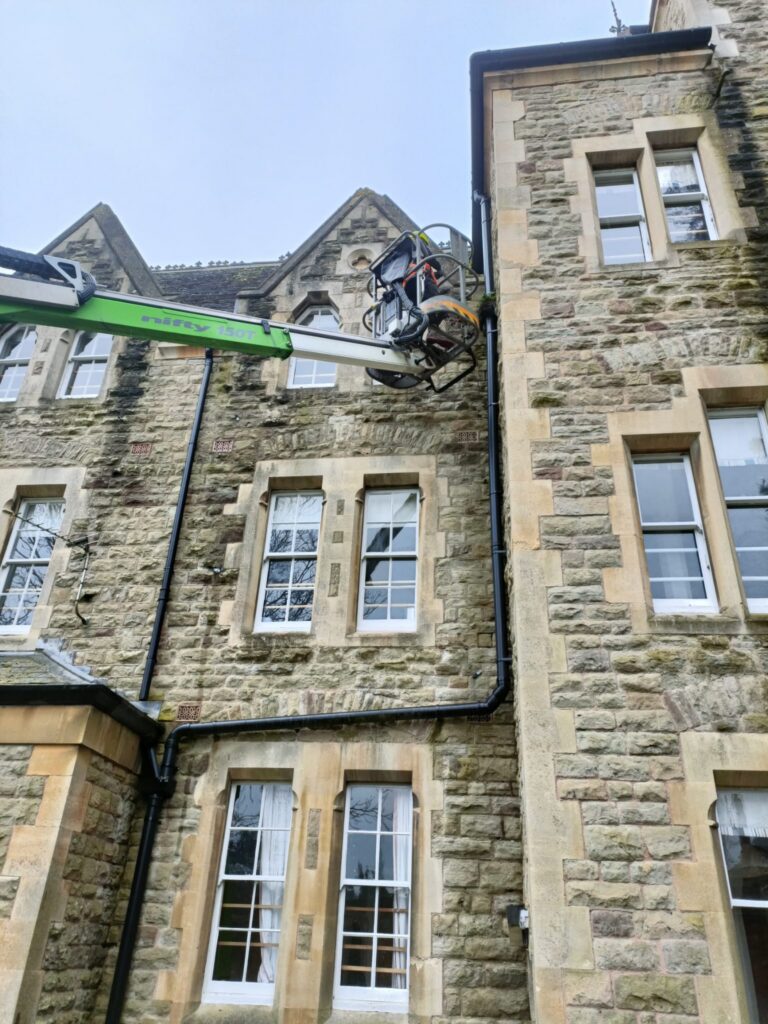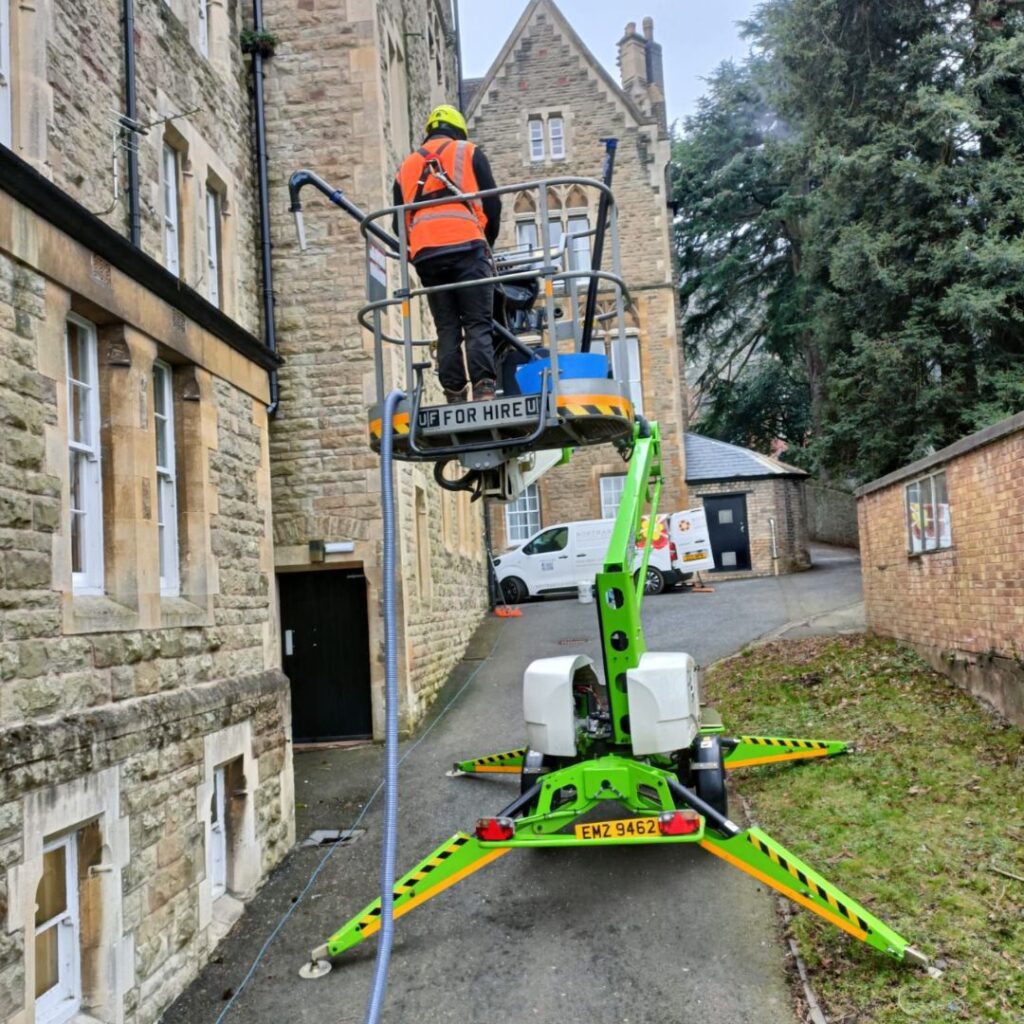
Exterior Cleaning Hampton Poyle | Pressure Washing Hampton Poyle
- Residential & Commercial Cleaning Specialists
- 5-Star Rated Service & Customer Care
- Eco-Friendly Cleaning Solutions
- Expert Team Covering Hampton Poyle
Get a FREE Quote
Exterior Cleaning Hampton Poyle
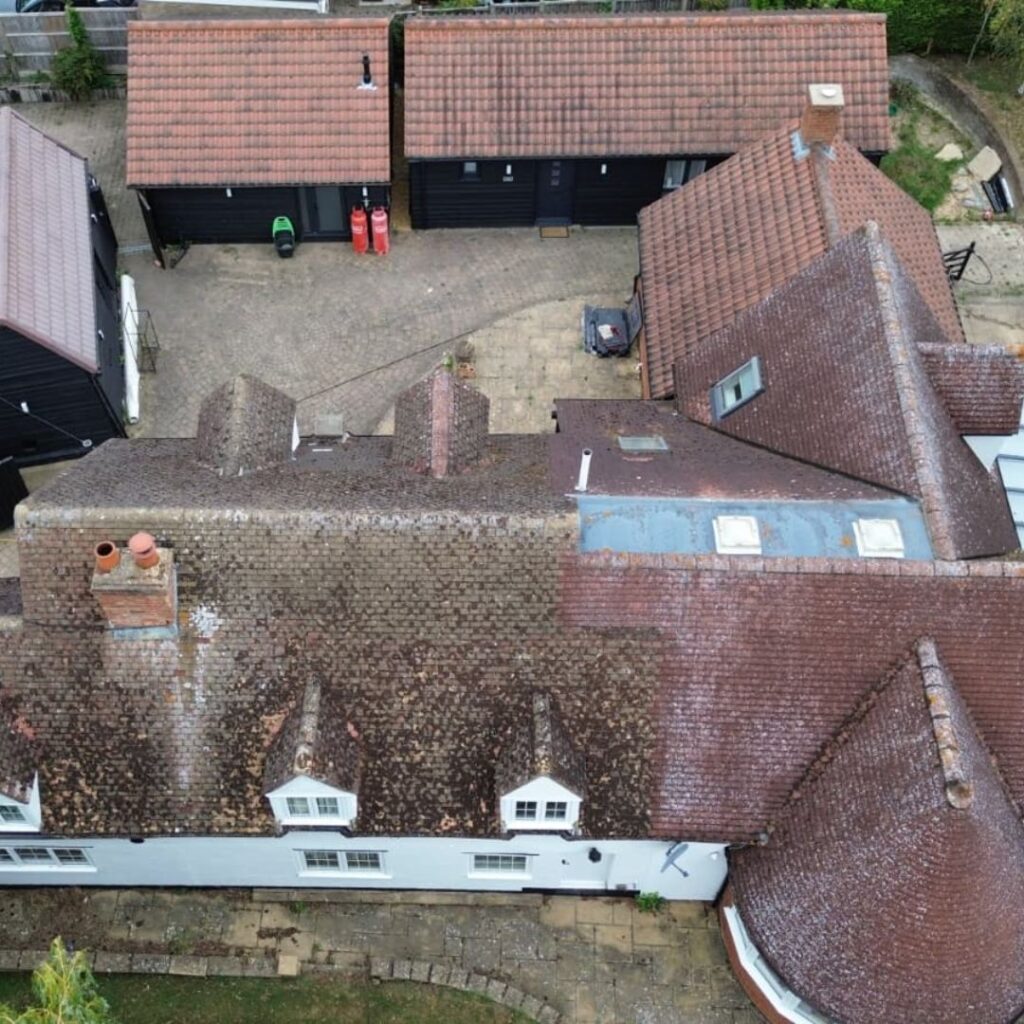
Every surface a cleaning contractor works on is protecting something else, and understanding what lies beneath explains most of the caution involved. Beneath a roof covering sit battens, underlay and rafters, none of which is designed to stay wet. The covering works by keeping water moving fast enough that it never finds its way in, and everything about correct treatment follows from protecting that arrangement rather than from the appearance of the tiles. Behind a gutter sits the fascia board, which is usually timber even where a uPVC cover has been fitted over it, and behind that sit the eaves and the wall plate. Water wicking into that gap rots the timber entirely out of sight, which is why overflow at the back of a channel matters more than overflow at the front. Behind render sits either masonry or, increasingly, insulation board with no rigid substrate at all. The finish is a few millimetres thick in modern systems, and anything that breaches it admits water to a layer that cannot dry. Beneath paving sits a laying course and a sub-base, and the interlock between blocks is what stops load reaching them unevenly. Behind glass on a solar module sit cells and connections that moisture ends. That framing changes how the work is judged. A clean that looks impressive while scouring joints, breaching a finish or driving water past a lap has damaged the thing it was meant to protect, and a treatment that looks unremarkable on the day while leaving every substrate intact has done its job. The visible surface is the part everybody sees and the least important part of the assembly. Stewart Exterior Cleaning works to protect what is underneath. Households in Hampton Poyle searching exterior cleaning near me are buying protection of the structure rather than of the surface.
Pressure Washing Hampton Poyle
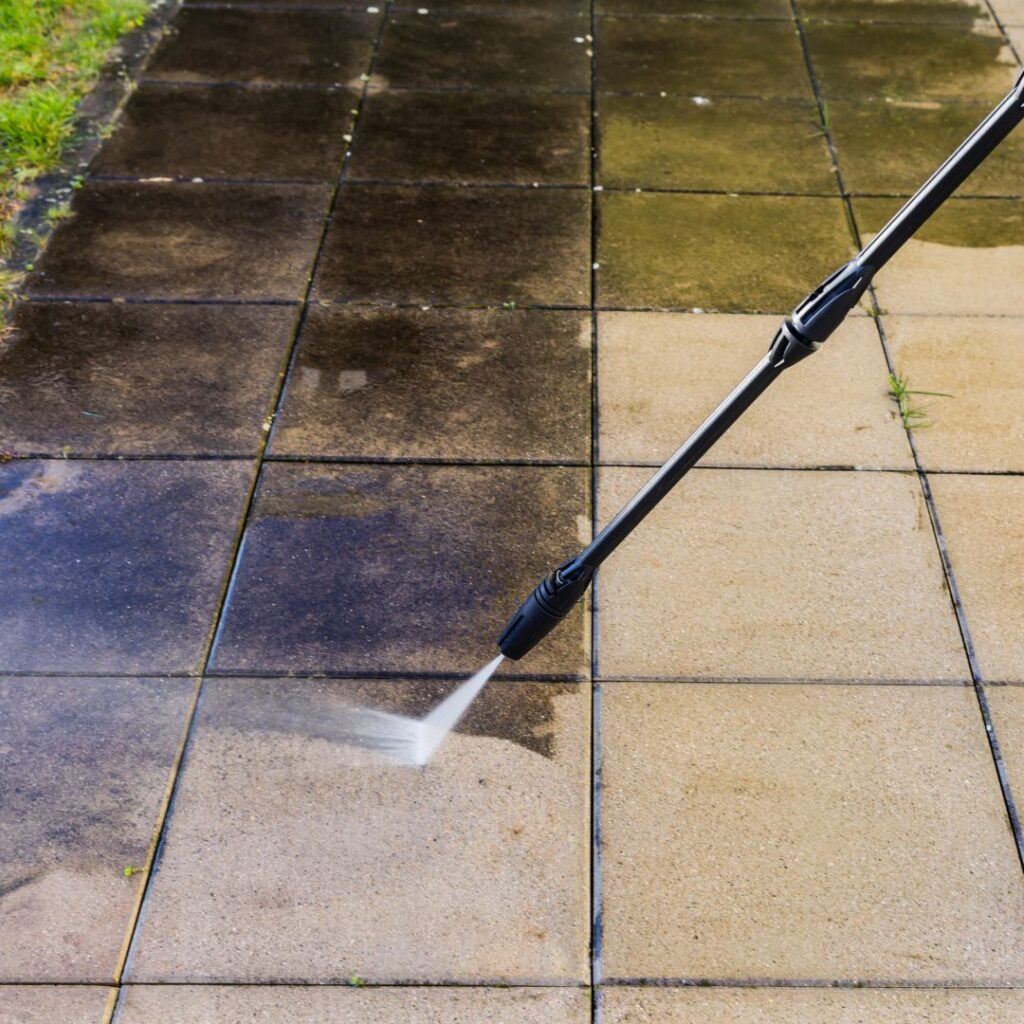
Mechanical cleaning is judged by what happens to the surface, and the more important question is what happens to whatever sits beneath it. Beneath block paving lies a laying course of sharp sand or grit and, below that again, a compacted sub-base. Water reaching those layers is the beginning of every serious paving failure, and the route it takes is through joints that have lost their sand. A pressure washer scouring joints to depth and leaving them unfilled therefore does damage that is invisible on the day and structural within a few years. Beneath a slab patio lies either bedding mortar or a sand bed, and open pointing lets water in directly, after which the slab rocks and the bedding washes out. Beneath older concrete lies steel reinforcement in some cases, and once the surface has spalled and porosity has increased, water reaching steel is a genuine concern rather than a theoretical one. Behind a masonry wall being cleaned at ground level lies the wall itself, and lime mortar washed out of a joint opens a direct route. Around all of it lies drainage, and silt driven into a gully during cleaning ends up in a soakaway or a chamber. The principle running through all of it is that mechanical energy directed at a surface does not stop at the surface. Water forced into a joint, a pore or a lap carries on into whatever lies behind, and the visible result of that arrives months or years later rather than on the day, which is why the connection is so rarely made. Beneath a gravel margin sits a membrane, and driving water at one displaces both the gravel and the layer keeping weeds out of it. Anyone in Hampton Poyle booking pressure washing near me should think about the joints rather than about the surface.
Are you based in Hampton Poyle or the Surrounding Areas?
Patio & Driveway Cleaning Hampton Poyle
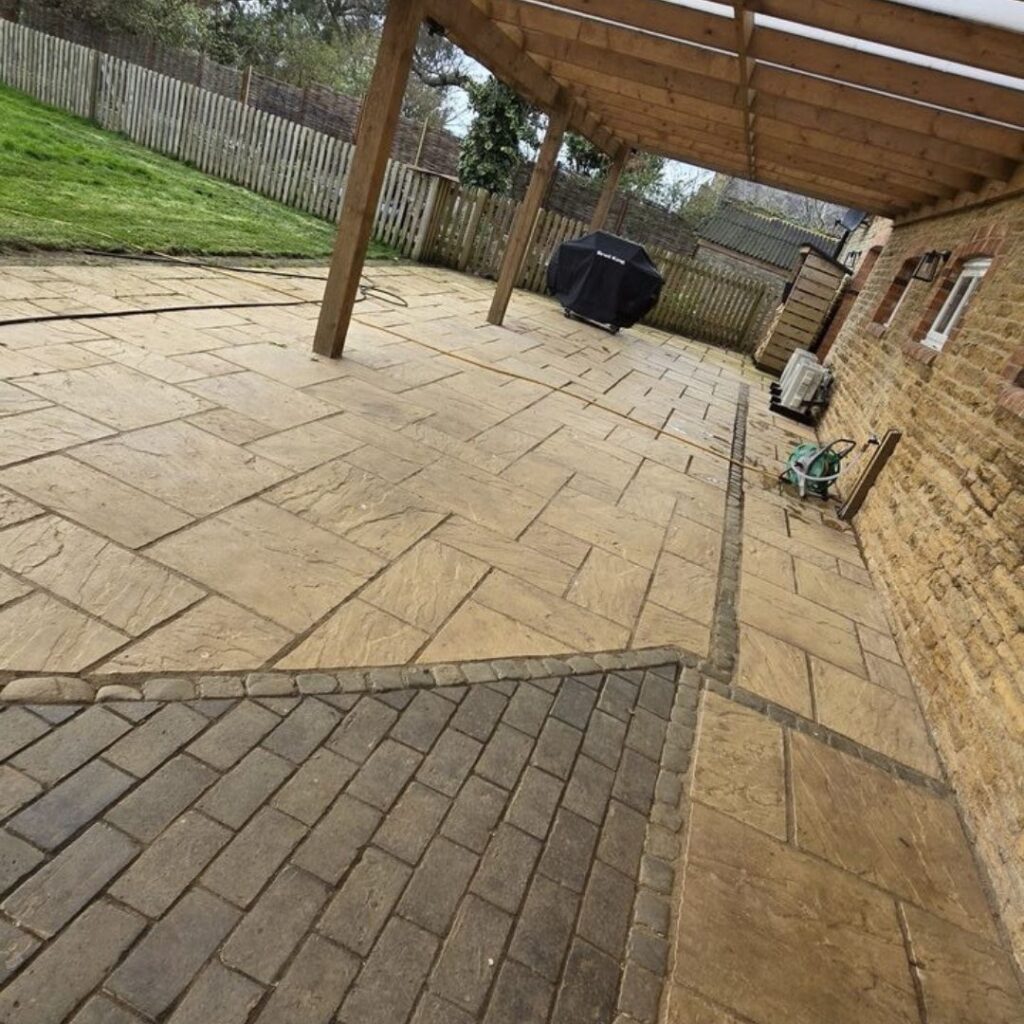
A driveway is a structure rather than a surface, and almost everything worth knowing about maintaining one concerns the parts nobody sees. The blocks themselves are much the least important element of it. They are hard, durable and largely inert, and they will outlast everything beneath them. What gives a block pavement its strength is interlock: load applied to one unit transfers through the jointing sand to its neighbours, so the surface behaves as a single plate rather than as a collection of loose pieces. Sand is therefore structural, and every clean removes some of it. Beneath the blocks themselves sits a laying course, usually of sharp sand or grit, a few tens of millimetres thick and vulnerable to any water that reaches it. Beneath that again sits the sub-base, compacted stone which carries the load and spreads it out. Water reaching it softens it, traffic then deforms it, and once that has happened the surface follows. A depression across a driveway is almost always a sub-base problem rather than a paving one. Around the perimeter sit the edge restraints, and once those move the whole pavement spreads outward. Cleaning addresses none of that directly. Reinstating jointing sand protects all of it. Beneath the whole assembly sits the ground itself, and where a service trench has been backfilled poorly or a soakaway has stopped taking water, the surface above will settle regardless of how well the pavement was built. That is a groundworks matter rather than a cleaning one, and identifying it honestly saves considerable money. Beneath a resin-bound surface sits a base of concrete or tarmac, and the binder holding the aggregate together is the only thing keeping the two connected. Homeowners in Hampton Poyle booking driveway cleaning near me should treat the re-sanding as the structural part of the job.
Roof Cleaning Hampton Poyle
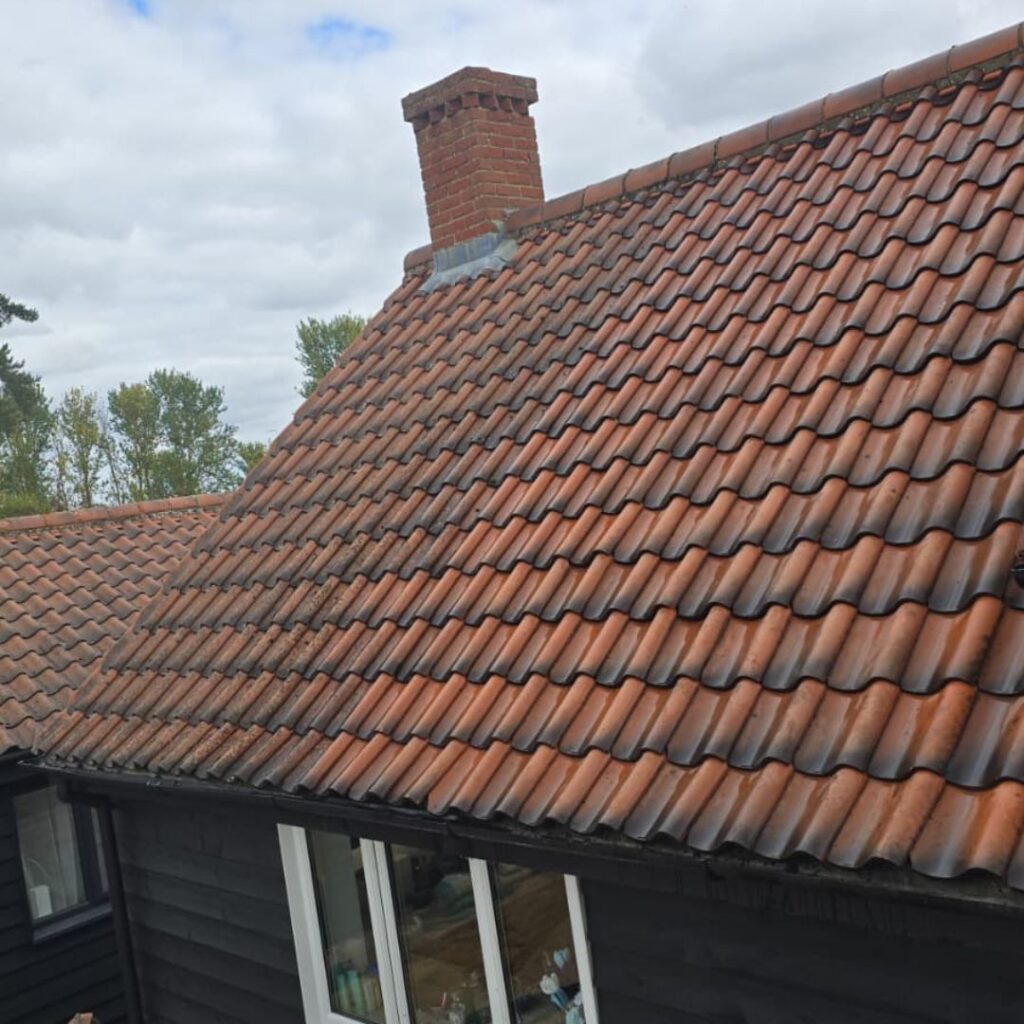
A roof covering is a rain screen rather than a waterproof layer, and understanding that explains why treatment is carried out the way it is. The units between them shed water downward across overlapping courses, and the arrangement works because water never stops moving long enough to be drawn sideways into a lap by capillary action. It was never intended to be sealed and it does not need to be. Beneath the covering itself sits the underlay, a secondary barrier designed to catch whatever gets past and direct it back out at the eaves. It is a second line rather than a permanent one, and a roof relying on it is already failing. Beneath that sit the battens, the timber laths carrying the covering, and beneath those again the rafters themselves. Neither is designed to be repeatedly wetted, and both rot when they are. The whole structure is carrying a calculated load, and a saturated moss mat adds a considerable quantity of water weight that was never part of that calculation. Which is why growth in the laps matters structurally rather than cosmetically, why pressure washing is never used, and why gutters and valleys are cleared in parallel with any treatment. The valleys, flashings and mortar fillets are the details where all of this is most easily compromised, since each is a junction rather than a plain run of covering, and each concentrates water that the plain courses simply shed. That is why they are cleared and inspected properly rather than treated as part of the general area. Above all of it sit the ridge and the verges, closing the assembly against wind-driven rain at exactly the points where the covering is least restrained. Anyone in Hampton Poyle searching roof cleaning near me is protecting the timber rather than the tiles.
Solar Panel Cleaning Hampton Poyle
A solar panel looks like a sheet of glass and is a laminated assembly, which explains why the cleaning method is so restrained. Beneath the outer glass sits a layer of encapsulant, then the cells themselves, then a further layer of encapsulant and finally a backsheet, all bonded together and sealed within an aluminium frame. The seal between glass and frame is what keeps moisture out of that assembly, and once it is breached the module deteriorates from within. Directing pressure at that junction is therefore not a risk to the surface but to the whole unit. The cells themselves are silicon wafers, and they are genuinely brittle. Point loading from somebody standing on a module causes microcracking that does not show visually and appears later as generation that never quite recovers. The glass itself carries an anti-reflective coating applied at manufacture, which exists to maximise light transmission, and abrasive contact or detergent residue both compromise it. Behind the array sits the roof covering itself and, on a retrofit system, an air gap that collects debris and provides ready nesting space. And running between the modules sits cabling carrying direct current whenever there is light on the array. All of which is why the method is water, a soft brush and a pole. The frame itself is part of that assembly rather than a fitting around it, which is why the channel where glass meets frame is cleared with the same care as the glass, and why debris held there against the seal is a maintenance issue rather than a cosmetic one. Beneath the covering itself, on an in-roof system, sits a flashing kit forming the weather detail around the whole array, and disturbing it is a roofing matter rather than a cleaning one. Owners in Hampton Poyle should think of a panel as a sealed assembly rather than as a window.

Our Customers Say Everything there is to know about us
EXCELLENTTrustindex verifies that the original source of the review is Google. Fantastic service through out! Our roof looks brand new! Decided to also get the driveway done after seeing the results of first job and what a difference! All for a reasonable price as well. Definitely highly recommend 5*Posted on GoogleTrustindex verifies that the original source of the review is Google. Brendan of Stewart Exterior Cleaning was superb. He obviously knows a lot about looking after the exterior of a property and when he visited to clean our gutters, he clearly explained what was going on and gave excellent advice for the future. He was also friendly and enthusiastic, and gave us the sense he enjoys his work and taking care of his customers. He also mentioned some of his company's other services such as landscape gardening, which probably explains why he has so much expertise. But as it was winter and just before Christmas when he visited, it wasn't the right time for things for the garden, but we'd like to have him back in the spring, so he's probably got a customer for life now! Thanks so much, Brendan – it's very obvious why your business is thriving and we'll be back in touch in the future!Posted on GoogleTrustindex verifies that the original source of the review is Google. Brendan was very helpful and informative, he was quick and efficient in completing the job while answering any questions I had, I would definitely recommend his servicesPosted on GoogleTrustindex verifies that the original source of the review is Google. Returning customer of Stewart Exterior Cleaning. Brendan did a gutter clear for us recently and came back today to carry out a repair caused by high winds. Very friendly servicePosted on GoogleTrustindex verifies that the original source of the review is Google. Great service, roof looks newPosted on GoogleTrustindex verifies that the original source of the review is Google. Great service, couldn’t be happier with the end result. We initially had Brendan in to pressure wash and re-sand our driveway and after seeing the excellent job he did, we decided to have the roof and gutters cleaned as well. The transformation has completely refreshed our home and added fantastic curb appeal. Reliable, friendly, and great value for the service provided thanks again, Brendan!Posted on GoogleTrustindex verifies that the original source of the review is Google. Excellent job completed by Brendan. Was prompt and went above and beyond - given that there wasn’t a useable tap on sight! Also advised what do do after cleaning with regards to paving slabs. Would highly recommend, very excellent price and top notch service. Thank you BrendanPosted on GoogleTrustindex verifies that the original source of the review is Google. Excellent job done in a most friendly and efficient manner. Would highly recommend Brendan and his company to anybody looking to have their gutters cleared and fascia’s cleaned. Well done Stewart Exterior Cleaning.Posted on GoogleTrustindex verifies that the original source of the review is Google. I spotted Brendan working at neighbours property and asked him for a quote to pressure wash my pathway and patio. We agreed a price and the work was carried out a few days later. Brendon is hardworking, friendly and diligent and I’m very happy with the outcome and overall experience.Posted on GoogleTrustindex verifies that the original source of the review is Google. Fantastic service from Stewart Cleaning Ltd. Great work, tidy and very accommodating. Would definitely recommend and will definitely be using these guys again. Thank you! Noticed my dirty windows and even cleaned them despite it not being part of the booked job! Many many thanks.
Gutter Cleaning Hampton Poyle
Guttering is a cheap component protecting expensive ones, and the whole case for maintaining it rests on what sits behind and below. Directly behind the channel itself sits the fascia board. On most properties this is timber, frequently with a uPVC cover fitted over it during a previous refurbishment, and water wicking into the gap between gutter and board rots it out of sight. By the time anything shows, the timber is usually well gone. Behind and above that fascia sit the soffit, the eaves and the wall plate, which is the timber carrying the roof structure onto the wall. Sustained wetting there is a structural matter rather than a decorative one. Below the run itself sits the wall, taking repeated saturation which in turn supports colonisation, drives damp through to internal plaster and, in frost, opens the surface. Below that sits the paving, developing a permanently wet strip which then throws splash-back back onto the base of the wall. And behind each downpipe sits the same wall once again, quietly wetted by any leaking joint or perished seal along its length. Replacing any one of those costs many times what a clearance does, which is the entire argument. The brackets deserve a mention in the same context, since they are screwed into that fascia board and a softened board no longer holds them. A run that has begun to deflect is frequently telling you about the timber behind it rather than about the weight of the deposit inside it. Beneath the ground-level gully sits a drain run and, on many rural properties, a soakaway, and silt reaching either of those is considerably harder to deal with than silt in a channel. Householders in Hampton Poyle should think of a clearance as protecting the fascia rather than the gutter itself.

Render Cleaning Hampton Poyle
Render is a coating protecting a wall, and what that wall is made of determines everything about how the render should be treated. On a modern cavity-built house, the render sits on an outer masonry leaf with a ventilated cavity behind it, and the wall has some tolerance for moisture. On an older solid wall, the render is the only weather protection there is at all, and the wall depends on being able to dry inward and outward between wettings. That is why lime render is soft and permeable by design, and why coating one with anything impermeable traps moisture in the structure and causes far more harm than any discolouration. On a property with external wall insulation, the situation is different again. Behind a few millimetres of thin topcoat and a reinforced base coat sit insulation boards fixed to the masonry, with no rigid substrate at all. Any breach admits water to a layer with no capacity to dry and no way of getting it out, and the thermal performance the system was installed for is lost. Behind all three of those sits whatever the wall itself is built from, and moisture reaching it is the thing every render system exists to prevent. Which is why the method is chemical, applied at very low pressure, and why a hollow section means repair before treatment. The beads and trims form part of the same protective arrangement, since a bellcast at the base of a panel throws water clear of whatever is below it and a stop bead closes an edge cleanly. Once either is blocked or damaged, water runs where the system was designed to prevent it running. Beneath the finish coat sits the base coat, usually reinforced with a mesh, and exposing it is precisely what a pressure washer does to a wall in a matter of seconds. Anyone in Hampton Poyle comparing render cleaning near me should establish what the wall behind it is actually built from.