Exterior Cleaning Hethe | Pressure Washing Hethe
- Residential & Commercial Cleaning Specialists
- 5-Star Rated Service & Customer Care
- Eco-Friendly Cleaning Solutions
- Expert Team Covering Hethe
Get a FREE Quote
Exterior Cleaning Hethe
Cleaning an entire property is a logistical exercise as much as a technical one, and understanding the practicalities helps a householder plan around it. Time is the first consideration, and it is usually longer than people assume. A full exterior clean on an average house takes one to two days depending on size, access and how much mechanical work is genuinely needed. It is rarely a single continuous session, because block paving cannot be re-sanded until it has dried thoroughly, which usually means a return visit. Chemical treatments on walls and coverings then continue working for weeks afterwards, so the finished result arrives well after the last van has left. Water supply and power are the next questions to settle. A professional machine consumes twelve to fifteen litres a minute, more than many outside taps reliably deliver, so a buffer tank or bowser is often part of the arrangement. Petrol equipment removes the dependence on a socket, which matters where the working area sits some distance from the house. Access is the next item and needs settling well in advance: gates unlocked, vehicles moved, side returns cleared, and somewhere to site a tower or scaffold on firm level ground where one is needed. Sequencing governs the order. Everything at height comes first, then the elevations, then the ground surfaces, so that dislodged material always falls onto areas not yet finished. Reversing that order means redoing completed work. Disruption to the household is modest but genuinely real while the work is going on. Windows stay shut, washing comes in, and cleaned surfaces are out of use until they have dried. Stewart Exterior Cleaning sets all of this out at survey so nothing arrives as a surprise. Households in Hethe searching exterior cleaning near me should ask for the schedule rather than just the price.
Pressure Washing Hethe
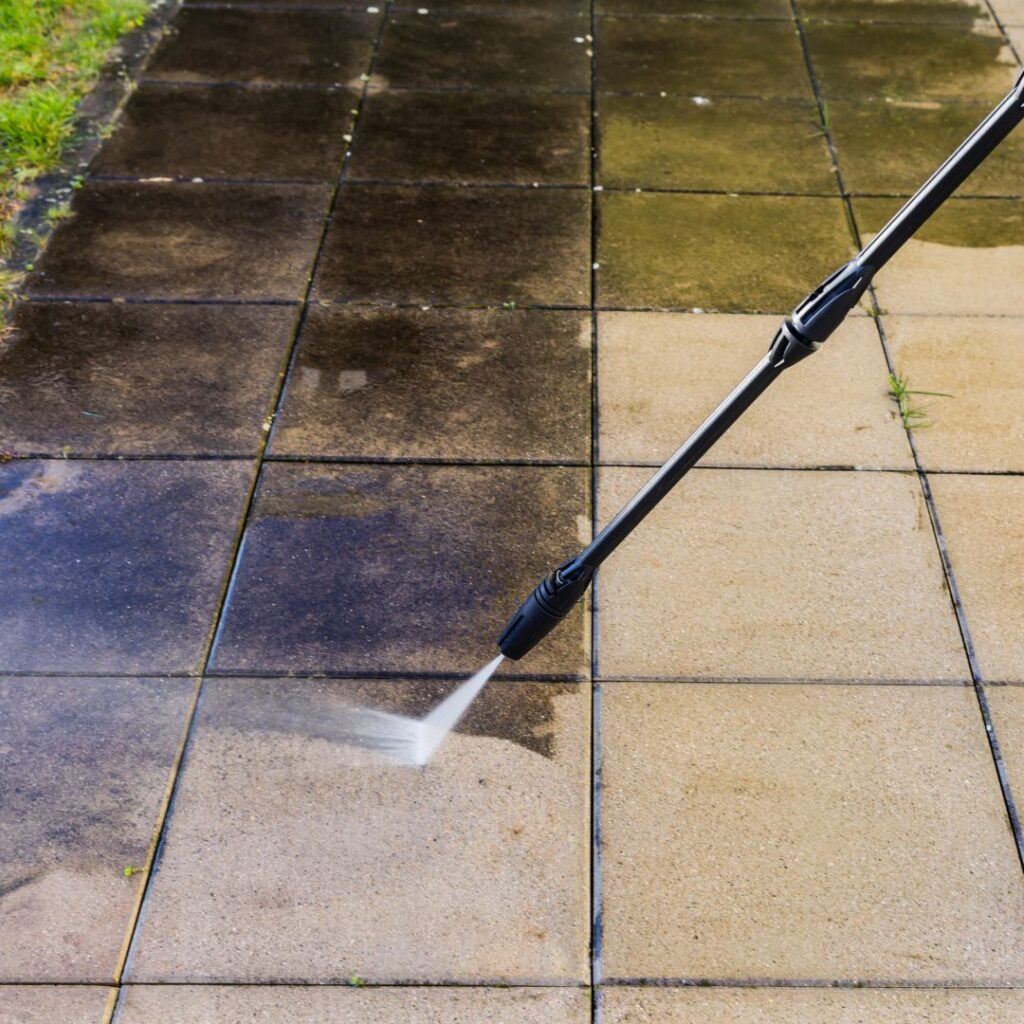
Running a pressure washer properly for a full working day involves more preparation than the machine itself suggests, and the constraints are worth knowing. Water supply governs everything. A professional unit draws twelve to fifteen litres a minute continuously, and few domestic taps sustain that. Running a pump dry, even briefly, damages it, so a buffer tank sits between the tap and the machine to even out the supply, or a bowser is brought where no reliable connection exists. Filling that tank takes time and is factored into the day. Power supply is the second variable to resolve on site. Electric machines need a suitable supply and a residual current device, and long extension runs across wet ground introduce their own problems. Petrol and diesel units remove the dependence entirely, which matters where an outbuilding, a side return or a distant hard standing is being worked on, though they bring noise and exhaust considerations of their own. Hose management sounds like a trivial matter and it is nothing of the kind. Runs are laid to avoid trip hazards, kept clear of anything that will be driven over, and routed so the operator is not repeatedly dragging a hose across a surface just cleaned. Chemical staging affects the rhythm of the day. A pre-treatment needs fifteen or twenty minutes to dwell, which means work is organised in sections so that one area is soaking while another is being rinsed rather than everybody standing about. Discharge is planned before the first trigger pull, into a foul drain or an interceptor, with recovery equipment where neither is available. Weather sets the outer limits: too cold and the chemistry stalls, too hot and it dries before it acts. Householders in Hethe booking pressure washing near me should expect a scheduled window rather than an exact hour.
Are you based in Hethe or the Surrounding Areas?
Patio & Driveway Cleaning Hethe
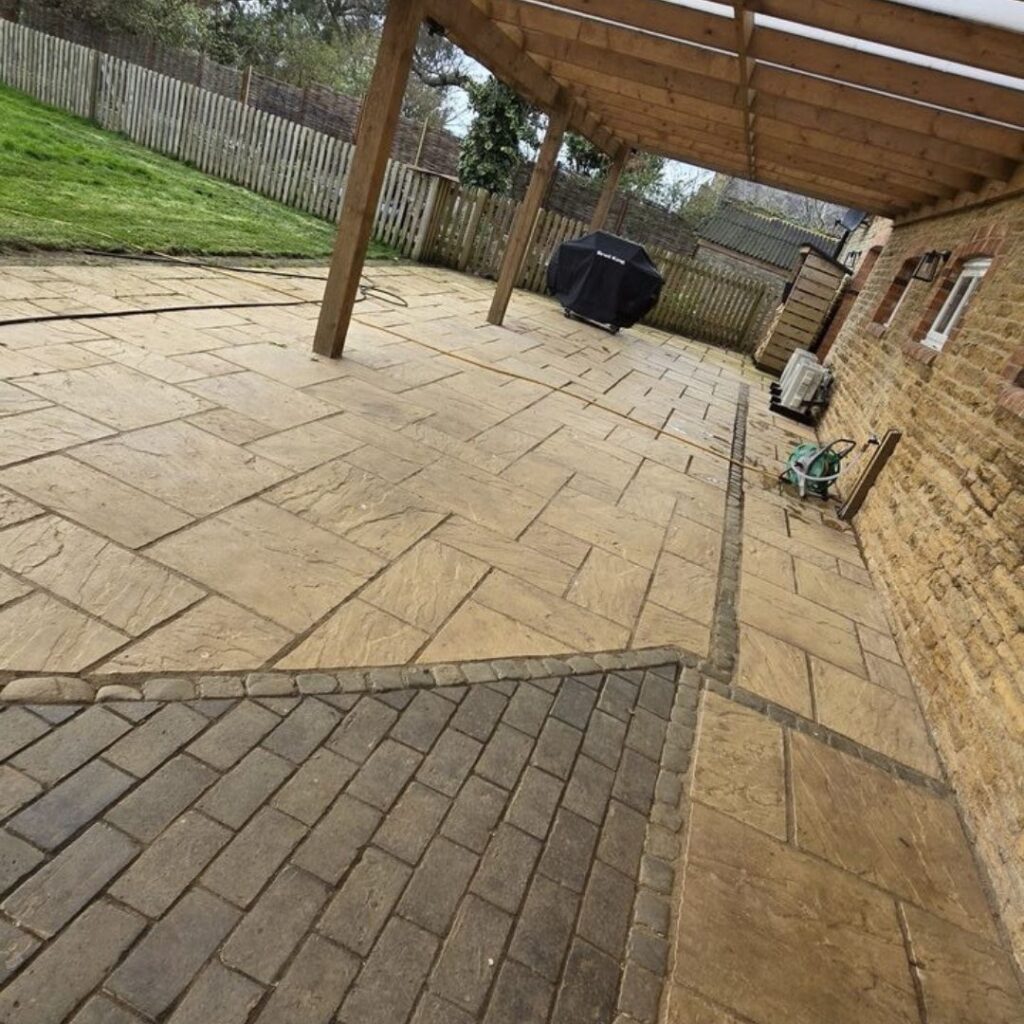
A driveway job is rarely completed in a single unbroken visit, and understanding why prevents a good deal of frustration. The cleaning itself is comfortably the shortest part of the whole exercise. A rotary surface cleaner covers ground efficiently, and a typical domestic drive takes a few hours of actual machine time. What surrounds that stage is where the day goes. Weed treatment happens a week or two before anyone arrives with equipment, since a systemic herbicide needs time to travel to the root and kill the whole plant rather than the visible top. Booking on the day and expecting the weeds to be dealt with permanently is asking for regrowth within weeks. Pre-treatment happens on the day itself but well ahead of the machine, with a biocide or degreaser left to dwell so that the mechanical stage becomes a rinse rather than an extended cut. Specific stains are treated individually and separately: a degreasing poultice for oil, a controlled acidic application for rust, a biocide with real dwell for red lichen. Then, before anything else can happen, the surface has to dry out completely. This is the constraint people underestimate, because kiln-dried sand will not flow into a damp joint — it clumps at the surface and bridges a void underneath. On block paving that generally means returning the following day for the re-sanding, and any contractor filling joints on wet paving has produced something that looks finished and is not. Sealing, in the cases where it is genuinely appropriate, comes several clear dry days after that again. So a properly executed drive spans a fortnight from first treatment to final finish, with perhaps a day and a half of actual attendance. Homeowners in Hethe booking driveway cleaning near me should plan around that rather than expecting one afternoon.
Roof Cleaning Hethe
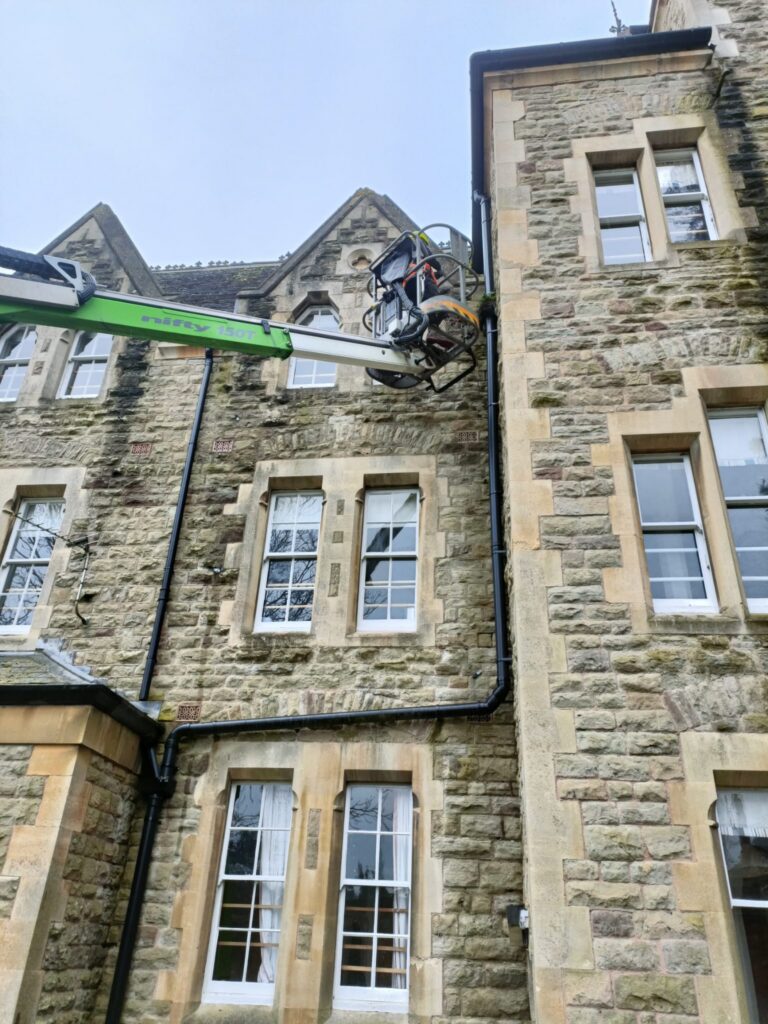
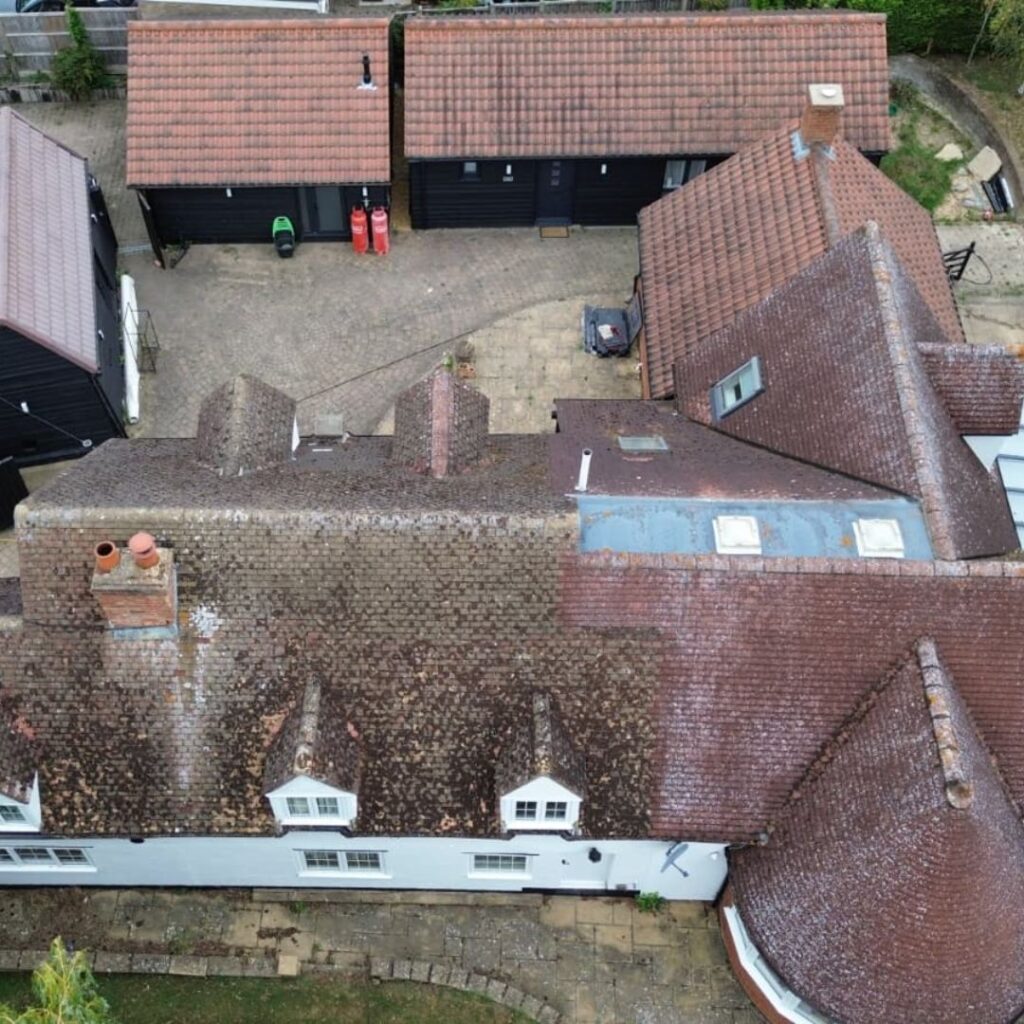
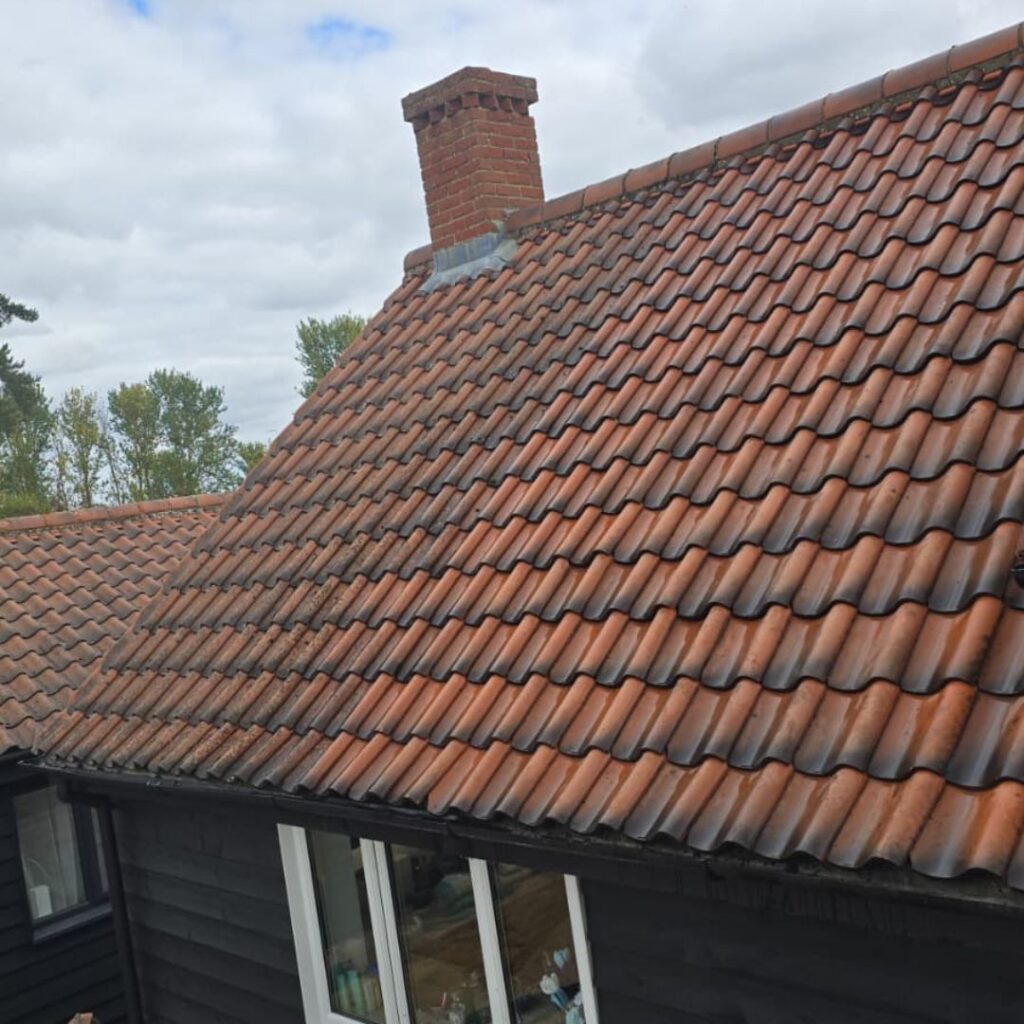
Roof work introduces the largest logistical variable on any exterior job, which is access, and it needs settling before a price means anything. The decision rests on the pitch, the height, the condition of the covering and the ground available alongside. A low-pitched sound covering with firm level standing alongside may be worked from a mobile tower, which one team can erect and move in a morning. A steeper or fragile covering, or greater height, requires scaffold — and scaffold means a separate erection visit, a hire period and a dismantling visit, which changes both the cost and the calendar considerably. Where the covering will bear no weight at all, everything is done from poles at ground level and no access equipment is needed. That decision has to be made from a proper site survey rather than from a photograph sent by email, and the chosen method should be named explicitly in the quotation itself. The ground beneath matters quite as much as the roof above. Towers need firm, level standing with outriggers used as designed, and soft or sloping ground rules them out. Overhead cables set hard limits on where poles can be raised. Conservatory roofs, fragile glazing and planting beneath the working area all need protecting or avoiding. Volume of material is the other practical consideration on the day. Bulk moss from a neglected covering fills sacks rather than buckets, and it lands on whatever is below. Gutters and valleys are cleared in parallel rather than afterwards, since a channel filling with moss through the morning is a blockage by lunchtime. Then the work: hand removal with soft-bladed tools worked downward from the ridge, followed by low-pressure biocide left to act over subsequent weeks. Anyone in Hethe searching roof cleaning near me should have the access method priced explicitly.
Solar Panel Cleaning Hethe
Solar cleaning is the most straightforward job on any property to organise, which is worth knowing when scheduling several pieces of work together. Attendance on site is short by any standard. A domestic array of a dozen or so panels takes well under an hour of actual work, and the equipment is minimal: a deionising vessel, a length of hose, a set of carbon fibre poles and a soft brush head. No scaffold, no tower and, in the great majority of cases, no ladder. Access requirements are correspondingly light. A standing position on firm ground with a clear line to the array, a water connection and enough space to extend poles safely is generally the whole list. Overhead cables are the one hard constraint, since carbon fibre conducts, and wind is a stopping condition rather than an inconvenience. Timing has two considerations. Work happens in cooler parts of the day so that cold water never contacts hot glass, which in summer means early or late rather than the middle. And a generation reading is taken beforehand on a clear day, with a comparable reading afterwards, so the benefit can be measured rather than assumed. Nothing about the visit is disruptive to the household. There is no noise beyond a small pump, no chemicals, no debris to remove and no period during which anything is out of use. The array is generating throughout, since the panels are never covered or isolated. It therefore slots easily alongside other work, and pairing it with a visit already scheduled for something else makes sense. What it should not be paired with is anyone walking on the modules or directing pressure at the frame seals, neither of which happens at any point. Owners in Hethe generally find an annual appointment takes less time than arranging it.

Our Customers Say Everything there is to know about us
EXCELLENTTrustindex verifies that the original source of the review is Google. Fantastic service through out! Our roof looks brand new! Decided to also get the driveway done after seeing the results of first job and what a difference! All for a reasonable price as well. Definitely highly recommend 5*Posted on GoogleTrustindex verifies that the original source of the review is Google. Brendan of Stewart Exterior Cleaning was superb. He obviously knows a lot about looking after the exterior of a property and when he visited to clean our gutters, he clearly explained what was going on and gave excellent advice for the future. He was also friendly and enthusiastic, and gave us the sense he enjoys his work and taking care of his customers. He also mentioned some of his company's other services such as landscape gardening, which probably explains why he has so much expertise. But as it was winter and just before Christmas when he visited, it wasn't the right time for things for the garden, but we'd like to have him back in the spring, so he's probably got a customer for life now! Thanks so much, Brendan – it's very obvious why your business is thriving and we'll be back in touch in the future!Posted on GoogleTrustindex verifies that the original source of the review is Google. Brendan was very helpful and informative, he was quick and efficient in completing the job while answering any questions I had, I would definitely recommend his servicesPosted on GoogleTrustindex verifies that the original source of the review is Google. Returning customer of Stewart Exterior Cleaning. Brendan did a gutter clear for us recently and came back today to carry out a repair caused by high winds. Very friendly servicePosted on GoogleTrustindex verifies that the original source of the review is Google. Great service, roof looks newPosted on GoogleTrustindex verifies that the original source of the review is Google. Great service, couldn’t be happier with the end result. We initially had Brendan in to pressure wash and re-sand our driveway and after seeing the excellent job he did, we decided to have the roof and gutters cleaned as well. The transformation has completely refreshed our home and added fantastic curb appeal. Reliable, friendly, and great value for the service provided thanks again, Brendan!Posted on GoogleTrustindex verifies that the original source of the review is Google. Excellent job completed by Brendan. Was prompt and went above and beyond - given that there wasn’t a useable tap on sight! Also advised what do do after cleaning with regards to paving slabs. Would highly recommend, very excellent price and top notch service. Thank you BrendanPosted on GoogleTrustindex verifies that the original source of the review is Google. Excellent job done in a most friendly and efficient manner. Would highly recommend Brendan and his company to anybody looking to have their gutters cleared and fascia’s cleaned. Well done Stewart Exterior Cleaning.Posted on GoogleTrustindex verifies that the original source of the review is Google. I spotted Brendan working at neighbours property and asked him for a quote to pressure wash my pathway and patio. We agreed a price and the work was carried out a few days later. Brendon is hardworking, friendly and diligent and I’m very happy with the outcome and overall experience.Posted on GoogleTrustindex verifies that the original source of the review is Google. Fantastic service from Stewart Cleaning Ltd. Great work, tidy and very accommodating. Would definitely recommend and will definitely be using these guys again. Thank you! Noticed my dirty windows and even cleaned them despite it not being part of the booked job! Many many thanks.
Gutter Cleaning Hethe
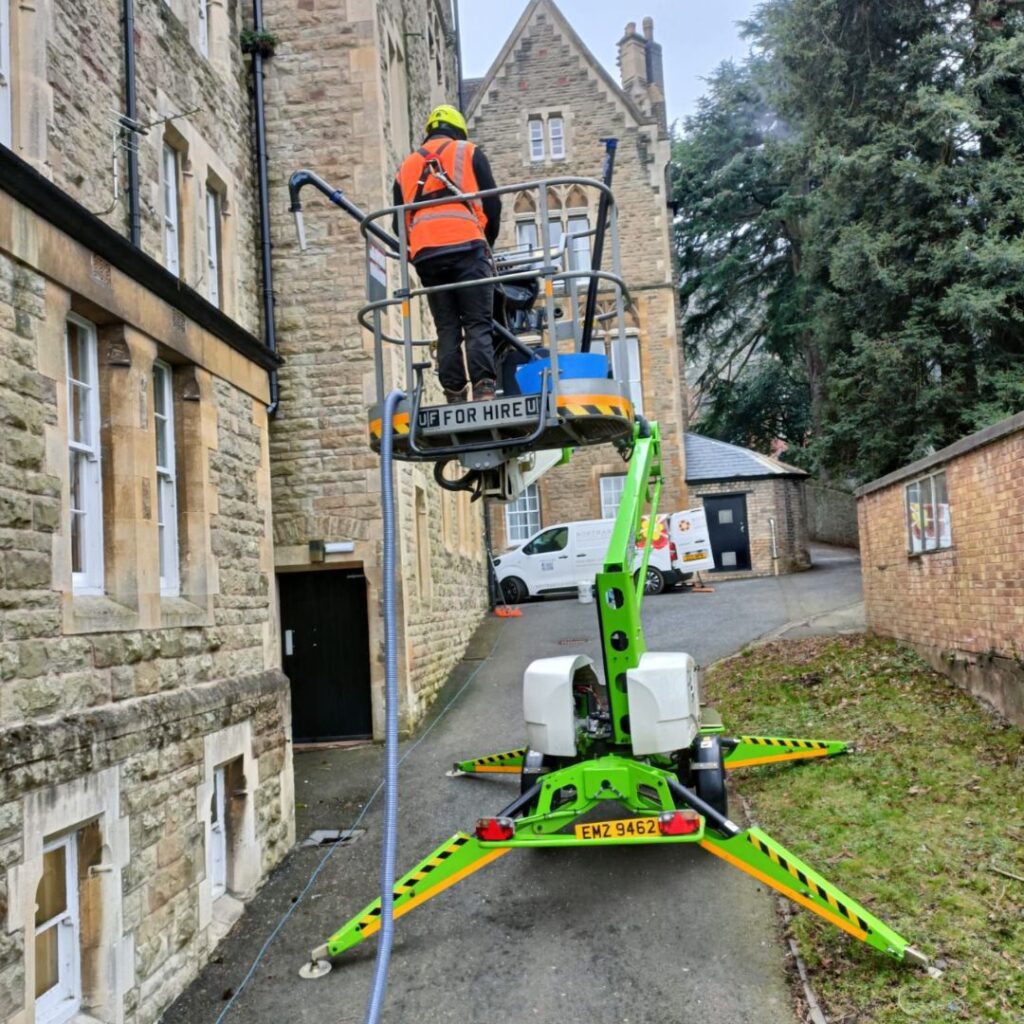
Gutter clearance is quick to carry out and worth a little planning beforehand, mostly around access on the ground rather than at height. Attendance on site is short enough to be unobtrusive: a standard house takes an hour or two with high-reach vacuum equipment, which draws compacted material into a sealed drum at ground level through carbon fibre poles. There is no scaffold, and ladders are used only where a deposit has set beyond what suction will lift. What actually determines the time taken is the availability of standing positions. Poles need firm, level ground with a clear vertical line to the gutter, which means beds, conservatory roofs, fragile glazing, parked vehicles and overhanging planting all shape where the work can be done from. A property with clear access on all four elevations is straightforward; one with a narrow side return, a locked gate or a shrub border tight against the wall takes considerably longer. Overhead cables are the one absolute constraint. Water and power requirements for the work are minimal, though downpipe flushing needs a hose connection and each pipe is run through separately with discharge confirmed at the gully. Locating those gullies beforehand saves time, since one hidden under gravel or beneath a shrub is much easier to find dry than wet. The collection drum needs siting somewhere it can be emptied without carrying wet sludge back through the property, and the material leaves the site in bags rather than going onto a border. Camera inspection adds only a few minutes and produces the findings that genuinely make the visit worthwhile: joint condition, bracket security, sagging runs and residual silt, all photographed. Two visits a year suit properties with mature trees nearby, and a single annual visit where there are none. Households in Hethe should unlock side gates before the appointment.

Render Cleaning Hethe
Render cleaning is quick on site and slow to finish, and that gap between attendance and result is the thing worth planning around. Attendance on site is modest in relation to the result. A full elevation, or in many cases a whole house, is soft washed within a day. The equipment is compact: a low-pressure pump running at well under a hundred pounds per square inch, a hose reel, a fan tip and a pole-mounted lance for reaching gable height from the ground. No scaffold is needed in the great majority of cases, and no ladder work at height. Preparation of the surroundings takes a meaningful share of that day. Beds adjacent to the elevations are soaked thoroughly and sheeted, windows and doors sealed, external electrics masked, and any pond or water feature protected. A test area on an inconspicuous section confirms the dilution before the main application, which matters particularly on coloured or painted finishes. The application itself is unhurried but it is not a lengthy business. The solution is then left in place rather than rinsed off, which is where the timescale opens up: growth dies at root level over the following weeks, loses adhesion and weathers off in rain and wind, so the wall lightens progressively for a month or more. That gap has a straightforward practical consequence for scheduling. Work booked six weeks ahead of photographs, a viewing or an event produces the intended result; work booked six days ahead produces a damp wall. Access requirements are light — a standing position on firm ground with a clear line to the elevation, and a water connection. Wind stops pole work outright rather than merely slowing it. Anyone in Hethe arranging render cleaning near me around a deadline should count backwards by six weeks rather than by six days.