Exterior Cleaning Kiddington | Pressure Washing Kiddington
- Residential & Commercial Cleaning Specialists
- 5-Star Rated Service & Customer Care
- Eco-Friendly Cleaning Solutions
- Expert Team Covering Kiddington
Get a FREE Quote
Exterior Cleaning Kiddington
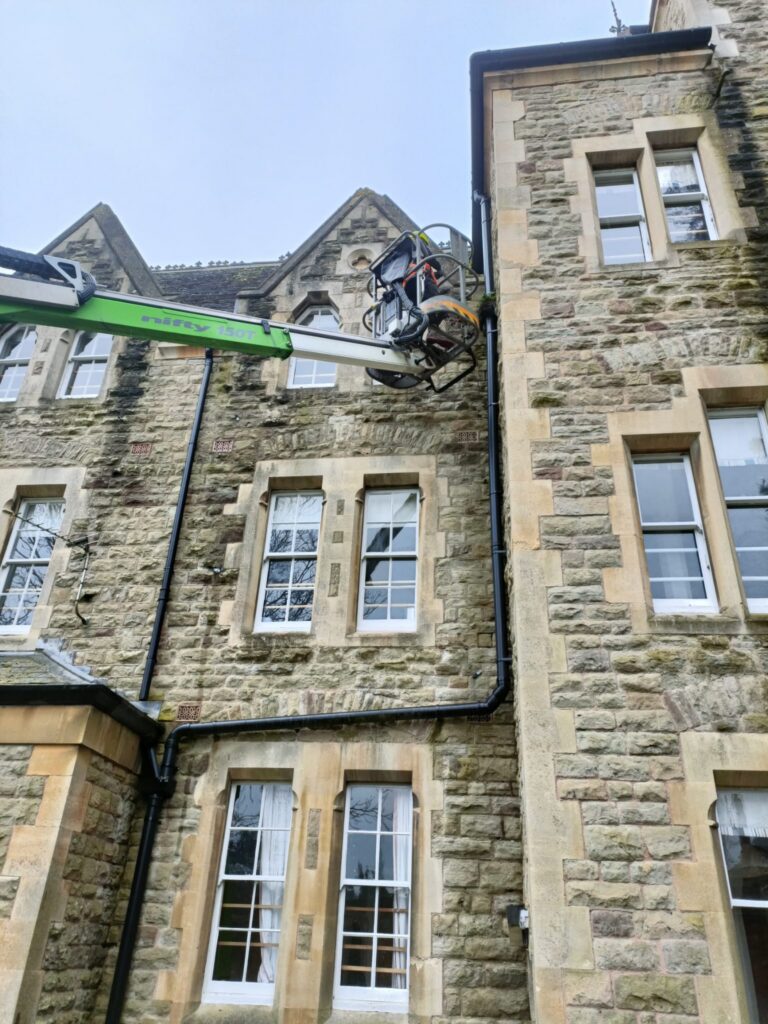
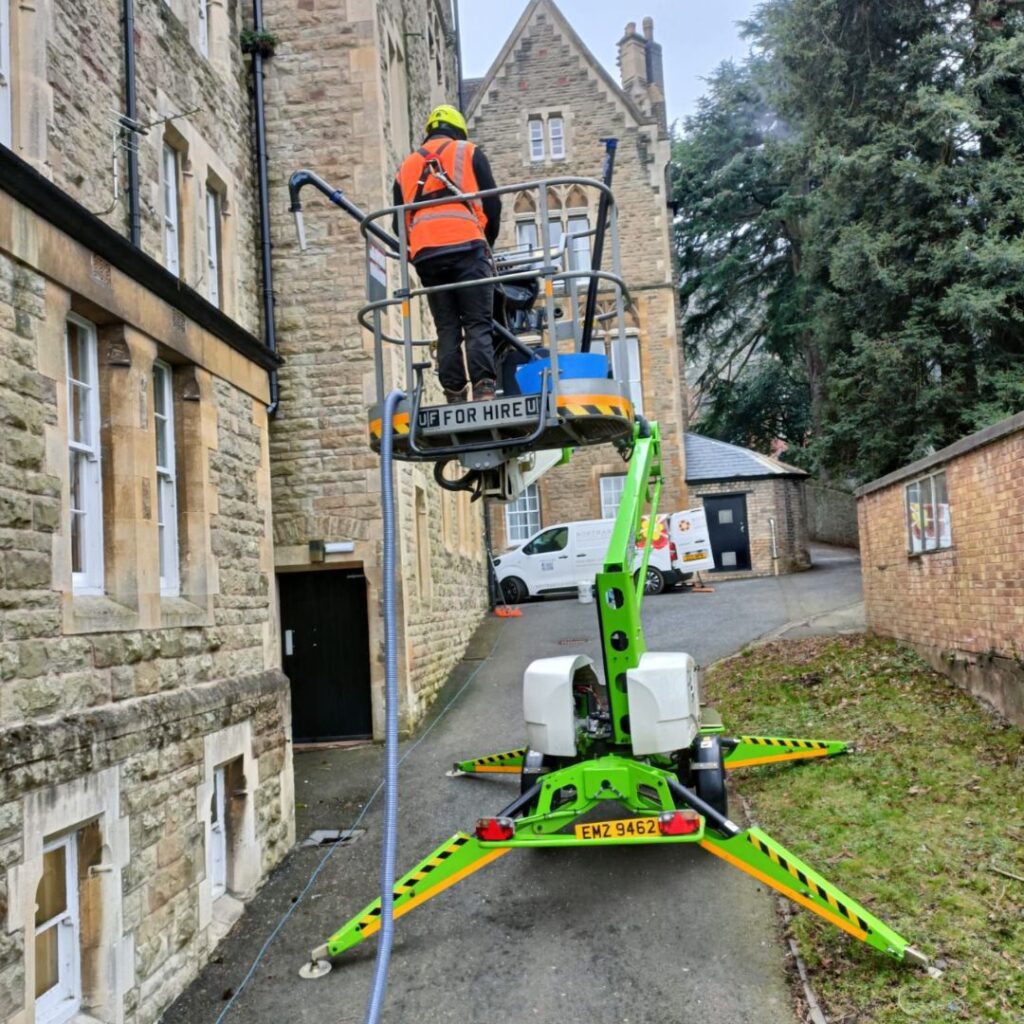
Getting to a surface safely is the largest single variable in exterior cleaning, and the four ways of doing it have quite different applications. Pole systems are the default wherever they will reach. Carbon fibre poles carrying a brush, a suction head or a low-pressure lance allow glass, panels, rainwater goods, fascias and elevations up to gable height to be worked entirely from the ground, which removes falls from the equation altogether. Their limitations are wind, which makes a pole at full extension unmanageable, and overhead cables, which are an absolute constraint since carbon fibre conducts. Mobile towers suit work needing hands rather than reach. Hand removal on a covering, close inspection of ridge bedding or a flashing, and anything requiring judgement at close range all need an operator up there. Towers demand firm level standing with outriggers used as designed, and soft or sloping ground rules them out. Scaffold is for height, duration or a fragile covering. It is expensive, brings an erection visit, a hire period and a dismantling visit, and it is the only defensible option on a steep roof or where several days of work are involved. Ladders have a narrow legitimate use: short-duration work on sound surfaces with firm footing, never reached sideways from and never with a lance in hand. The choice between them is rarely about preference. Ground conditions, the condition of the covering, the duration of the work and what sits beneath the working area all narrow the options before anyone expresses an opinion, and a contractor who arrives intending to use one method regardless has already stopped assessing the property. Where the decision affects the price substantially, as it does whenever scaffold is involved, it belongs in the quotation rather than in a conversation on the morning. Stewart Exterior Cleaning names the method in the quotation rather than deciding on the day. Households in Kiddington searching exterior cleaning near me should expect that decision explained.
Pressure Washing Kiddington
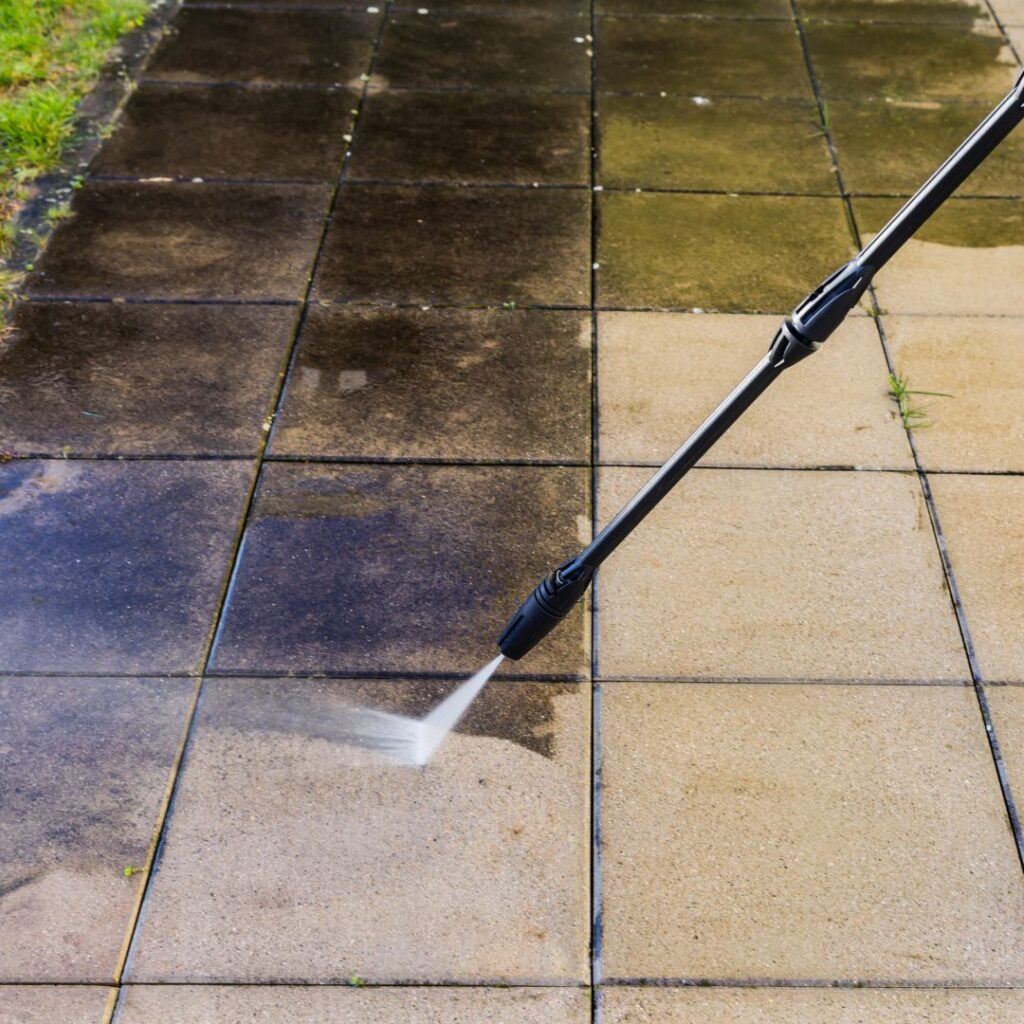
Mechanical cleaning is almost entirely ground-level work, and where it is not, the access decision changes the job considerably. Most hard landscaping needs no access equipment at all, which is why it is generally the most straightforward element on a property to price. The complications are elsewhere. Steps and terracing are the first. A change of level means the operator is working above or below the surface being cleaned, and holding a consistent working distance and angle across a riser is harder than across a flat run. It is done from the ground, carefully, rather than from anything raised. Retaining walls and low boundary walls are the second and are usually within reach, though a lance angled upwards throws spray back at the operator and across everything behind them. Elevations above single-storey are where the question arises properly, and the answer is generally that a pressure washer should not be going up there anyway. Masonry above ground level is soft washed rather than jetted, delivered through a pole-mounted lance at low pressure. Where mechanical work genuinely is needed at height — a hard standing on a terrace, a flat area above a garage — a tower is used rather than a ladder, since recoil from a lance and a ladder are a poor combination and account for a proportion of injuries in the trade. The reason matters as much as the rule. A lance at working pressure pushes back hard enough to unbalance an operator, and an unbalanced operator on a ladder with wet rungs and a running machine is the origin of a good proportion of the serious injuries in this trade. On firm ground the same recoil is absorbed through the body and nobody notices it. Anyone in Kiddington booking pressure washing near me should expect the machine itself to stay firmly on the ground.
Are you based in Kiddington or the Surrounding Areas?
Patio & Driveway Cleaning Kiddington
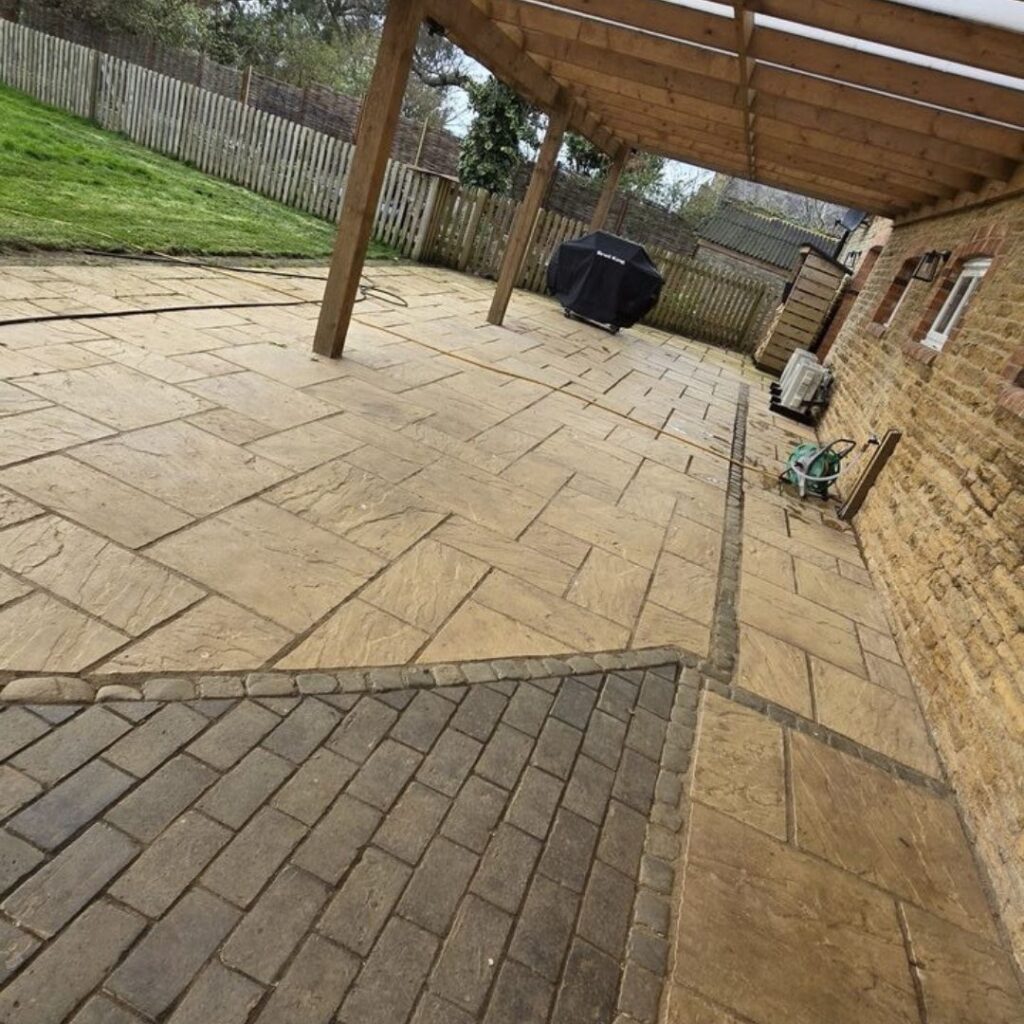
Hard landscaping is worked from the ground, and the access considerations are about getting equipment to it rather than up to it. Gate widths are the first consideration and the most mundane of them. A machine on a trolley, a flat surface cleaner and a hose reel all need a reasonable opening, and a narrow rear gate means everything is carried rather than wheeled, which adds time to every trip. Distance from the parking position is the second. Long hose runs drop pressure, present trip hazards and have to be repeatedly dragged across surfaces that have just been cleaned, so equipment is positioned as close as it sensibly can be. Ground firmness is the third, particularly on rural or unmade approaches where a loaded trolley sinks and a bowser cannot get close. Level changes are the fourth. Steps between a drive and a rear garden mean lifting equipment rather than moving it, and a property with several terraces is a series of separate set-ups rather than one. Locked areas are the fifth, and side gates unlocked in advance is the single most useful thing a householder can arrange. Overhead obstructions matter less here than elsewhere, though a low carport or a pergola limits how a lance can be angled. And the working area itself needs clearing, since anything left in place leaves an untreated shadow. Water and power positions matter alongside all of it. A tap that will not sustain twelve to fifteen litres a minute means a buffer tank, which itself needs somewhere to sit within hose reach, and an electric machine needs a socket and a residual current device rather than a hopeful extension lead across wet ground. Homeowners in Kiddington booking driveway cleaning near me should check the gate widths and the tap position before the survey.
Roof Cleaning Kiddington
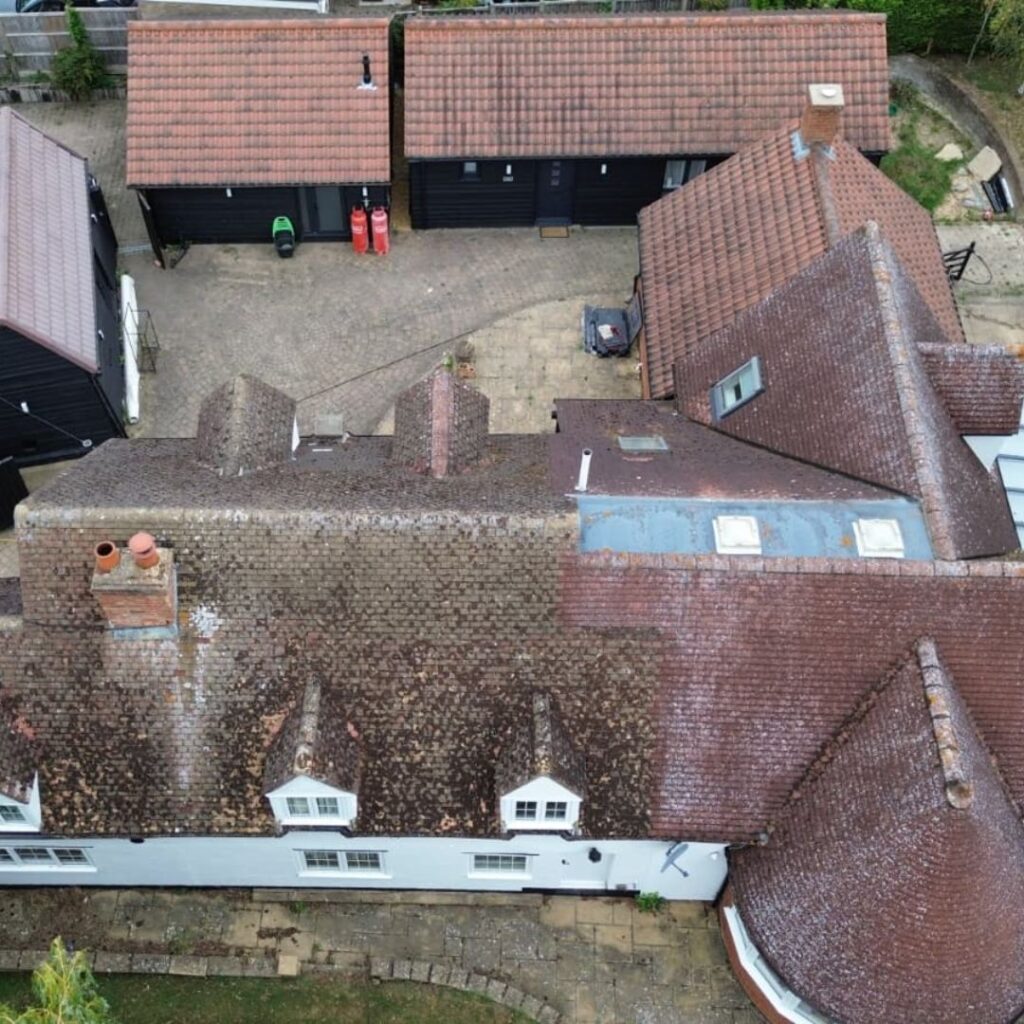
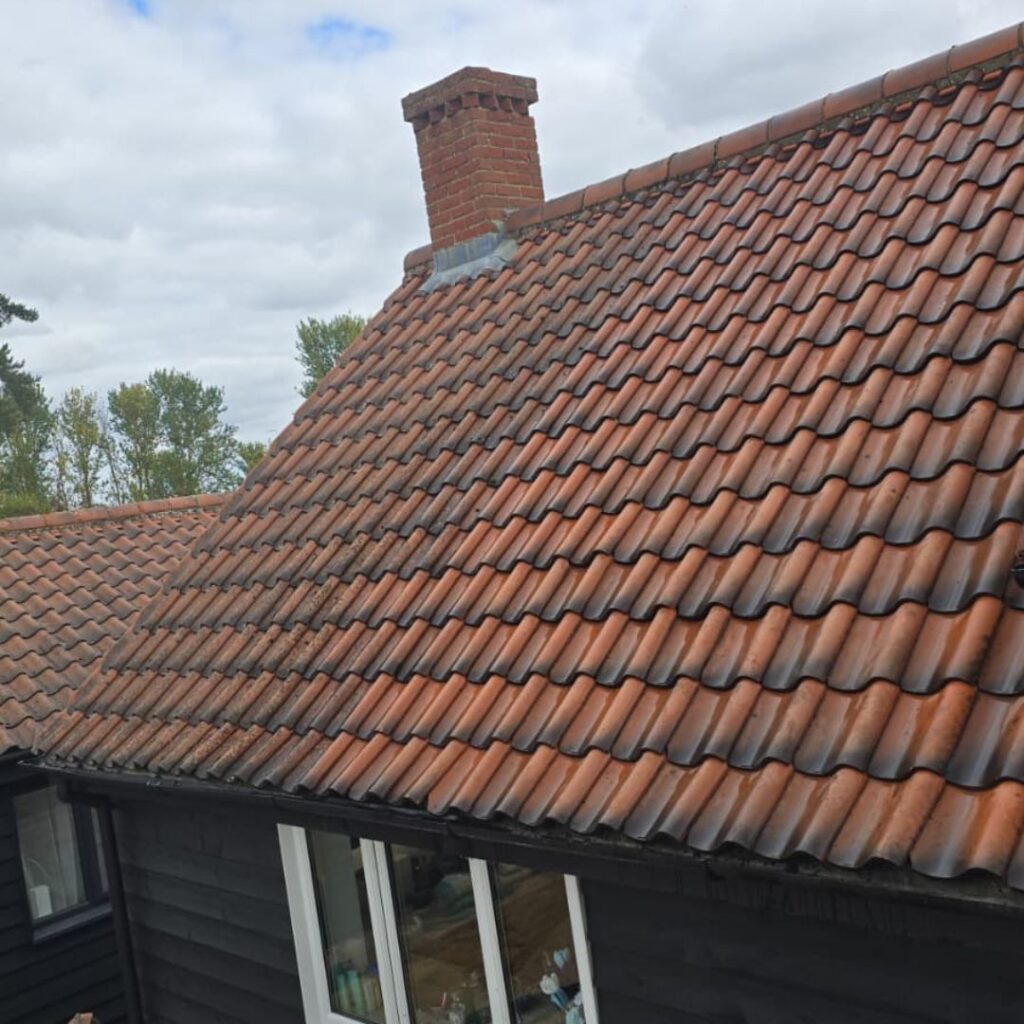
Roof access is the decision that determines most of what a quotation costs, and it is made from four factors rather than one. Pitch is the first. A shallow covering can often be worked from a mobile tower with the operator reaching only the lower courses and treating the rest from a pole. A steeper one puts the working position beyond reach and needs scaffold with edge protection. Height is the second and interacts with pitch. A two-storey gable with a steep plane above it is a scaffold job regardless of how sound the covering happens to be. Covering condition is the third and it is the one that overrides the others. Fibre cement takes no weight at all. Old natural slate held by corroding nails, and brittle clay plain tiles failing at the nibs, are not walked on whatever equipment is available, and the whole job is then done from poles at ground level with hand removal limited to what can be reached. Ground is the fourth. A tower needs firm level standing with outriggers used properly, and soft, sloping or recently disturbed ground rules it out entirely regardless of the roof above it. Overhead cables set a hard limit on pole work in their vicinity. Where none of the four permits close access, the honest answer is treatment from the ground and an inspection by camera rather than by hand. What sits beneath each plane completes the assessment. A conservatory roof, a lean-to, fragile glazing, a greenhouse or a bed of established planting all determine where equipment can be placed and what has to be covered before a single tool touches the covering, since bulk moss lands wherever gravity takes it. Anyone in Kiddington searching roof cleaning near me should have the access method named explicitly in writing.
Solar Panel Cleaning Kiddington
Solar arrays are almost always reached from the ground, and the few exceptions are worth understanding, since they change both the cost of the visit and the risk attached to it. Pole-fed cleaning covers the great majority of domestic installations without difficulty. Carbon fibre poles carrying a soft brush head reach two-storey arrays comfortably and three-storey ones with a longer set, and working from the ground keeps operatives off the covering and away from an installation generating direct current whenever there is light on it. The constraints are practical rather than technical. A standing position needs firm level ground with a clear vertical line to the array, and a conservatory, a planted border, a greenhouse or a parked vehicle beneath the panels removes the position that would otherwise be used. Overhead cables rule out pole work in their vicinity absolutely. Wind is the other constraint, and it stops the work outright rather than merely slowing it, since a pole at full extension becomes unmanageable well before it becomes dangerous. Where an array genuinely cannot be reached — an inner courtyard, a deep rear elevation with no standing ground, an unusually complex roof — a tower is used rather than a ladder, and nobody walks on the modules under any circumstances, since point loading causes microcracking within the cells that shows up later as lost output. Manufacturer warranties are generally explicit about all of this. The practical consequence is that solar cleaning is quick and cheap to access, which is part of why an annual visit makes sense on almost any installation. There is no equipment to erect, nothing to hire and no second visit required, so the cost is essentially the work itself rather than the arrangements around it. Owners in Kiddington should expect the whole visit to be conducted from the garden.

Our Customers Say Everything there is to know about us
EXCELLENTTrustindex verifies that the original source of the review is Google. Fantastic service through out! Our roof looks brand new! Decided to also get the driveway done after seeing the results of first job and what a difference! All for a reasonable price as well. Definitely highly recommend 5*Posted on GoogleTrustindex verifies that the original source of the review is Google. Brendan of Stewart Exterior Cleaning was superb. He obviously knows a lot about looking after the exterior of a property and when he visited to clean our gutters, he clearly explained what was going on and gave excellent advice for the future. He was also friendly and enthusiastic, and gave us the sense he enjoys his work and taking care of his customers. He also mentioned some of his company's other services such as landscape gardening, which probably explains why he has so much expertise. But as it was winter and just before Christmas when he visited, it wasn't the right time for things for the garden, but we'd like to have him back in the spring, so he's probably got a customer for life now! Thanks so much, Brendan – it's very obvious why your business is thriving and we'll be back in touch in the future!Posted on GoogleTrustindex verifies that the original source of the review is Google. Brendan was very helpful and informative, he was quick and efficient in completing the job while answering any questions I had, I would definitely recommend his servicesPosted on GoogleTrustindex verifies that the original source of the review is Google. Returning customer of Stewart Exterior Cleaning. Brendan did a gutter clear for us recently and came back today to carry out a repair caused by high winds. Very friendly servicePosted on GoogleTrustindex verifies that the original source of the review is Google. Great service, roof looks newPosted on GoogleTrustindex verifies that the original source of the review is Google. Great service, couldn’t be happier with the end result. We initially had Brendan in to pressure wash and re-sand our driveway and after seeing the excellent job he did, we decided to have the roof and gutters cleaned as well. The transformation has completely refreshed our home and added fantastic curb appeal. Reliable, friendly, and great value for the service provided thanks again, Brendan!Posted on GoogleTrustindex verifies that the original source of the review is Google. Excellent job completed by Brendan. Was prompt and went above and beyond - given that there wasn’t a useable tap on sight! Also advised what do do after cleaning with regards to paving slabs. Would highly recommend, very excellent price and top notch service. Thank you BrendanPosted on GoogleTrustindex verifies that the original source of the review is Google. Excellent job done in a most friendly and efficient manner. Would highly recommend Brendan and his company to anybody looking to have their gutters cleared and fascia’s cleaned. Well done Stewart Exterior Cleaning.Posted on GoogleTrustindex verifies that the original source of the review is Google. I spotted Brendan working at neighbours property and asked him for a quote to pressure wash my pathway and patio. We agreed a price and the work was carried out a few days later. Brendon is hardworking, friendly and diligent and I’m very happy with the outcome and overall experience.Posted on GoogleTrustindex verifies that the original source of the review is Google. Fantastic service from Stewart Cleaning Ltd. Great work, tidy and very accommodating. Would definitely recommend and will definitely be using these guys again. Thank you! Noticed my dirty windows and even cleaned them despite it not being part of the booked job! Many many thanks.
Gutter Cleaning Kiddington
Rainwater goods used to be the most dangerous job on a property and are now among the safest, entirely because of how they are reached. High-reach vacuum systems are the standard. A suction unit at ground level connected to lightweight carbon fibre poles draws material into a sealed drum, and a camera at the pole head shows the interior of the run on a monitor at ground level. Two-storey work is routine; three-storey needs a longer pole set that flexes noticeably and takes considerably more skill to handle. Standing positions are the whole of the difficulty. A pole needs firm level ground directly beneath the run with a clear vertical line to the channel, so borders planted tight against a wall, conservatories, greenhouses, fragile glazing, parked vehicles and narrow side returns all remove the positions that would otherwise be used. Overhead cables are an absolute constraint. Towers are used where a deposit has consolidated beyond what suction will lift and hand clearing is needed, and where the ground will take them. Ladders retain a narrow use for short work on sound footing, and they are the origin of most of the injuries in domestic maintenance: soft ground, a shallow angle, a bucket in one hand, a gutter used as a handhold and the reach sideways rather than repositioning. Nothing about the method requires anyone to be at height for long. The change has been substantial. Where a clearance once meant a day of ladder repositioning around a property, it is now an hour or two of pole work with better results, a camera record and nobody more than a few feet off the ground at any point. That is a genuine improvement rather than a marketing one. Householders in Kiddington should clear the ground beneath each run before the visit.

Render Cleaning Kiddington
Reaching a rendered elevation is straightforward enough on most properties, and the equipment question is really one of steadiness rather than of height. A fan tip at low pressure covers single-storey walls from the ground with full control over the spray pattern, which is comfortably the easiest application there is. A pole-mounted lance handles two-storey elevations and gables, and it introduces the one genuine limitation: an operator standing directly beneath a wall cannot see the surface well enough to judge coverage by eye, which is why elevations are worked systematically in sections rather than swept across. Wind makes an even application impossible at full extension and stops the work altogether. A mobile tower is occasionally the better option on a tall gable, not for the reach but for the control, since standing level with the surface allows the coverage to be seen and adjusted. Scaffold is rarely needed for render cleaning on its own, and where it happens to be up already for other work it is well worth making use of. Ladders have no useful role in this work at all. Applying solution from a ladder gives poor coverage, puts an operator on wet rungs with a lance in hand, and produces the patchy result that makes people think soft washing does not work. The reveals, soffits, base of the wall and the gaps behind downpipes all need working separately regardless of the method. The practical test is coverage. Whatever method is used, the elevation should be evenly wetted from base to verge, with no dry bands, no runs and no untreated sections at the top where somebody could not quite reach. That is easy to judge on the day and impossible to correct afterwards. Anyone in Kiddington comparing render cleaning near me should ask how gable height will actually be reached.