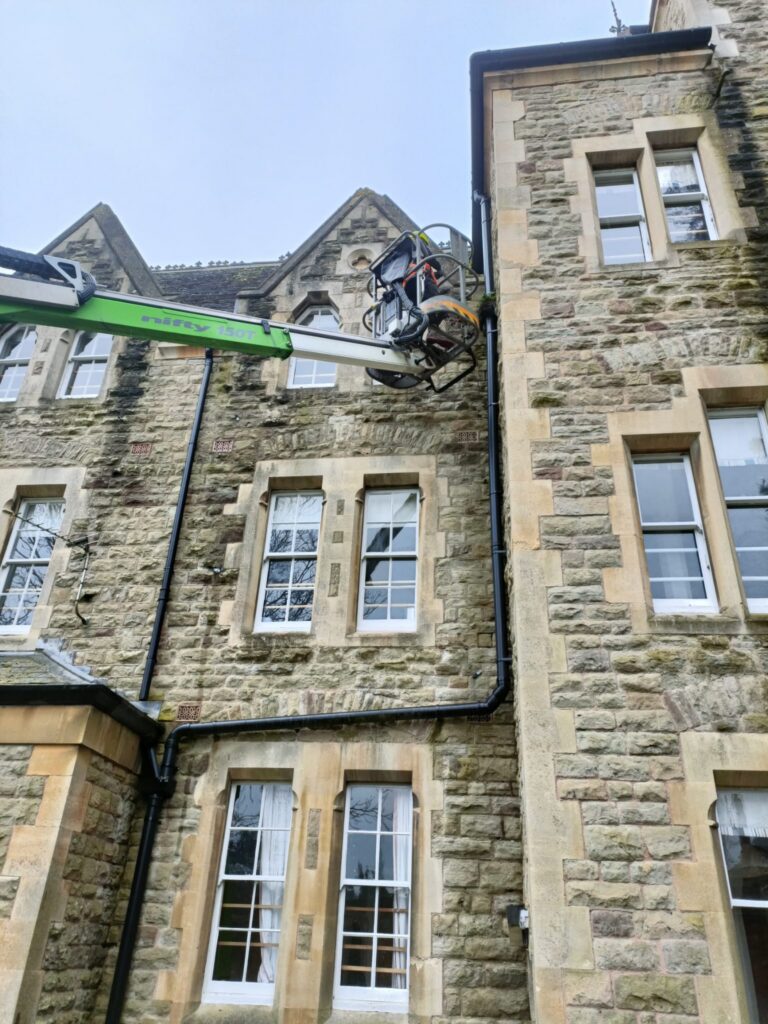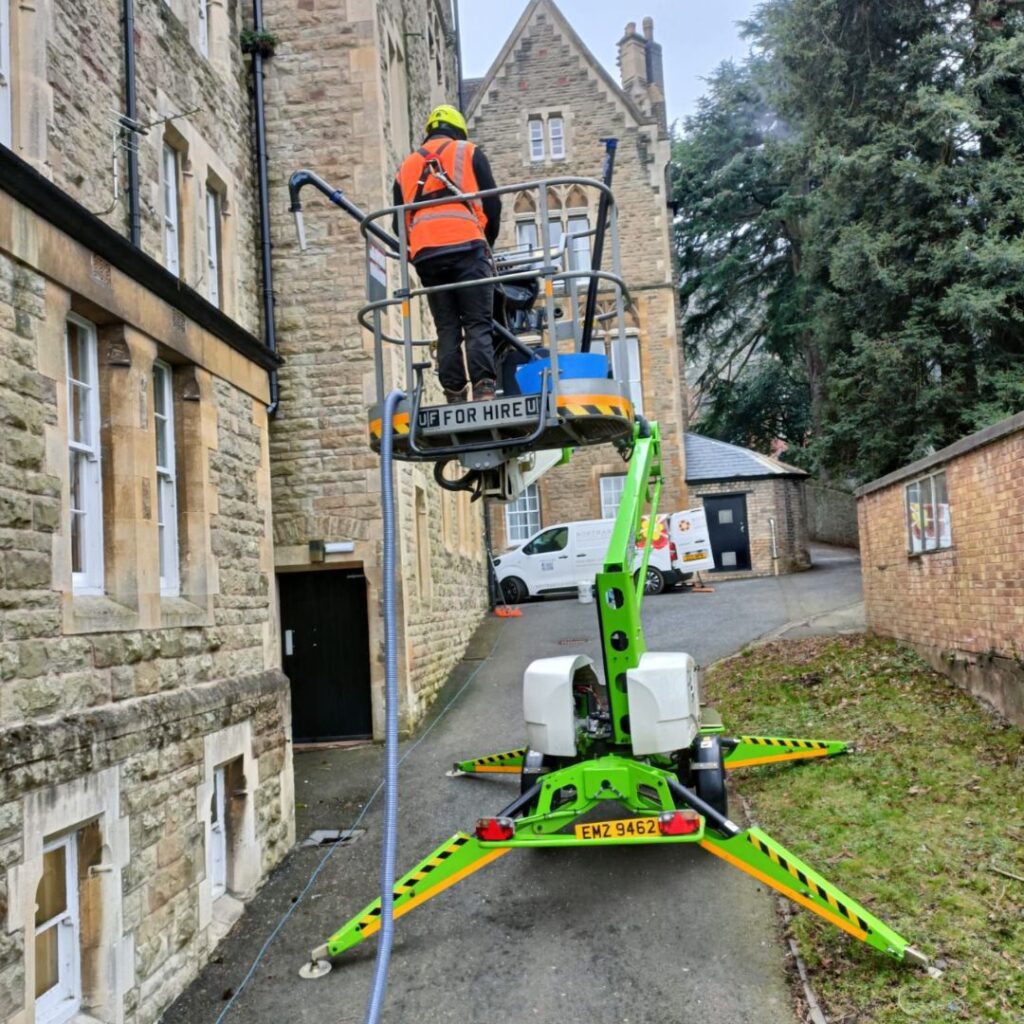
Exterior Cleaning Oakley | Pressure Washing Oakley
- Residential & Commercial Cleaning Specialists
- 5-Star Rated Service & Customer Care
- Eco-Friendly Cleaning Solutions
- Expert Team Covering Oakley
Get a FREE Quote
Exterior Cleaning Oakley
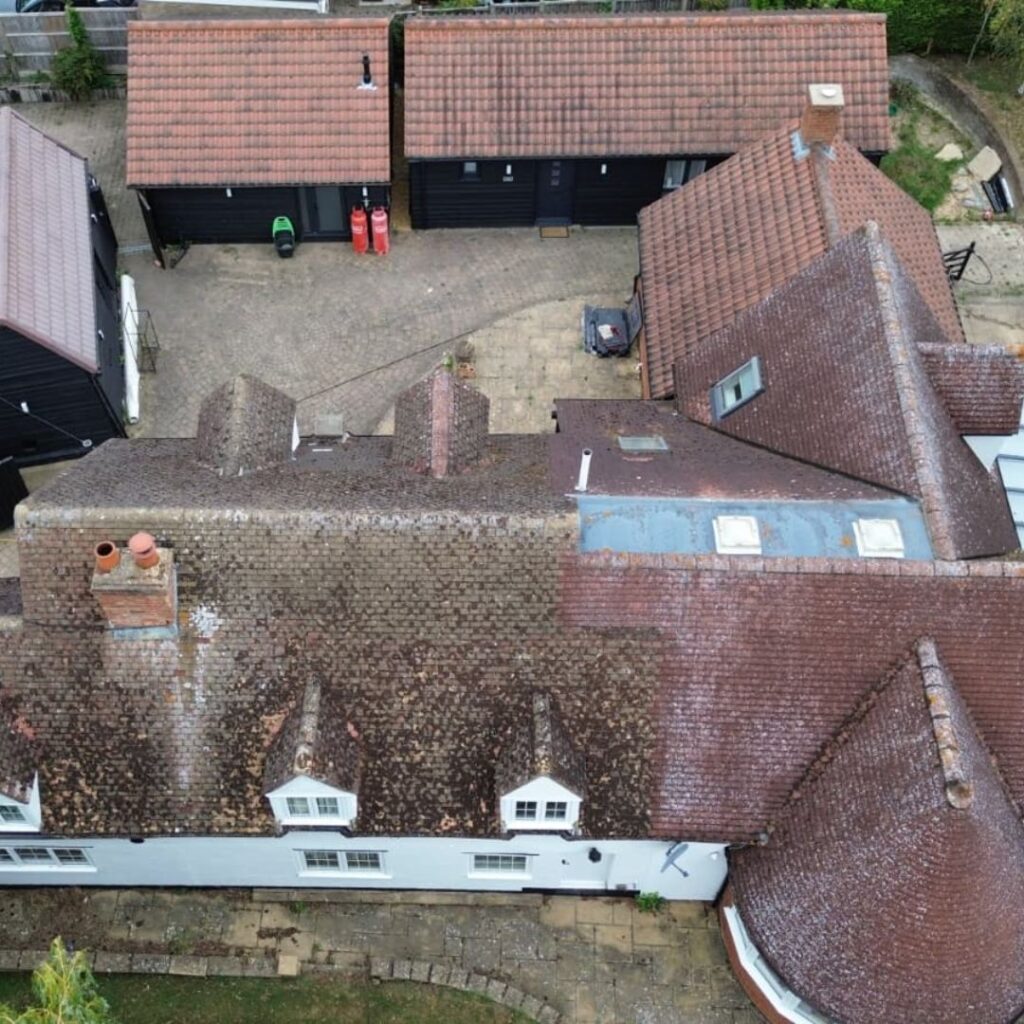
Growth arrives on a building by a small number of routes, and knowing which one is dominant on a given property changes what should be done about it. Airborne spores are the first and account for most of it. Algae and lichen reproduce by spores carried on the wind in enormous numbers, and every surface on every property receives them continuously. Nothing prevents their arrival, which is why the question is never how to keep them off but how quickly they can establish once they land. Overhanging vegetation is the second and is the route owners can actually influence. Branches drop organic material directly onto a covering and into gutters, providing both the nutrient and the moisture retention that a bare surface would not. Water carrying material downward is the third. A colonised roof sheds spores and debris onto the elevations and the paving beneath it, which is why a property frequently greens over from the top down. Splash-back is the fourth, carrying soil and spores from paving onto the base of a wall. And soil contact is the fifth, wherever a bed meets a surface directly. And a property with all five routes wide open colonises at a rate that no schedule keeps up with. The reason for thinking in terms of routes rather than growth is that four of the five can be reduced and one cannot. Nobody can stop spores arriving on a building, and almost anybody can trim a branch, sweep a surface, redirect a downpipe or cut a bed back from a wall. An owner who closes several of those routes changes the interval on every element at once, and does so for very little money. Stewart Exterior Cleaning looks at the routes as well as the growth. Households in Oakley searching exterior cleaning near me can close several of them for nothing.
Pressure Washing Oakley
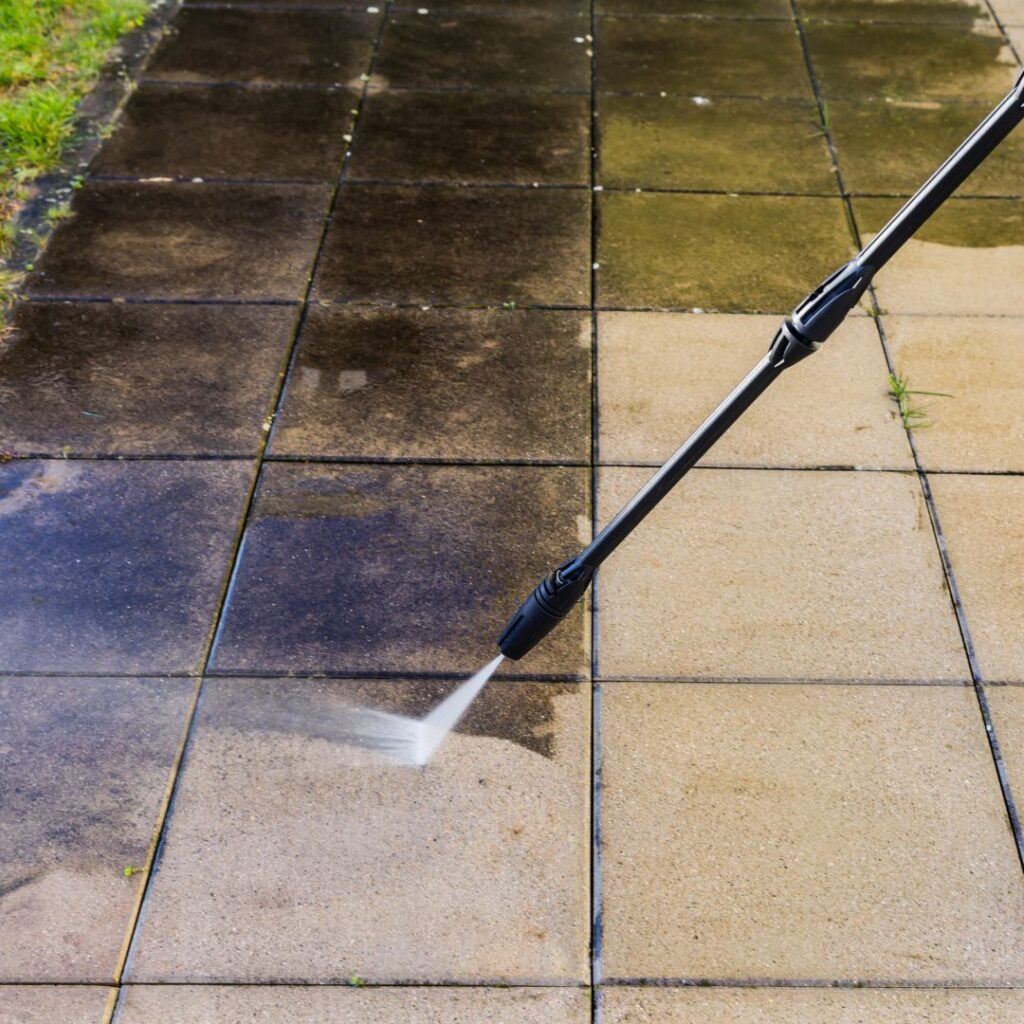
Hard surfaces acquire growth from a few identifiable directions, and one of them is entirely within an owner’s control. Leaf litter is much the largest contributor. Falling leaves settle on paving, break down over a winter into the joints and become a growing medium with nutrient, water retention and a seed bank all in one. A surface swept promptly each autumn receives a fraction of what an unswept one does. Soil contact is the second. Wherever a bed meets paving directly, material migrates across it continuously, and the margin nearest a border is invariably the worst part of any surface. Run-off from above is the third, since a colonised roof or a green wall sheds material downward and a downpipe discharging onto paving delivers it in concentrated form. Airborne spores are the fourth and are unavoidable, arriving on every surface everywhere. And existing joint material is the fifth, since composted matter already in place germinates whatever lands on it. Which means the useful interventions are sweeping, keeping soil off the margins and correcting anything discharging onto the surface. And the margin nearest a border is invariably the worst part of any surface for exactly that reason. And run-off arriving from above delivers material in concentrated form rather than spread evenly. And airborne spores arrive on every surface everywhere, whatever anybody does about it. And the useful interventions are sweeping, keeping the soil back and correcting the discharge. The point about the joints is worth dwelling on, since it explains why a surface cleaned mechanically without extraction regreens so quickly. Removing the growth while leaving the medium it was growing in behind is treating the crop rather than the field, and whatever lands next has somewhere ready to establish. Anyone in Oakley booking pressure washing near me should sweep in autumn and treat the joints as the source.
Are you based in Oakley or the Surrounding Areas?
Patio & Driveway Cleaning Oakley
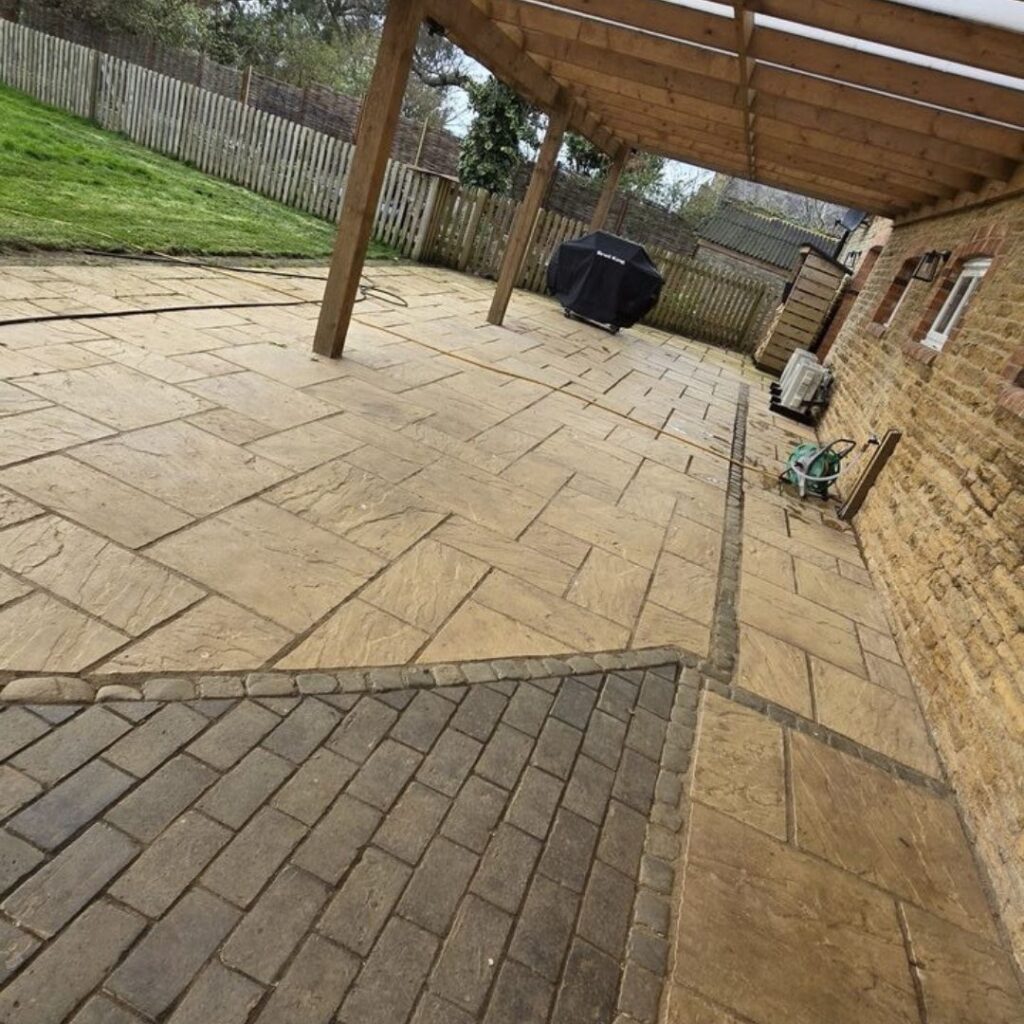
A driveway receives growth from several directions at once, and identifying the dominant one explains the pattern. Growth concentrated along one margin points to a border, a hedge or a fence. Soil migrating across the edge, shade from the planting and reduced airflow together make that strip the worst on any surface, and cutting back changes it more than any treatment does. Growth in a defined band across the surface points to something above discharging onto it, almost always a downpipe or a gutter joint. Growth spread evenly across the whole area points to airborne spores landing on a surface that dries slowly, which is a matter of orientation, shade and drainage rather than any particular source. Growth concentrated in the joints alone points to composted leaf litter, and the remedy is sweeping rather than cleaning. Growth beneath a tree points to the obvious. And growth returning within a season after a clean points to the growing medium having been left in place. Reading which pattern is present takes seconds and identifies what is actually feeding it. And a pattern that persists after every clean is pointing at something nobody has corrected. And growth returning within a season points straight to the growing medium having been left in place. And growth beneath a tree points at something perfectly obvious. And reading which pattern is present takes a matter of seconds. And a border cut back changes that margin more than any treatment. That single habit changes what an owner spends money on, since three of those six patterns point towards something other than cleaning. A border cut back, a downpipe redirected and an autumn spent sweeping between them address more than any number of visits with a machine would. Homeowners in Oakley booking driveway cleaning near me should look at where the growth is rather than how much there is.
Roof Cleaning Oakley
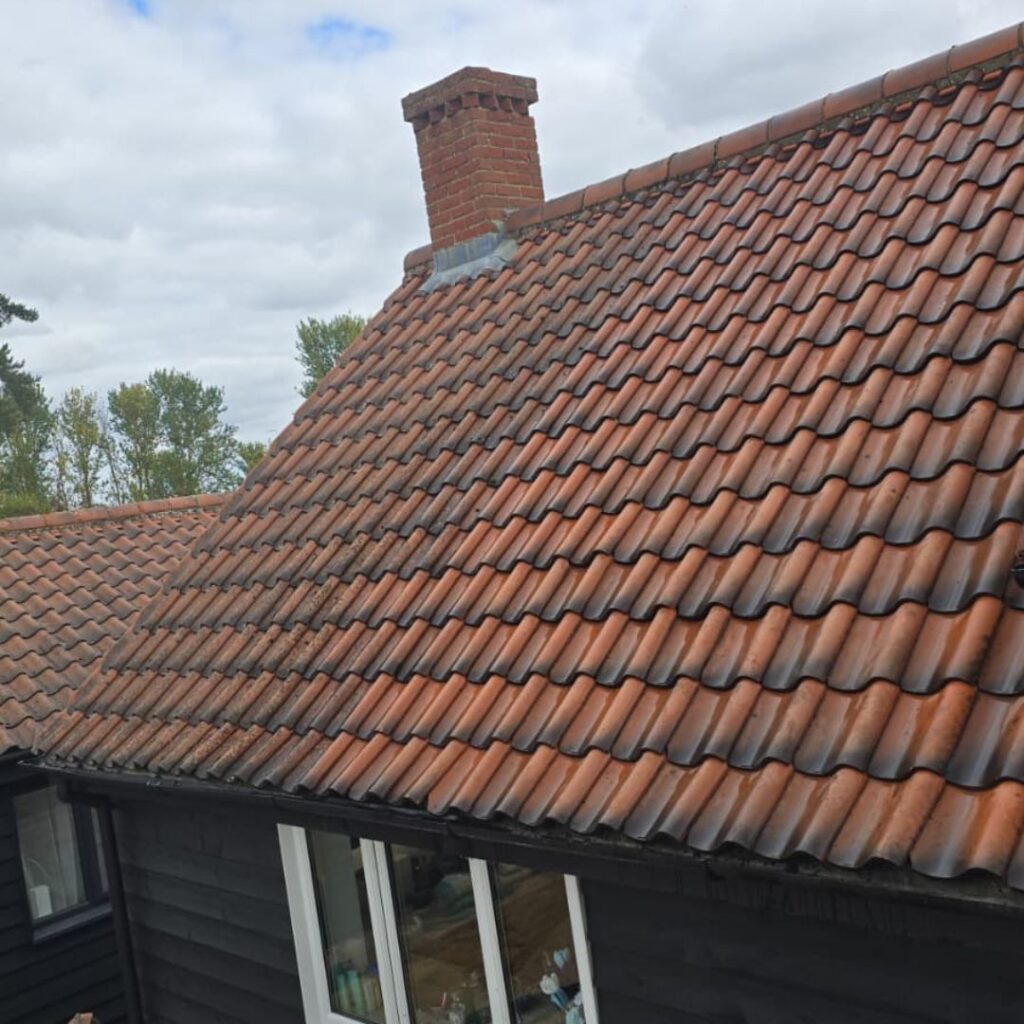
A roof is where colonisation begins on most properties, and understanding how it arrives explains why treatment lasts as long as it does. Spores land continuously. Every covering receives airborne algal and lichen spores in enormous numbers, and nothing prevents that. What determines whether they establish is how long the surface stays wet after rain, which is why the shaded plane colonises years before the sunlit one. Overhanging branches are the factor an owner can change. They shade the covering, restrict the airflow across it and drop organic material into the laps continuously, and a plane beneath them will always be the worst on a building. Existing growth is the third route and the most important for treatment. An established colony produces spores locally in vast quantities, which is why a covering cleaned mechanically without any biocide regreens within a season while one properly treated holds for years. Birds are the fourth, carrying seed and depositing nutrient. And the covering itself is the fifth, since a porous surface that has lost its granular layer offers far more purchase than an intact one. And a covering that has lost its granular layer offers far more purchase than an intact one. And birds contribute both seed and nutrient to a covering continuously. And what determines establishment is how long the surface stays wet after rain. And a plane beneath branches will always be the worst on any building. That distinction is the whole argument for using a biocide rather than a jet, since the visible growth is only the current generation and the population producing it is spread across the entire covering. Remove one and leave the other, and the interval is measured in seasons rather than years. Anyone in Oakley searching roof cleaning near me should treat the spore population rather than the visible growth.
Solar Panel Cleaning Oakley
Solar arrays acquire soiling rather than growth in most cases, and the sources are quite different from the rest of a property. Atmospheric deposition is the largest. Dust, pollen, agricultural residue and combustion particulates settle continuously on any upward-facing surface, and glass collects them as readily as anything else. Run-off is the second and is what concentrates the problem. Rainfall carries everything on a panel down towards the lower frame, where it slows and deposits, which is why the residue band forms exactly where the limiting cells sit. The covering above is the third. Tiles carrying moss shed spores and debris directly onto the array beneath, so a system on an untreated roof soils considerably faster than one on a maintained covering. Birds are the fourth and are the most costly, since an opaque dropping over a single cell restricts the current through its whole string. The frame channel is the fifth and is where actual growth occurs, since debris packed there holds moisture permanently and supports moss in a way the glass never does. And the frame channel is where actual growth occurs rather than mere soiling. And an opaque dropping over a single cell restricts the current through its whole string. And a system on an untreated roof soils considerably faster than one on a maintained covering. And run-off concentrates everything at exactly the point where the limiting cells sit. And the covering above is worth treating as part of the same job. It is the source most owners never consider, since an array is thought of as a separate installation rather than as something sitting beneath a large colonised surface. Treating the roof reduces what arrives on the panels far more effectively than cleaning them more often does. Owners in Oakley should treat the covering above the array as part of the maintenance.

Our Customers Say Everything there is to know about us
EXCELLENTTrustindex verifies that the original source of the review is Google. Fantastic service through out! Our roof looks brand new! Decided to also get the driveway done after seeing the results of first job and what a difference! All for a reasonable price as well. Definitely highly recommend 5*Posted on GoogleTrustindex verifies that the original source of the review is Google. Brendan of Stewart Exterior Cleaning was superb. He obviously knows a lot about looking after the exterior of a property and when he visited to clean our gutters, he clearly explained what was going on and gave excellent advice for the future. He was also friendly and enthusiastic, and gave us the sense he enjoys his work and taking care of his customers. He also mentioned some of his company's other services such as landscape gardening, which probably explains why he has so much expertise. But as it was winter and just before Christmas when he visited, it wasn't the right time for things for the garden, but we'd like to have him back in the spring, so he's probably got a customer for life now! Thanks so much, Brendan – it's very obvious why your business is thriving and we'll be back in touch in the future!Posted on GoogleTrustindex verifies that the original source of the review is Google. Brendan was very helpful and informative, he was quick and efficient in completing the job while answering any questions I had, I would definitely recommend his servicesPosted on GoogleTrustindex verifies that the original source of the review is Google. Returning customer of Stewart Exterior Cleaning. Brendan did a gutter clear for us recently and came back today to carry out a repair caused by high winds. Very friendly servicePosted on GoogleTrustindex verifies that the original source of the review is Google. Great service, roof looks newPosted on GoogleTrustindex verifies that the original source of the review is Google. Great service, couldn’t be happier with the end result. We initially had Brendan in to pressure wash and re-sand our driveway and after seeing the excellent job he did, we decided to have the roof and gutters cleaned as well. The transformation has completely refreshed our home and added fantastic curb appeal. Reliable, friendly, and great value for the service provided thanks again, Brendan!Posted on GoogleTrustindex verifies that the original source of the review is Google. Excellent job completed by Brendan. Was prompt and went above and beyond - given that there wasn’t a useable tap on sight! Also advised what do do after cleaning with regards to paving slabs. Would highly recommend, very excellent price and top notch service. Thank you BrendanPosted on GoogleTrustindex verifies that the original source of the review is Google. Excellent job done in a most friendly and efficient manner. Would highly recommend Brendan and his company to anybody looking to have their gutters cleared and fascia’s cleaned. Well done Stewart Exterior Cleaning.Posted on GoogleTrustindex verifies that the original source of the review is Google. I spotted Brendan working at neighbours property and asked him for a quote to pressure wash my pathway and patio. We agreed a price and the work was carried out a few days later. Brendon is hardworking, friendly and diligent and I’m very happy with the outcome and overall experience.Posted on GoogleTrustindex verifies that the original source of the review is Google. Fantastic service from Stewart Cleaning Ltd. Great work, tidy and very accommodating. Would definitely recommend and will definitely be using these guys again. Thank you! Noticed my dirty windows and even cleaned them despite it not being part of the booked job! Many many thanks.
Gutter Cleaning Oakley
Everything in a gutter arrived from somewhere, and knowing which source dominates sets the correct frequency. The covering above is the largest contributor on most properties. A roof carrying moss sheds it continuously, and combined with roofing grit and fine silt it forms the dense consolidated deposit that resists suction. A channel full of moss is a direct report on the tiles above it. Trees are the second and are the one most owners think of first. Leaf fall in autumn, blossom and seed in early summer and small twig debris throughout the year all arrive in proportion to what is growing within falling distance. Wind-blown material is the third, bringing dust, seed and litter from further away. Birds are the fourth, contributing nesting material and, on some properties, a good deal of it. And germination is the fifth, since once a deposit has composted it grows its own vegetation rather than merely collecting it. Which is why treating the covering above frequently does more for a gutter than clearing it more often. And once a deposit has composted it grows its own vegetation rather than merely collecting it. And wind-blown material brings dust, seed and litter from a good deal further away. And a channel full of moss is a direct report on the state of the tiles above it. And treating the covering above frequently does more than clearing more often. And birds contribute nesting material on a good many properties. The distinction between leaf litter and roof moss matters because the remedies differ entirely. Leaves need a clearance timed after the fall; moss needs the covering above treating, after which the channel fills at a fraction of the previous rate and the schedule can be relaxed accordingly. Householders in Oakley should identify what is arriving before setting the schedule.

Render Cleaning Oakley
Rendered elevations are colonised from three directions, and only one of them is really unavoidable. Airborne spores are the unavoidable route. Algae and lichen arrive on every wall continuously, and whether they establish depends entirely on how long the surface stays damp after rain. Orientation, shelter and airflow govern that, which is why one elevation carries growth while another on the same building does not. Run-off from above is the second and is the route that produces defined marks. A colonised roof sheds directly onto the wall beneath, a leaking gutter joint delivers water to one line repeatedly, and a sill without a working drip groove directs it down the face rather than clear of it. Splash-back from below is the third, carrying soil and spores from paving onto the base of the wall and keeping that strip permanently damp. Vegetation on the wall is the fourth and the most damaging, since climbers hold moisture against the render and prevent air reaching it entirely. And soil banked against the base is the fifth. And climbers growing on a wall are much the most damaging of all the routes. And soil banked against the base of a wall keeps that strip permanently damp. And orientation, shelter and airflow between them govern the whole process. And a leaking joint above delivers water to one line repeatedly. And splash-back from below keeps the base of a wall permanently damp. Four of those five routes can be closed or reduced by an owner without any contractor being involved, which is the useful part. Cutting climbers off a wall, correcting a gutter joint, keeping paving draining away and clearing soil back from the base together change an elevation more than any treatment does. Anyone in Oakley comparing render cleaning near me should look at what is delivering material to the wall.