Exterior Cleaning Sandford St Martin | Pressure Washing Sandford St Martin
- Residential & Commercial Cleaning Specialists
- 5-Star Rated Service & Customer Care
- Eco-Friendly Cleaning Solutions
- Expert Team Covering Sandford St Martin
Get a FREE Quote
Exterior Cleaning Sandford St Martin
Colonisation on a property falls into recognisable grades, and knowing which grade a surface has reached determines both the treatment and the cost far more reliably than measuring its area. Light colonisation is a tint rather than a layer. A faint green cast on the elevations that dry slowest, a slight darkening in paving joints, a subtle mottling in the roof laps. Nothing is thick enough to feel under a hand and nothing is doing any harm yet. At this stage a dilute treatment clears everything, no mechanical work is needed anywhere, and the visit is short. Moderate colonisation is visible and established. Defined patches on render with a slightly furred texture, moss occupying paving joints, growth standing proud along a ridge. This is where most properties are when somebody finally calls. It needs proper chemistry with real dwell time, mechanical extraction of composted joint material, and hand removal on the covering. Heavy colonisation is a layer in its own right. Lichen anchored into the pore structure of render, a saturated moss mat on the roof, gutters holding a consolidated deposit, paving joints that are effectively soil. The work takes days rather than hours and produces a substantial quantity of waste. Beyond that, damage has started and cleaning is no longer the whole answer. The grades also explain why the cost curve is not linear. Moving from light to moderate roughly doubles the work; moving from moderate to heavy can treble it again, because hand removal, waste disposal, stronger chemistry and longer dwell all arrive together. Intervening early is therefore not merely tidier, it is arithmetically cheaper by a wide margin. Stewart Exterior Cleaning grades each element separately, since a property is rarely at one stage throughout. Households in Sandford St Martin searching exterior cleaning near me are usually moderate on some surfaces and heavy on others.
Pressure Washing Sandford St Martin
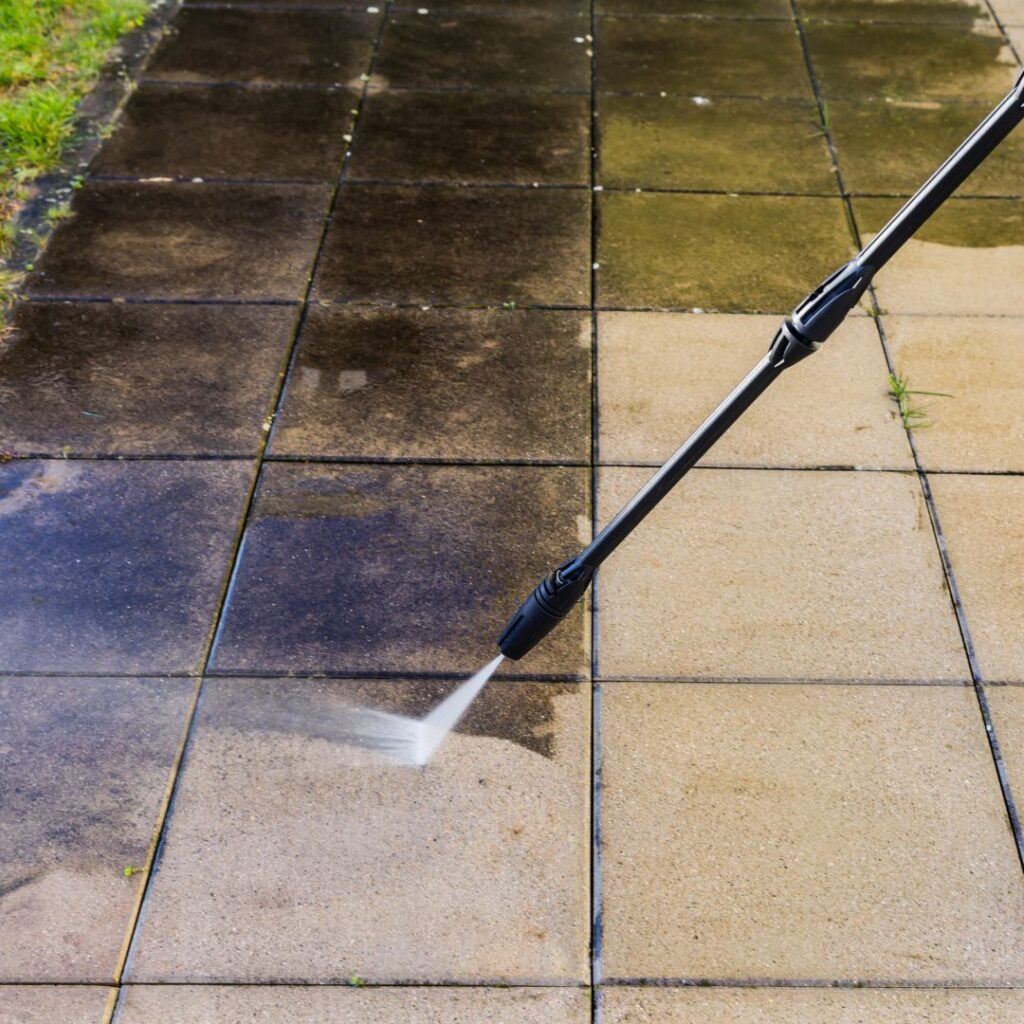
How much mechanical work a hard surface needs depends entirely on how far the contamination has progressed, and the grades are quite distinct. At the lightest grade the surface carries a thin biofilm and some atmospheric grime. A biocide applied and left to dwell does almost all of it, and the mechanical stage becomes a rinse at low pressure. Anyone reaching for maximum pressure here is removing material for no reason. At the moderate grade, silt has worked into the pores and organic material has begun composting in the joints. Chemistry still leads, but a flat surface cleaner at working pressure is genuinely needed to extract what has accumulated, and the pass takes proper time rather than a quick sweep. At the heavy grade, the joints hold what amounts to soil, weeds are rooted through it and specific stains have soaked in over years. This needs a systemic herbicide a fortnight ahead, a pre-treatment left to dwell, mechanical extraction, individual stain treatments and a full re-sand afterwards. It is a job spanning several days rather than one. At the extreme grade, the material itself is failing — laitance gone, aggregate loose, arrises chipped — and further pressure removes matrix rather than dirt. The important point is that pressure should not rise with the grade in a straight line. Beyond a certain point, more time and more chemistry does the work that more force would only damage. The grade also determines how long the work takes and whether it spans more than one visit. A light surface is an afternoon; a heavy one is a fortnight from the first weed treatment to the final sand top-up, with a return visit in the middle to re-sand once the paving has dried through. Anyone in Sandford St Martin booking pressure washing near me should have the grade established before the settings are chosen.
Are you based in Sandford St Martin or the Surrounding Areas?
Patio & Driveway Cleaning Sandford St Martin
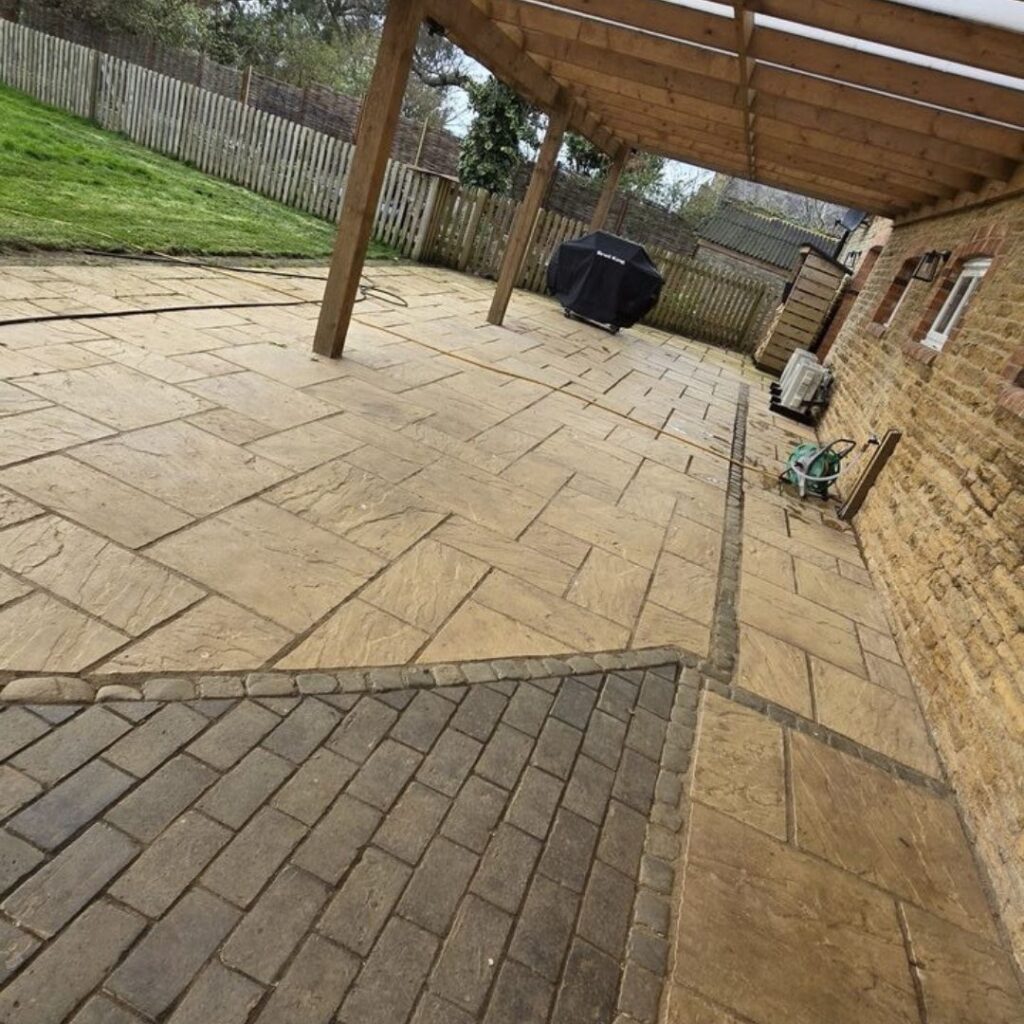
Driveways and patios pass through recognisable stages, and identifying the stage is what determines whether a clean is a light job or a substantial one. Stage one is surface film. A thin green tint on the shaded portions, joints slightly darkened, the surface a little slick after rain. An annual biocide applied with a watering can prevents it from ever going further. Stage two is joint occupation. Moss establishes in the joints and shaded margins, organic material begins composting where leaf litter has sat, and the first weeds appear. Mechanical extraction is now needed, since chemistry kills what is growing and leaves the growing medium in place. Stage three is sand depletion. Joints have dropped below roughly two-thirds full, blocks begin to move fractionally under load, edges chip and water reaches the laying course. This is the point at which the problem becomes structural rather than cosmetic, and re-sanding is no longer optional. Stage four is settlement. The sub-base has taken water it was not designed to carry, low spots pond, blocks rock underfoot and the fall no longer runs where it was intended. Cleaning improves the appearance and does not address any of it. Stage five is failure, where lifting and relaying is the honest recommendation. Most properties calling for the first time are at stage two or three, which is entirely retrievable. The useful thing about the staging is that it identifies where money is best spent. At stage two, cleaning is the answer. At stage three, cleaning and re-sanding together are. At stage four, correcting the drainage and the levels matters more than the surface, and cleaning without doing so simply produces a clean area that ponds exactly as it did before. Homeowners in Sandford St Martin booking driveway cleaning near me should look at the joints to place their own surface.
Roof Cleaning Sandford St Martin
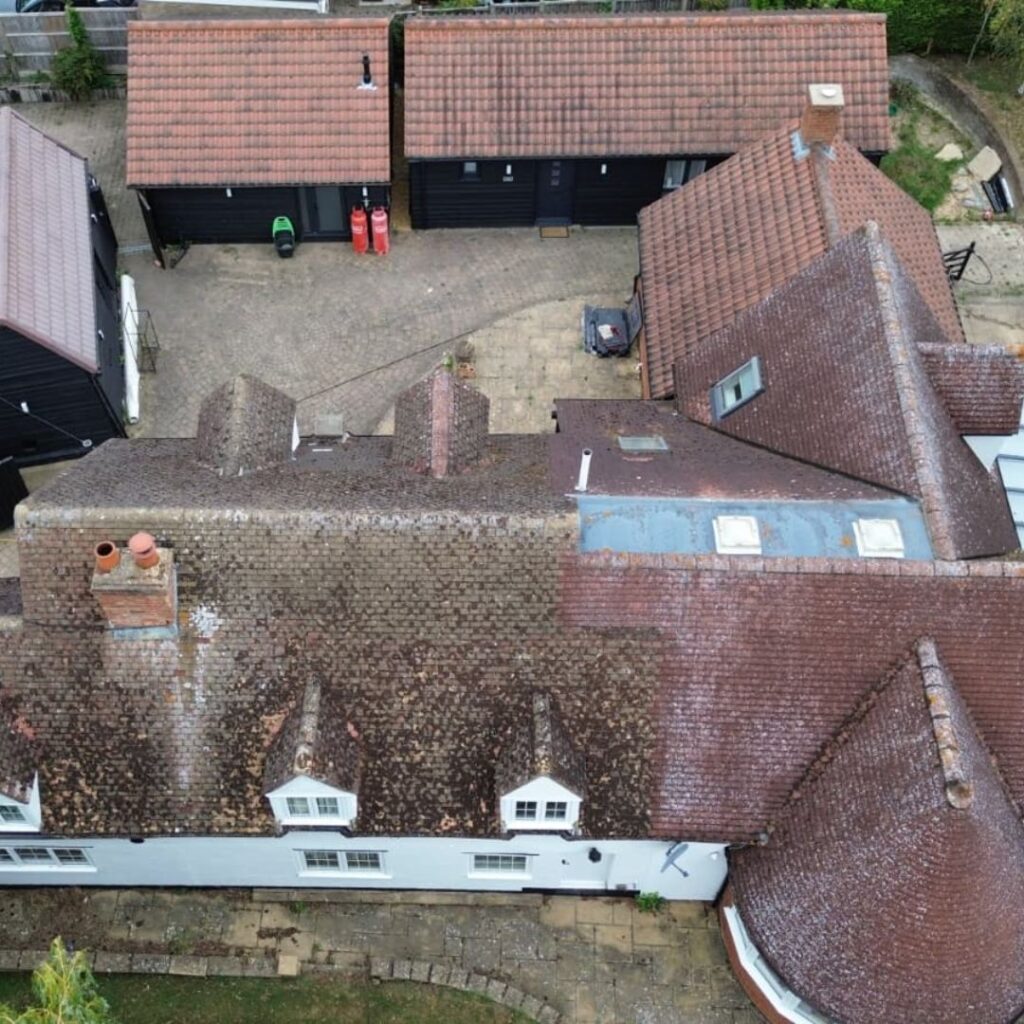
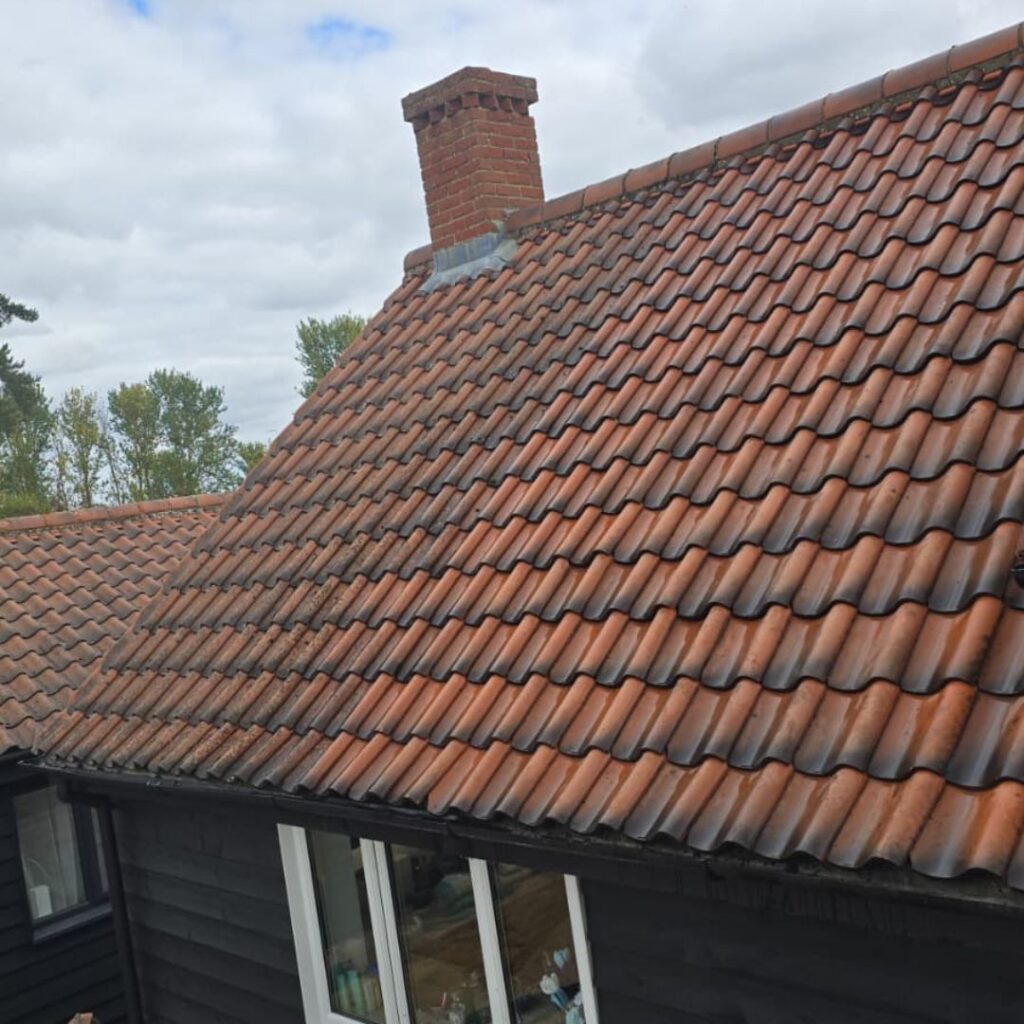
Roof coverings colonise in stages, and the stage determines how much of the work is hand removal and how much is treatment. The earliest stage is barely visible: a faint mottling in the laps and along the ridge, showing mainly as courses that stay darker than the rest for a while after rain. Treatment alone handles it, applied at low pressure and left to act, with no hand work needed at all. The second stage is established growth. Moss occupies the overlaps, sits along the ridge and collects in the valleys, and it is thick enough to hold water against the units through every wet spell. Hand removal is now necessary, worked downward from the ridge with soft-bladed tools, and it produces a real quantity of material. The third stage is a saturated mat. Growth stands proud across whole planes, tiles are being lifted by material forced into the overlaps, valleys are obstructed and the gutters below are receiving a continuous supply. The hand work dominates the visit and fills sacks, and the drainage has to be cleared in parallel or it blocks by lunchtime. The fourth stage brings damage: opened laps from repeated freezing, water reaching battens and underlay, and slipped units concealed beneath the growth. Cleaning still helps and the inspection matters more. Beyond that, recovering rather than treating is the honest conversation. The staging also explains the difference in visit length. A first-stage covering is an application and little else; a third-stage one is a day or more of hand work before any biocide goes on, with several sacks of material to bag and remove from site. That is where the variation in quotations comes from rather than from the treatment itself. Anyone in Sandford St Martin searching roof cleaning near me should expect the grade rather than the area to drive the price.
Solar Panel Cleaning Sandford St Martin
Soiling on a solar array progresses through stages, and the stage explains why a first clean produces a much larger gain than a maintenance visit. The first stage is a uniform film across the glass. Fine dust, pollen and atmospheric residue across the glass, invisible from the ground and costing perhaps five per cent of output. A single pass with a soft brush and purified water removes all of it. The second stage is the band along the lower edge. Over successive seasons, run-off slowing against the lower frame deposits everything it has carried down the glass into a defined strip, and because that strip sits directly above the cells that limit each string, the losses climb out of proportion to the area covered. It takes a second pass rather than a single one. The third stage is colonisation of the frame itself. Debris packed into the channel where glass meets frame holds moisture permanently, moss establishes and grows upward onto the panel edge, and cells are then shaded continuously rather than intermittently. Clearing that channel is the substance of the visit at this stage. The fourth stage involves the installation itself rather than the glass: nesting beneath a retrofit array, chafed cabling, corroding brackets, and fouling that recurs regardless of cleaning because the cause has never been addressed. Physical damage is the fifth stage, and it stops the work entirely. The practical value of the staging is that it separates what cleaning can fix from what it cannot. The first three stages are entirely reversible with water and a soft brush; the fourth needs the cause addressed rather than the symptom cleaned; and the fifth is a matter for an installer. Owners in Sandford St Martin will find a first clean usually spans the first three stages at once.

Our Customers Say Everything there is to know about us
EXCELLENTTrustindex verifies that the original source of the review is Google. Fantastic service through out! Our roof looks brand new! Decided to also get the driveway done after seeing the results of first job and what a difference! All for a reasonable price as well. Definitely highly recommend 5*Posted on GoogleTrustindex verifies that the original source of the review is Google. Brendan of Stewart Exterior Cleaning was superb. He obviously knows a lot about looking after the exterior of a property and when he visited to clean our gutters, he clearly explained what was going on and gave excellent advice for the future. He was also friendly and enthusiastic, and gave us the sense he enjoys his work and taking care of his customers. He also mentioned some of his company's other services such as landscape gardening, which probably explains why he has so much expertise. But as it was winter and just before Christmas when he visited, it wasn't the right time for things for the garden, but we'd like to have him back in the spring, so he's probably got a customer for life now! Thanks so much, Brendan – it's very obvious why your business is thriving and we'll be back in touch in the future!Posted on GoogleTrustindex verifies that the original source of the review is Google. Brendan was very helpful and informative, he was quick and efficient in completing the job while answering any questions I had, I would definitely recommend his servicesPosted on GoogleTrustindex verifies that the original source of the review is Google. Returning customer of Stewart Exterior Cleaning. Brendan did a gutter clear for us recently and came back today to carry out a repair caused by high winds. Very friendly servicePosted on GoogleTrustindex verifies that the original source of the review is Google. Great service, roof looks newPosted on GoogleTrustindex verifies that the original source of the review is Google. Great service, couldn’t be happier with the end result. We initially had Brendan in to pressure wash and re-sand our driveway and after seeing the excellent job he did, we decided to have the roof and gutters cleaned as well. The transformation has completely refreshed our home and added fantastic curb appeal. Reliable, friendly, and great value for the service provided thanks again, Brendan!Posted on GoogleTrustindex verifies that the original source of the review is Google. Excellent job completed by Brendan. Was prompt and went above and beyond - given that there wasn’t a useable tap on sight! Also advised what do do after cleaning with regards to paving slabs. Would highly recommend, very excellent price and top notch service. Thank you BrendanPosted on GoogleTrustindex verifies that the original source of the review is Google. Excellent job done in a most friendly and efficient manner. Would highly recommend Brendan and his company to anybody looking to have their gutters cleared and fascia’s cleaned. Well done Stewart Exterior Cleaning.Posted on GoogleTrustindex verifies that the original source of the review is Google. I spotted Brendan working at neighbours property and asked him for a quote to pressure wash my pathway and patio. We agreed a price and the work was carried out a few days later. Brendon is hardworking, friendly and diligent and I’m very happy with the outcome and overall experience.Posted on GoogleTrustindex verifies that the original source of the review is Google. Fantastic service from Stewart Cleaning Ltd. Great work, tidy and very accommodating. Would definitely recommend and will definitely be using these guys again. Thank you! Noticed my dirty windows and even cleaned them despite it not being part of the booked job! Many many thanks.
Gutter Cleaning Sandford St Martin
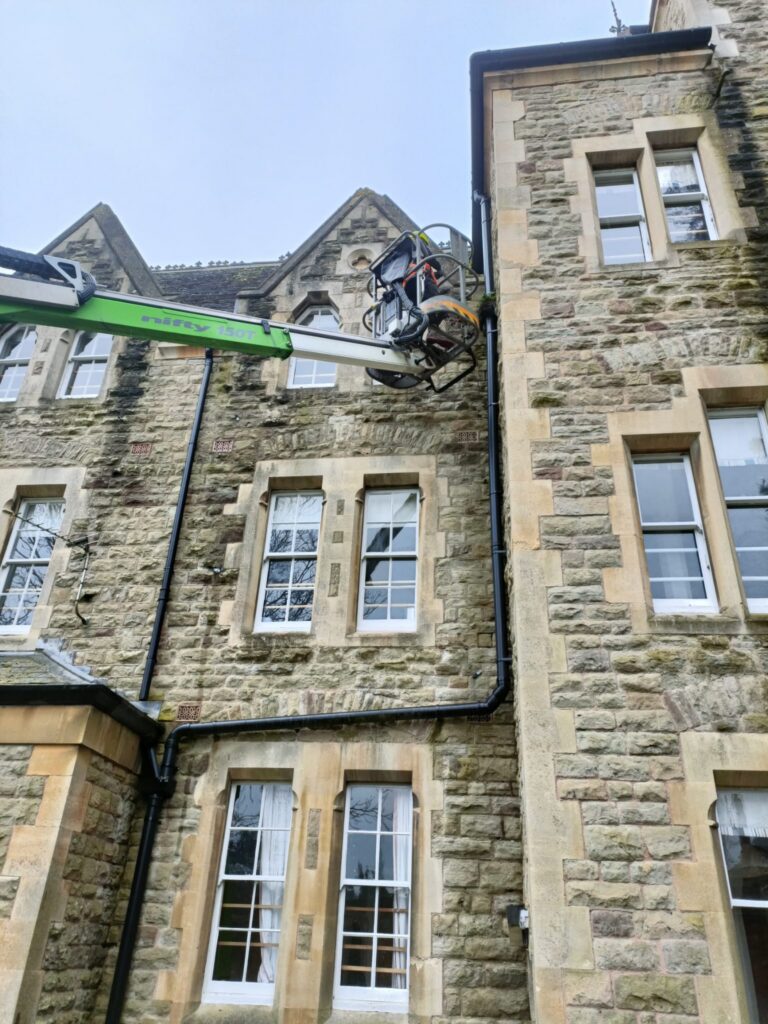
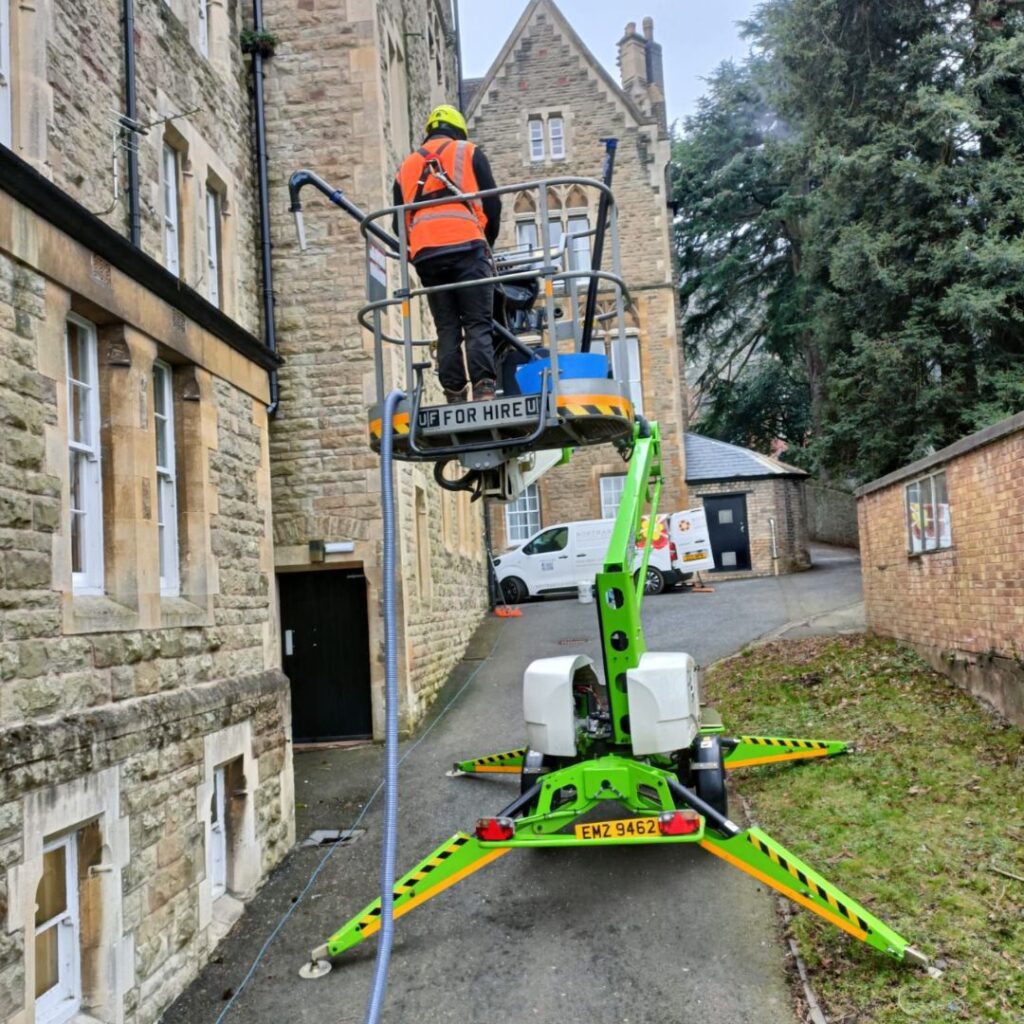
What is in a gutter progresses through clear stages, and each requires a different amount of work to remove. The first stage is simply loose debris. Leaf litter, twigs and light material sitting in the channel, easily drawn out under suction and rarely causing more than partial restriction. A run cleared annually never gets beyond this. The second stage is silting between it. Fine material settles between and beneath the loose debris, the channel begins to hold water rather than shed it, and the deposit stops drying out between rainfall. Suction still lifts it, though it takes longer and the corners and outlets pack hardest. The third stage is proper consolidation of the deposit. Moss washed off the covering combines with roofing grit and silt into a dense, permanently wet mass with the character of a poorly graded soil. This resists suction in places and sometimes needs hand clearing from a tower. Water no longer moves along the run at all. The fourth stage is root binding. Grasses and seedlings germinate in the composted material and their roots hold the whole mass together and force it against the joints. Plants visible along a gutter line mean this stage was passed some time ago. The fifth stage is deflection of the run, where the accumulated weight has pulled the section out of level and permanent standing water guarantees that all of it returns. What the staging makes clear is where the tipping point sits. Up to the second stage, an annual clearance keeps a run indefinitely at that level for a modest predictable cost. Beyond the third, each visit becomes harder than the last and the damage beneath, to the fascia and the wall, has already begun. Householders in Sandford St Martin should judge the urgency by which stage the camera actually shows.

Render Cleaning Sandford St Martin
Growth on a rendered elevation passes through stages, and treatment strength, dwell time and clearing period all follow from which one has been reached. The first stage is little more than a tint. A light green cast on the slowest-drying elevations, usually below sill level and along a sheltered gable, thin enough that it looks like shadow rather than growth. A gentle dilution clears it within a fortnight and leaves nothing behind. The second is patchy but definite establishment. Defined areas with a slightly furred feel under a hand, spreading outward from the base and the reveals. This needs a moderate mix and a proper six weeks to clear. The third is full colonisation, with lichen involved. The fungal component has anchored into the pore structure, sometimes etching the surface chemically, and while a stronger dilution kills it thoroughly, a faint shadow may remain permanently where it had been. The fourth is a mat rather than a layer, found on elevations that are both shaded and enclosed, holding moisture against the finish continuously. Clearing takes longer than six weeks and the wall beneath needs checking for crazing before anything is applied. The fifth stage is damage: crazing from repeated saturation, and sections that sound hollow when tapped, at which point repair precedes any treatment. Most walls turn out to be at the second or third stage by the time somebody calls about them. The staging also sets expectations about the result. A first-stage wall returns fully to the colour of the render. A third-stage one returns almost fully, with a faint shadow where lichen etched the surface. A fourth-stage one improves substantially and still looks its age, which is honest rather than disappointing once it has been explained. Anyone in Sandford St Martin comparing render cleaning near me should ask which stage their elevations are actually at.