Exterior Cleaning Sibford Ferris | Pressure Washing Sibford Ferris
- Residential & Commercial Cleaning Specialists
- 5-Star Rated Service & Customer Care
- Eco-Friendly Cleaning Solutions
- Expert Team Covering Sibford Ferris
Get a FREE Quote
Exterior Cleaning Sibford Ferris
Exterior cleaning works best as a schedule rather than a reaction, and once a property is on a sensible cycle the amount of work required at each visit falls considerably. The reason is simple: growth that has been established for six years is bonded into a surface and takes chemistry, dwell time and often mechanical removal to shift, while growth that has had eighteen months to develop lifts easily. The natural rhythm follows the seasons. Late spring is the productive window for chemical treatments, as temperatures are high enough for biocides to remain active and there is a long dry season ahead for treated surfaces to clear. Early autumn suits hard landscaping and rainwater goods, dealing with the summer’s accumulation before winter rainfall tests the drainage. High summer is workable for most tasks but treated surfaces dry too fast for chemistry to dwell properly on hot elevations. Deep winter suits very little beyond emergency clearance. Different elements sit on different intervals. Rainwater goods need annual or twice-yearly attention. Hard landscaping typically runs on a one- to two-year cycle depending on shade and drainage. Rendered elevations generally hold for three to five years after a proper soft wash. Roof coverings run longer still, often five to ten years between treatments where the biocide has done its job. Solar arrays sit on an annual cycle because their losses are continuous and measurable. Combining those intervals into a plan means most years involve one modest visit rather than an occasional expensive one. It also puts a trained eye on the building regularly, so that perished sealant, a slipped tile or a loose bracket is found early. Stewart Exterior Cleaning maps out that cycle at the initial survey. Households in Sibford Ferris searching exterior cleaning near me after several years of neglect are usually looking at one substantial visit followed by a far lighter schedule thereafter.
Pressure Washing Sibford Ferris
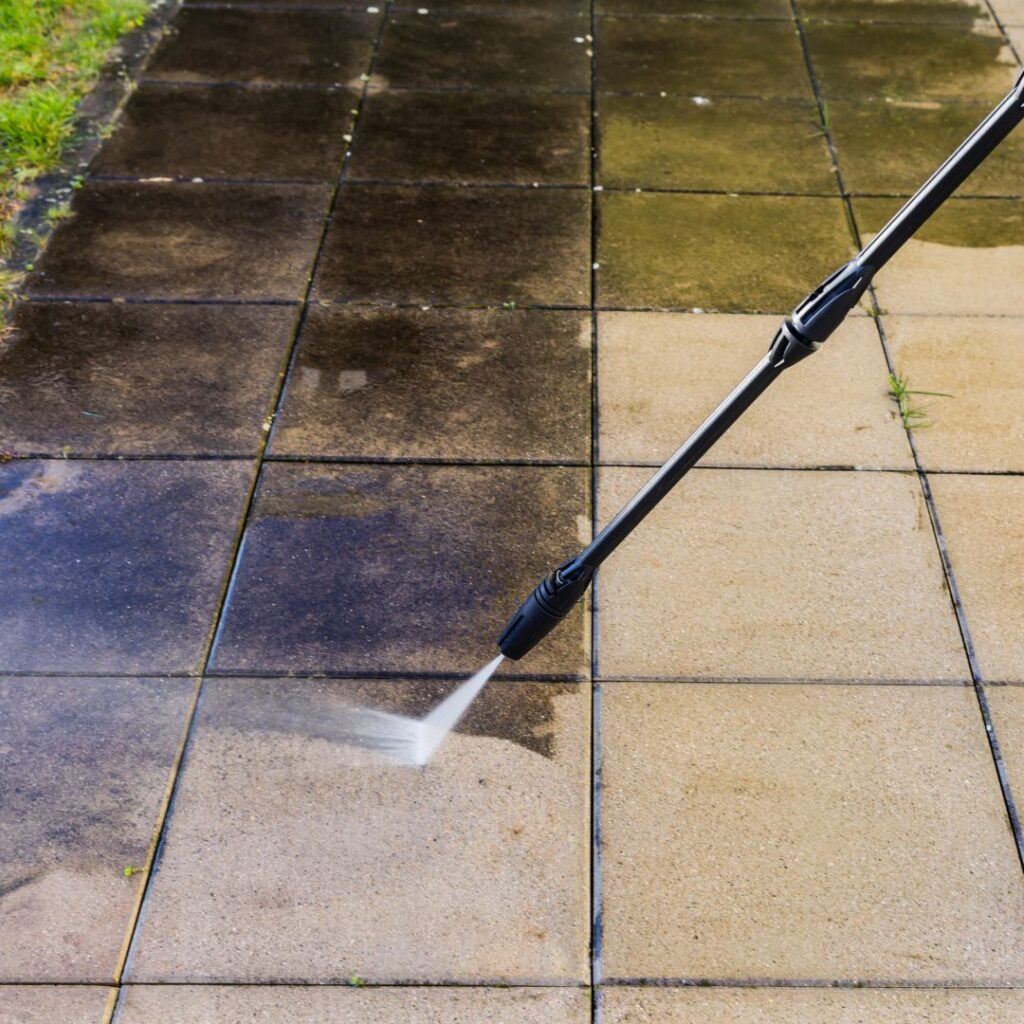
How often hard surfaces need pressure washing is governed less by use than by exposure, which is why two driveways of the same age can be in completely different condition. Shade is the dominant factor. A surface that receives direct sun for several hours dries out between rainfall and gives algae little chance to establish. One overshadowed by a building, a hedge or a canopy of planting stays damp almost permanently and will green over within a year of being cleaned. Drainage runs a close second. Paving that holds water in a low spot, or that receives a downpipe discharge directly onto its surface, feeds growth continuously at that point. Correcting the drainage extends the cleaning interval more effectively than any treatment applied to the surface. Material porosity is the third factor. Concrete and sandstone absorb water and stay damp longer; granite, porcelain and dense clay pavers shed it and stay cleaner. Traffic matters too, though mostly for a different kind of soiling: vehicle areas accumulate oil, rubber and traffic film that need heat and degreasing rather than biocide. Taken together, a sunny well-drained drive in a dense material may go three years comfortably. A shaded, porous, poorly draining one needs annual attention. Most properties sit between the two at roughly eighteen months to two years. Interim maintenance stretches whichever interval applies. An annual application of a proprietary path and patio biocide, applied by the householder with a watering can, kills early colonisation before it establishes and costs almost nothing. Sweeping leaf litter promptly in autumn prevents the composted layer that feeds the following year’s growth. Anyone searching pressure washing near me for a property in Sibford Ferris should expect a contractor to ask about shade and drainage before quoting an interval, because a figure given without them is guesswork.
Are you based in Sibford Ferris or the Surrounding Areas?
Patio & Driveway Cleaning Sibford Ferris
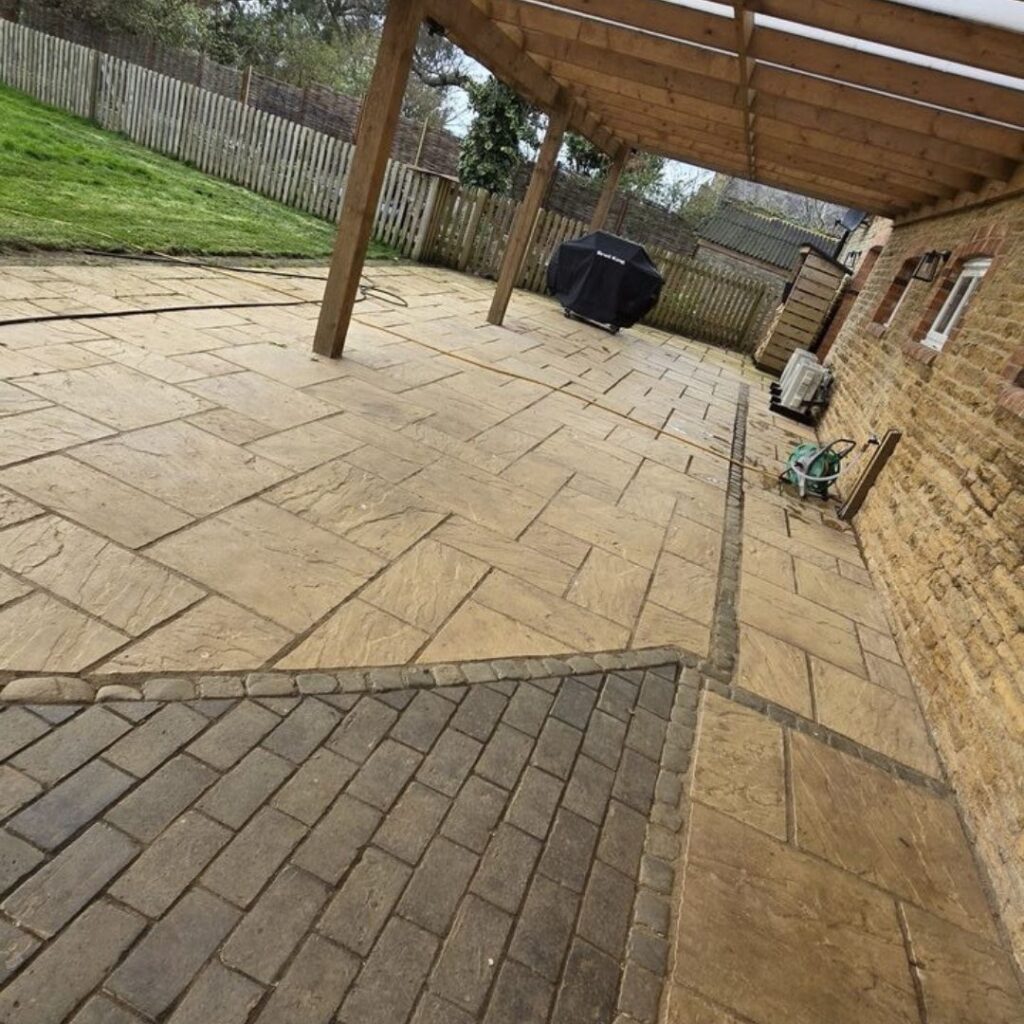
Block paving has a maintenance cycle that runs on two separate clocks, and confusing them is why so many driveways deteriorate despite being cleaned regularly. The first clock is surface appearance, which is what prompts most people to book. The second is jointing sand, which nobody looks at and which governs how long the pavement lasts. Sand depletes continuously. Rainfall washes the top few millimetres out, wind removes some, sweeping takes a little each time and every cleaning visit takes considerably more. Once a joint drops below about two-thirds full, the interlock that transfers load between blocks starts to fail. Blocks begin to move fractionally under traffic, edges chip, the gap widens further and water reaches the laying course below. At that point the problem is structural and cleaning cannot fix it. The remedy is simple and routine. Kiln-dried sand is brushed diagonally across the blocks so it enters rather than bridges the joints, worked in until they are full to just below the chamfer, and topped up again after settlement. This happens after every clean without exception, once the surface is genuinely dry, and is worth doing independently every couple of years even where no cleaning is due. Slab patios follow a different schedule, since their strength comes from the bed rather than the joints. Here the item to watch is pointing. Cement pointing cracks and blows over time, and an open joint lets water into the bedding, after which the slab rocks. Repointing is a repair rather than a cleaning task but should be identified during a cleaning visit. Edge restraints deserve inspection on the same cycle, as a driveway spreads outward at its perimeter once the edging has moved and the blocks nearest the edge lose their restraint entirely. Homeowners in Sibford Ferris booking driveway cleaning near me should ask whether re-sanding is included, since it frequently is not.
Roof Cleaning Sibford Ferris
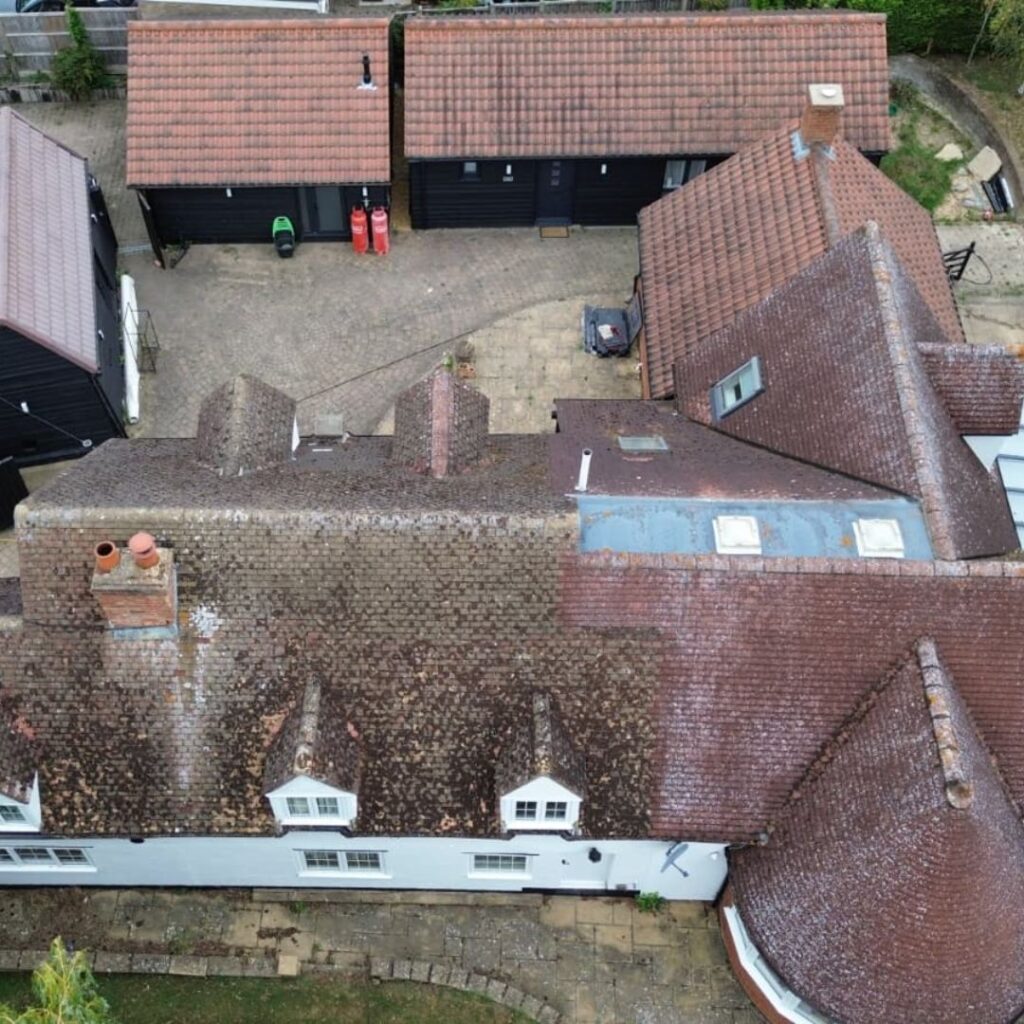
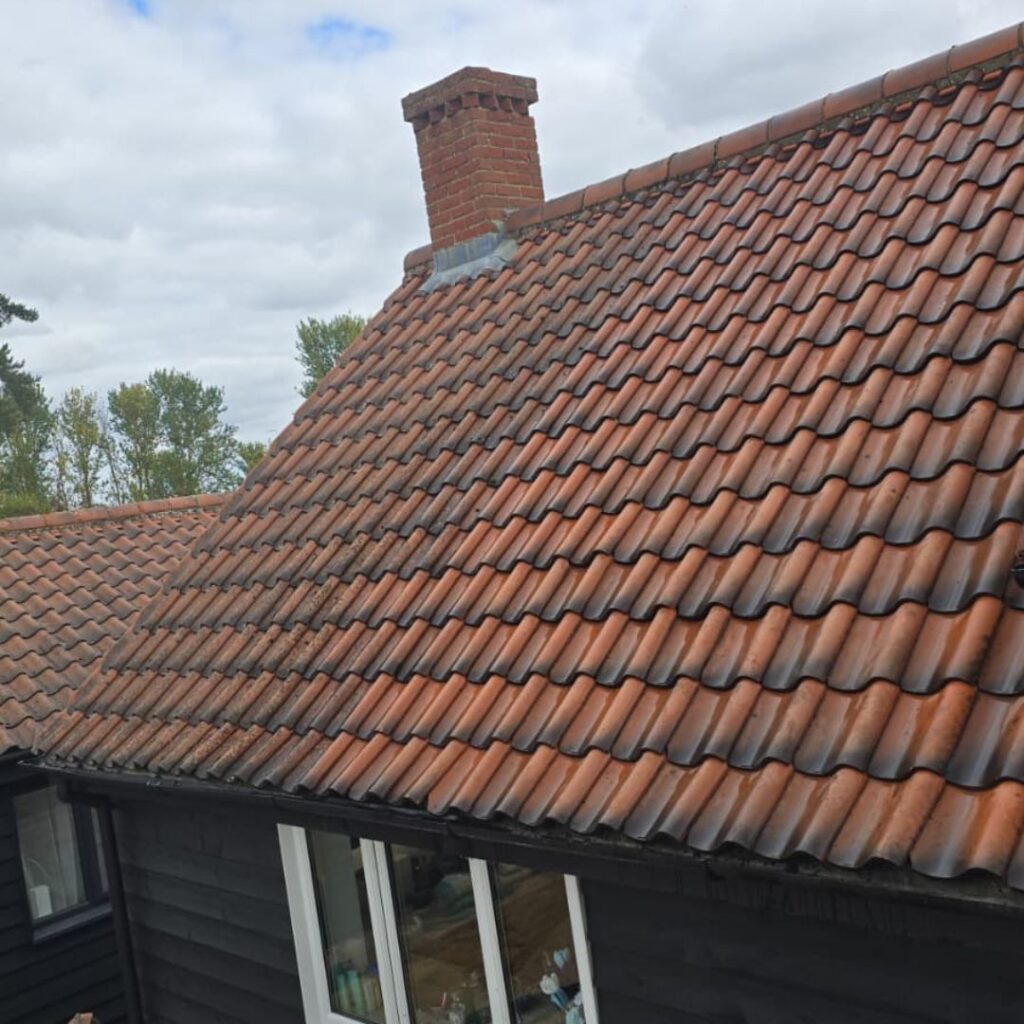
A roof cleaned properly should not need doing again for a long time, and understanding why explains what a good treatment actually buys. Mechanical removal alone takes off what is visible and leaves an intact spore population across the covering, so regrowth begins immediately and a jetted roof is often visibly greening again within two years. A biocidal treatment destroys the organisms and their spores, and the covering then stays largely clear for five to ten years depending on exposure. Exposure varies that figure considerably. A roof plane in permanent shade, overhung by branches, or facing away from prevailing sun will colonise sooner. An open, well-lit, well-drained roof holds its condition far longer. Covering type contributes too: concrete tiles that have lost their granular surface are porous and colonise fastest, clay resists better, and slate is largely inert though the joints between courses are not. The work itself is unhurried. Bulk moss is removed by hand with soft-bladed tools, worked downward from the ridge so material falls clear of the laps rather than being pushed beneath them, with gutters, valleys and hoppers cleared in parallel as the volume comes off. Biocide is then applied at low pressure across the covering and left to act, with the roof lightening progressively over the following weeks as dead material weathers away. Between treatments, the useful maintenance is drainage, and it costs nothing beyond attention. Keeping gutters and valleys clear prevents water backing up under the covering, which is where growth causes actual damage rather than merely looking untidy. Trimming overhanging branches reduces both shading and the organic debris that feeds colonisation. An inspection every few years costs nothing and catches slipped units, deteriorating ridge bedding and failing flashings early. Roofs in Sibford Ferris with mature trees alongside sit at the shorter end of the interval range.
Solar Panel Cleaning Sibford Ferris
An annual schedule suits most domestic solar installations, and the reasoning behind that interval is worth setting out because it is one of the few maintenance decisions that can be checked against real figures. Soiling accumulates continuously and its effect is proportional and constant. An array losing eight or ten per cent of its output to a film of dust, pollen and atmospheric residue gives away that proportion of everything it generates on every single day it remains dirty. Unlike most maintenance, where deferral simply postpones a cost, deferring solar panel cleaning incurs a running loss. On a system of any reasonable size, an annual visit pays for itself comfortably. Circumstances shorten the interval. Arrays close to trees collect debris and bird fouling, and fouling is disproportionately damaging because cells within a panel are wired in series, so one obscured cell restricts current through the whole string. Installations in agricultural settings take dust during ploughing and harvest. Shallow-pitched arrays self-clean poorly because rainfall does not run off with enough force to carry residue away, leaving a distinct band of soiling along the bottom edge of each panel where it collects against the frame. The visit itself is quick and low-impact. Purified, deionised water is fed through a carbon fibre telescopic pole to a soft brush head, agitating the glass lightly and rinsing continuously. Because the water carries no dissolved minerals it dries clear, leaving no film to attract the next layer of dust, and no detergent is required. Nothing is pressurised at the frame seals and nobody stands on the modules. Frame channels are cleared during the same pass, since debris held there supports moss along the glass edge. Recording generation before and after gives a direct measure, and owners in Sibford Ferris usually find the difference visible in monitoring data within a day.

Our Customers Say Everything there is to know about us
EXCELLENTTrustindex verifies that the original source of the review is Google. Fantastic service through out! Our roof looks brand new! Decided to also get the driveway done after seeing the results of first job and what a difference! All for a reasonable price as well. Definitely highly recommend 5*Posted on GoogleTrustindex verifies that the original source of the review is Google. Brendan of Stewart Exterior Cleaning was superb. He obviously knows a lot about looking after the exterior of a property and when he visited to clean our gutters, he clearly explained what was going on and gave excellent advice for the future. He was also friendly and enthusiastic, and gave us the sense he enjoys his work and taking care of his customers. He also mentioned some of his company's other services such as landscape gardening, which probably explains why he has so much expertise. But as it was winter and just before Christmas when he visited, it wasn't the right time for things for the garden, but we'd like to have him back in the spring, so he's probably got a customer for life now! Thanks so much, Brendan – it's very obvious why your business is thriving and we'll be back in touch in the future!Posted on GoogleTrustindex verifies that the original source of the review is Google. Brendan was very helpful and informative, he was quick and efficient in completing the job while answering any questions I had, I would definitely recommend his servicesPosted on GoogleTrustindex verifies that the original source of the review is Google. Returning customer of Stewart Exterior Cleaning. Brendan did a gutter clear for us recently and came back today to carry out a repair caused by high winds. Very friendly servicePosted on GoogleTrustindex verifies that the original source of the review is Google. Great service, roof looks newPosted on GoogleTrustindex verifies that the original source of the review is Google. Great service, couldn’t be happier with the end result. We initially had Brendan in to pressure wash and re-sand our driveway and after seeing the excellent job he did, we decided to have the roof and gutters cleaned as well. The transformation has completely refreshed our home and added fantastic curb appeal. Reliable, friendly, and great value for the service provided thanks again, Brendan!Posted on GoogleTrustindex verifies that the original source of the review is Google. Excellent job completed by Brendan. Was prompt and went above and beyond - given that there wasn’t a useable tap on sight! Also advised what do do after cleaning with regards to paving slabs. Would highly recommend, very excellent price and top notch service. Thank you BrendanPosted on GoogleTrustindex verifies that the original source of the review is Google. Excellent job done in a most friendly and efficient manner. Would highly recommend Brendan and his company to anybody looking to have their gutters cleared and fascia’s cleaned. Well done Stewart Exterior Cleaning.Posted on GoogleTrustindex verifies that the original source of the review is Google. I spotted Brendan working at neighbours property and asked him for a quote to pressure wash my pathway and patio. We agreed a price and the work was carried out a few days later. Brendon is hardworking, friendly and diligent and I’m very happy with the outcome and overall experience.Posted on GoogleTrustindex verifies that the original source of the review is Google. Fantastic service from Stewart Cleaning Ltd. Great work, tidy and very accommodating. Would definitely recommend and will definitely be using these guys again. Thank you! Noticed my dirty windows and even cleaned them despite it not being part of the booked job! Many many thanks.
Gutter Cleaning Sibford Ferris
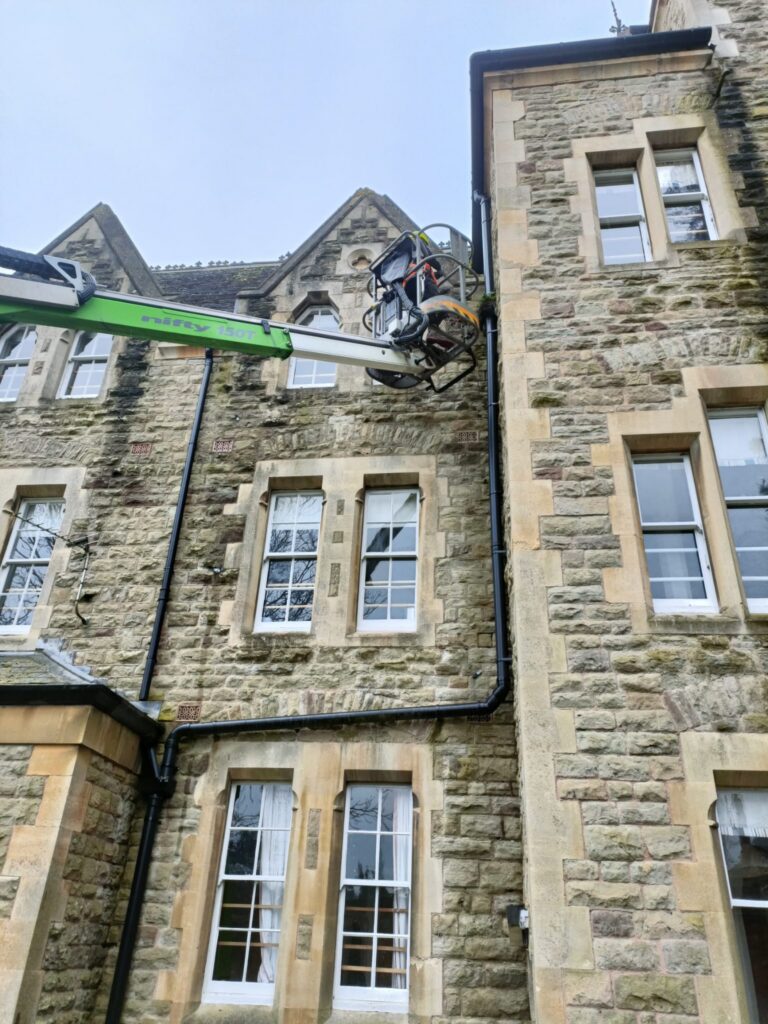
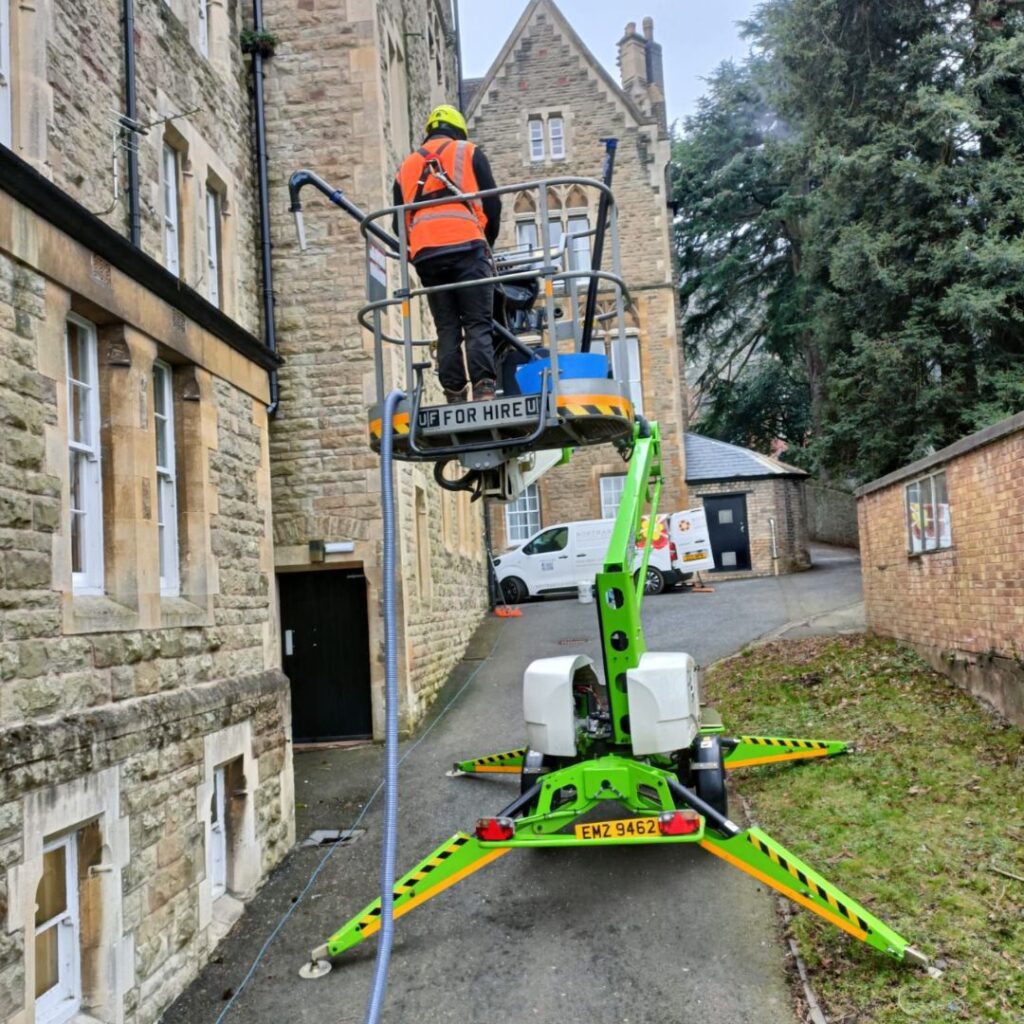
Twice a year is the honest answer for most properties with trees nearby, and once a year for those without, but the useful detail is in what each visit is for. They are not the same job. The autumn clearance, carried out once leaf fall has finished, removes the season’s accumulation of leaf litter and prepares the system for the months when it will be working hardest. This is the visit most people know about, and it is bulky, straightforward work. The spring clearance deals with something different and often heavier: moss and grit washed down from the roof covering through the winter, compacted with silt into a dense sludge in the base of the channel, along with nesting material, blossom and seed. Where a roof carries significant growth, the spring visit produces considerably more material than the autumn one. Between visits there are useful signs worth watching for. Water spilling over the front lip in heavy rain, dripping from the underside of a joint, a green algae stripe developing down a wall, or a run visibly sagging between brackets all indicate the system needs attention sooner rather than later. The work uses high-reach vacuum equipment, drawing compacted material into a sealed drum at ground level through carbon fibre poles, with a camera at the head allowing the interior of the run to be inspected before and after. Nothing is dropped onto planting or paving, and ladder use on soft ground is avoided. Where deposits have set hard, tower or ladder access completes the job by hand. Downpipes are flushed individually and discharge confirmed at the gully. Sagging sections and loose brackets are reported rather than quietly re-cleared, since a run holding standing water re-blocks regardless. Properties in Sibford Ferris with enclosed, sheltered aspects fall into the twice-yearly category comfortably.

Render Cleaning Sibford Ferris
Three to five years is a realistic interval between render cleaning visits on most elevations, and knowing what moves that figure in either direction helps with planning. Orientation is the largest single factor. A wall facing away from the prevailing sun stays damp for longer after every rainfall and colonises far sooner than one that dries within hours. Shelter matters similarly: an elevation enclosed by planting, outbuildings or a boundary has poor airflow and holds moisture at the surface. Render type contributes too, with silicone-based systems designed to shed water and typically staying clean longest, monocouche and traditional sand-and-cement holding moisture in their texture and greening sooner. Drainage above the wall is the factor most easily fixed. The majority of vertical staining on rendered elevations originates from a gutter joint, a blocked run or a sill without a proper drip detail, and correcting it removes the cause rather than treating the symptom every few years. Trimming vegetation back from the base of a wall improves airflow at low level, where splash-back and shade combine to produce the earliest colonisation. Where an elevation is inherently difficult — permanently shaded, sheltered, north-facing — a protective treatment applied after cleaning slows recolonisation and can extend the interval usefully. It is worth applying selectively to the problem elevation rather than to the whole building, and it is not a substitute for cleaning when the time comes. The cleaning itself remains soft washing throughout. A biocidal solution is applied at very low pressure through a fan tip or pole-mounted lance, wetting the surface evenly with no mechanical contact, and left to work. Growth dies at root level and weathers off over subsequent weeks, so the wall continues to improve after the visit. Sheltered rendered elevations in Sibford Ferris will generally need attention at the shorter end of that range.