Exterior Cleaning Somerton | Pressure Washing Somerton
- Residential & Commercial Cleaning Specialists
- 5-Star Rated Service & Customer Care
- Eco-Friendly Cleaning Solutions
- Expert Team Covering Somerton
Get a FREE Quote
Exterior Cleaning Somerton
Set the available methods side by side and the choices in exterior cleaning become much easier to follow. Pressure washing delivers mechanical energy through water at two to three thousand pounds per square inch. It excels on dense, non-porous, sound surfaces with intact joints, and it removes surface material along with dirt on anything softer. Fast, dramatic, and destructive in the wrong place. Soft washing delivers a biocidal solution at under a hundred pounds per square inch and relies on chemistry rather than force. It suits everything porous, coated or laid in overlapping courses. Slow to show results, harmless to the substrate, and long-lasting because it kills the spore population rather than displacing it. Pure water cleaning uses deionised water through a soft brush on a pole. It suits glass, panels, frames and high-level trim, leaves nothing behind as it dries, and has no chemical component at all. Hot water and steam add thermal energy, breaking down oils, rubber, gum and traffic film so that far lower pressures achieve the same result. It is the answer to hydrocarbon contamination and irrelevant to biological growth. Vacuum extraction removes consolidated material from confined spaces, principally rainwater goods, and is a physical rather than a cleaning process. Manual removal with soft-bladed tools handles bulk growth on coverings where no machine belongs. Chemical pre-treatment sits behind several of them rather than standing alone: an alkaline degreaser for oily deposits, an acidic treatment for rust and efflorescence, a systemic herbicide for rooted weeds, each applied to a defined area and given time to work. A whole property typically needs four or five of these methods in a single visit. Stewart Exterior Cleaning carries all of them for that reason. Households in Somerton searching exterior cleaning near me should be wary of a contractor arriving with only one.
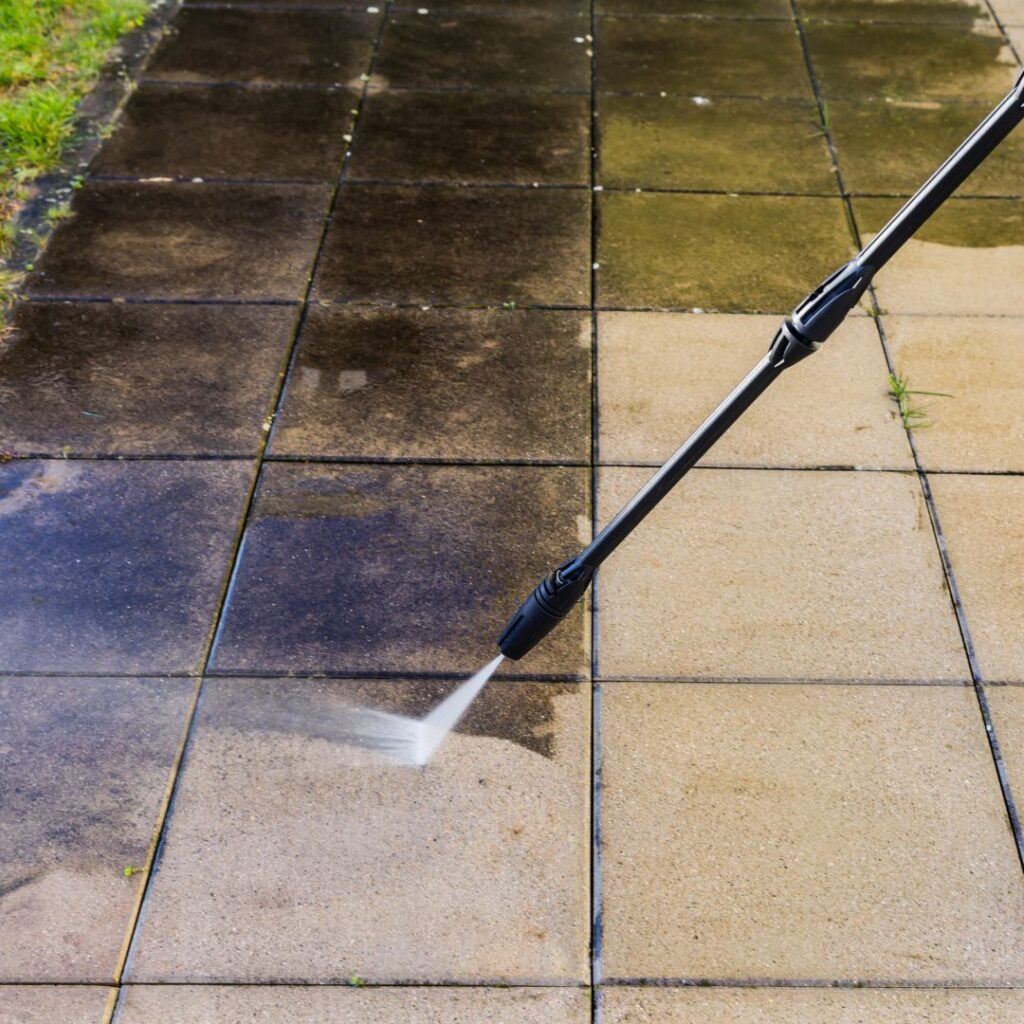
Pressure Washing Somerton
Comparing pressure washing directly against the alternatives shows where it genuinely wins and where it is simply the wrong tool. Against soft washing, pressure wins decisively on consolidated inorganic material — silt packed into pores, composted matter in paving joints, traffic film on a hard standing — because chemistry does not remove a growing medium, it only kills what grows in it. It loses decisively on anything porous, coated or biological, because it takes surface with it and leaves the spore population intact. Against hot water, cold pressure is cheaper to run and slower on anything greasy. Heat breaks the bond chemically, so a heated machine at moderate pressure will outperform a cold one at maximum on oil, rubber and gum, and it does considerably less damage doing it. Against a poultice, pressure is worse than useless on hydrocarbon staining. Oil is held within the pores, and directing energy at it drives contamination deeper and widens the mark, whereas an emulsifying agent draws it back out. Against an acidic treatment, pressure achieves nothing at all on rust, efflorescence or cement residue, which are mineral deposits requiring dissolution rather than shear. Against a flat surface cleaner, free-hand lancing is faster on awkward shapes and reliably worse on open areas, since maintaining constant height, angle and speed over hours is beyond most operators. And against doing nothing, pressure washing render or a roof covering is the losing option, since both are damaged permanently by it. Against vacuum recovery, an open discharge is quicker and sends silt, dead organics and cleaning residue wherever gravity takes it, which is why recovery mats and a vacuum unit are used where a foul drain or an interceptor is not available. Anyone in Somerton comparing pressure washing near me should establish which of these comparisons actually applies to their own surfaces.
Are you based in Somerton or the Surrounding Areas?
Patio & Driveway Cleaning Somerton
Paving treatments are best understood by comparing what each one actually does, since a quotation often bundles several together. Biocide treatment against mechanical extraction: a biocide kills algae, moss and lichen and slows their return substantially, and it leaves the composted material sitting in the joints entirely intact. Mechanical extraction removes that growing medium and does nothing about the spores. Both are needed, in that order. A systemic herbicide against simply pulling the weeds: pulling clears a joint today and leaves the root to regrow within weeks. A systemic treatment applied a fortnight ahead kills the whole plant. There is no contest, only a scheduling requirement. A rotary surface cleaner against a hand-held lance: the surface cleaner maintains a fixed distance from the surface so energy delivery stays constant, producing an even finish across an open area. The lance is essential for edges, steps and corners and produces striping over anything larger. Cold water against heated water: cold suits algae, silt and general soiling. Hot is the answer to oil, rubber and traffic film in vehicle areas, achieving more at lower pressure. Reinstating kiln-dried sand against sealing the surface: re-sanding restores the interlock that gives block paving its strength and is not optional. Sealing resists staining and slows recolonisation and is optional, appropriate on a sound dry surface and unhelpful on one with drainage problems. Poultice against pressure on oil, and an acidic treatment against anything else on rust: neither of those two has any real substitute. And drainage clearance against surface cleaning: clearing a silted channel drain or gully addresses why an area ponds, whereas cleaning the paving above it simply produces a clean surface that continues to hold water in the same place. Homeowners in Somerton booking driveway cleaning near me should check which of these seven items a price actually includes.
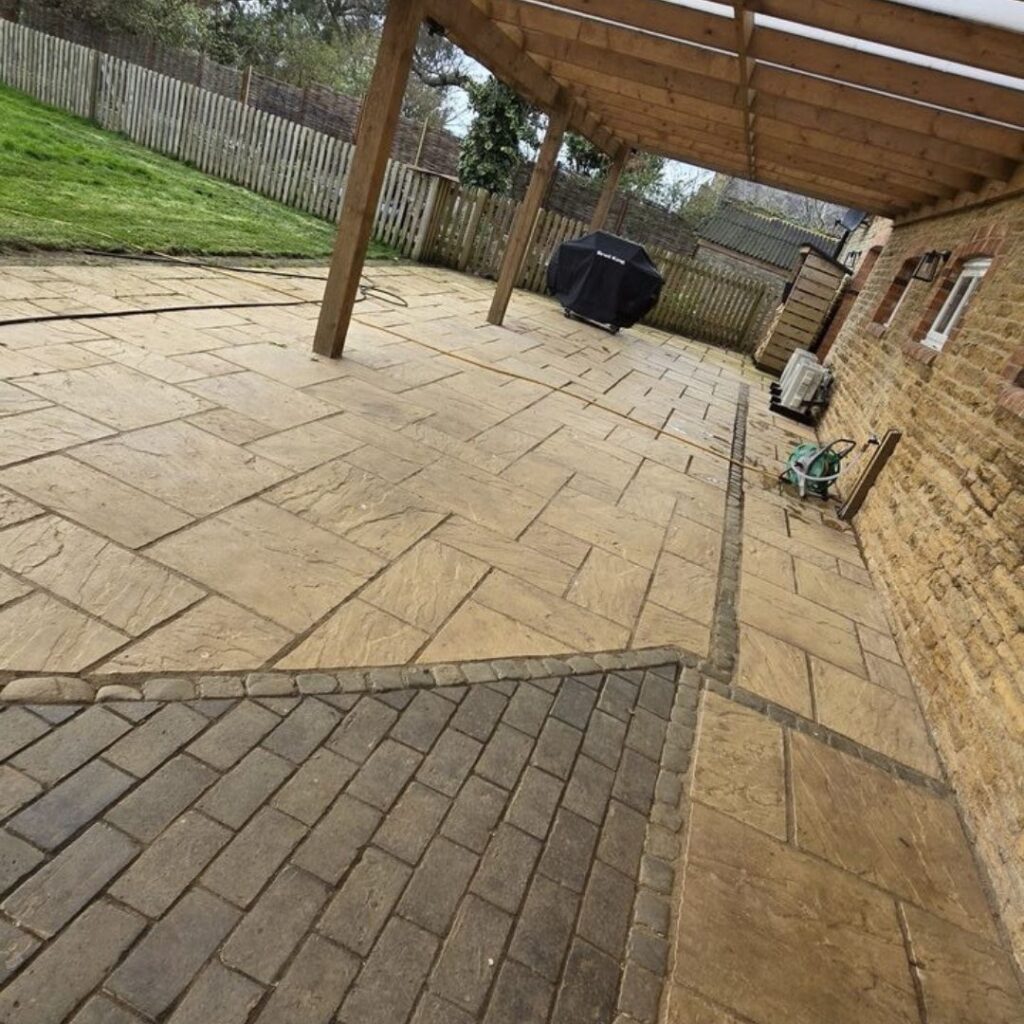
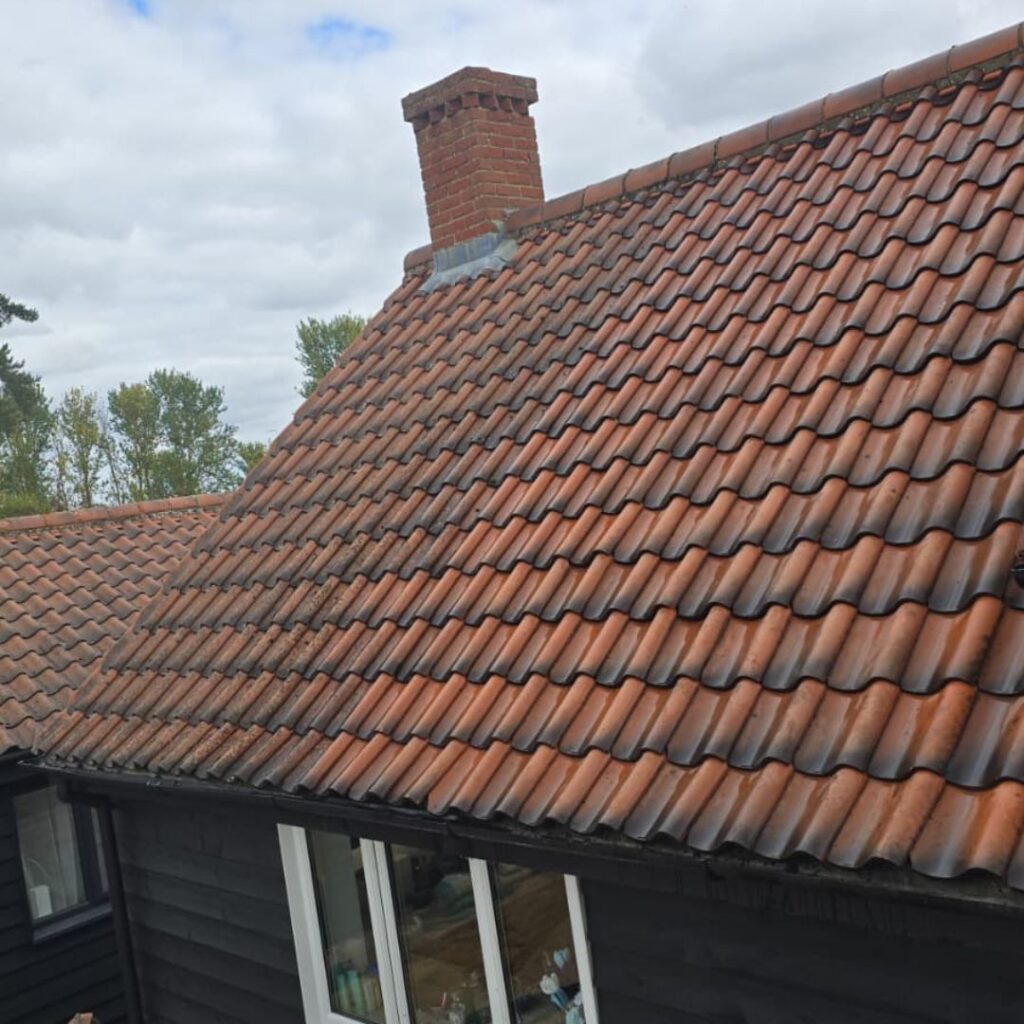
Roof Cleaning Somerton
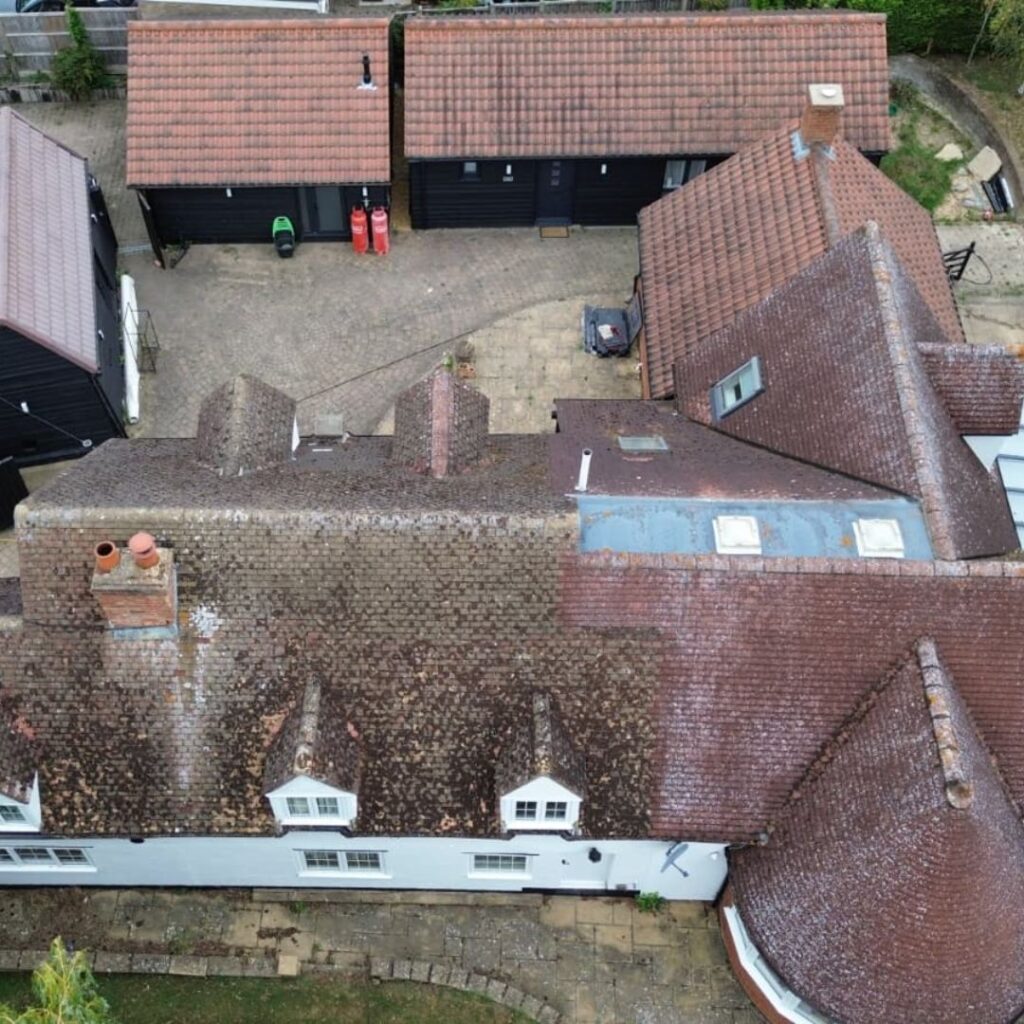
Comparing the two approaches taken to roofs makes the choice straightforward, though the marketing often obscures it. Pressure washing removes the visible growth in a single day. It also strips what remains of the granular surface from concrete tiles, damages the fired face of clay, drives water beneath slate courses into battens and underlay, and can shift units out of alignment. The spore population survives entirely, so the covering regreens within a couple of years, and it does so on a surface now more porous than before. Each subsequent visit starts from a worse position. Soft washing removes almost nothing on the day beyond whatever bulk moss has been taken off by hand. A biocidal solution applied at low pressure is left in place, killing growth at cellular level including the spores, and the covering lightens progressively over the following weeks as dead material weathers off. Nothing mechanical touches the tile surface. The interval before the next treatment is typically five to ten years. Hand removal sits alongside soft washing rather than competing with it as an alternative. Established moss standing proud of the laps has to come off physically, using soft-bladed tools worked downward from the ridge so debris falls clear rather than being forced beneath the overlaps. Coatings and sealants applied to a covering afterwards are a third option and generally a poor one, since they interfere with the breathability of a covering and can trap moisture beneath them. Doing nothing is a fourth option and occasionally the right one, since an old covering with corroded fixings and brittle units may be better inspected, reported and left, with the money spent on flashings and bedding instead. The comparison overall is between buying an appearance and maintaining an asset. Anyone in Somerton searching roof cleaning near me should be clear which is being quoted.
Solar Panel Cleaning Somerton
Solar cleaning methods differ rather more than they appear to at first glance, and the comparison between them explains why the professional approach looks so deliberately unhurried. Deionised water against ordinary mains water is the central comparison. Mains supply carries dissolved minerals which remain on the glass as it evaporates, forming spotting and a fine film. That film scatters light, so a hosed panel can perform barely better than a dirty one, and its slightly rough surface holds the next layer of dust more readily than clean glass. Deionised water leaves nothing behind and, being under-saturated, actively draws contaminants into solution as it flows. Pure water against a detergent solution: detergent cleans effectively and leaves surfactant residue that attracts soiling and can affect the anti-reflective coating, so the array resoils faster afterwards. Pure water needs no additive at all. Pole work from the ground against roof access: a pole reaches the great majority of domestic arrays from the ground, avoiding ladder work, roof loading and proximity to a live installation. Roof access allows more aggressive work on frame channels and risks microcracking cells through point loading. A soft brush against applied pressure: agitation supplies the small amount of mechanical energy needed. Pressure directed at a glass-to-frame seal is the fastest route to moisture ingress and a failed panel, and most warranties prohibit it explicitly. Cleaning against properly investigating: where output has fallen as a step change on a single day, cleaning will not fix it and an installer is needed. Annual against reactive: an annual visit keeps soiling from ever reaching the point where losses become significant, while a reactive one follows a noticed drop in generation and produces a larger single improvement from a worse starting position. Owners in Somerton should check which water is being used before booking anything.

Our Customers Say Everything there is to know about us
EXCELLENTTrustindex verifies that the original source of the review is Google. Fantastic service through out! Our roof looks brand new! Decided to also get the driveway done after seeing the results of first job and what a difference! All for a reasonable price as well. Definitely highly recommend 5*Posted on GoogleTrustindex verifies that the original source of the review is Google. Brendan of Stewart Exterior Cleaning was superb. He obviously knows a lot about looking after the exterior of a property and when he visited to clean our gutters, he clearly explained what was going on and gave excellent advice for the future. He was also friendly and enthusiastic, and gave us the sense he enjoys his work and taking care of his customers. He also mentioned some of his company's other services such as landscape gardening, which probably explains why he has so much expertise. But as it was winter and just before Christmas when he visited, it wasn't the right time for things for the garden, but we'd like to have him back in the spring, so he's probably got a customer for life now! Thanks so much, Brendan – it's very obvious why your business is thriving and we'll be back in touch in the future!Posted on GoogleTrustindex verifies that the original source of the review is Google. Brendan was very helpful and informative, he was quick and efficient in completing the job while answering any questions I had, I would definitely recommend his servicesPosted on GoogleTrustindex verifies that the original source of the review is Google. Returning customer of Stewart Exterior Cleaning. Brendan did a gutter clear for us recently and came back today to carry out a repair caused by high winds. Very friendly servicePosted on GoogleTrustindex verifies that the original source of the review is Google. Great service, roof looks newPosted on GoogleTrustindex verifies that the original source of the review is Google. Great service, couldn’t be happier with the end result. We initially had Brendan in to pressure wash and re-sand our driveway and after seeing the excellent job he did, we decided to have the roof and gutters cleaned as well. The transformation has completely refreshed our home and added fantastic curb appeal. Reliable, friendly, and great value for the service provided thanks again, Brendan!Posted on GoogleTrustindex verifies that the original source of the review is Google. Excellent job completed by Brendan. Was prompt and went above and beyond - given that there wasn’t a useable tap on sight! Also advised what do do after cleaning with regards to paving slabs. Would highly recommend, very excellent price and top notch service. Thank you BrendanPosted on GoogleTrustindex verifies that the original source of the review is Google. Excellent job done in a most friendly and efficient manner. Would highly recommend Brendan and his company to anybody looking to have their gutters cleared and fascia’s cleaned. Well done Stewart Exterior Cleaning.Posted on GoogleTrustindex verifies that the original source of the review is Google. I spotted Brendan working at neighbours property and asked him for a quote to pressure wash my pathway and patio. We agreed a price and the work was carried out a few days later. Brendon is hardworking, friendly and diligent and I’m very happy with the outcome and overall experience.Posted on GoogleTrustindex verifies that the original source of the review is Google. Fantastic service from Stewart Cleaning Ltd. Great work, tidy and very accommodating. Would definitely recommend and will definitely be using these guys again. Thank you! Noticed my dirty windows and even cleaned them despite it not being part of the booked job! Many many thanks.
Gutter Cleaning Somerton
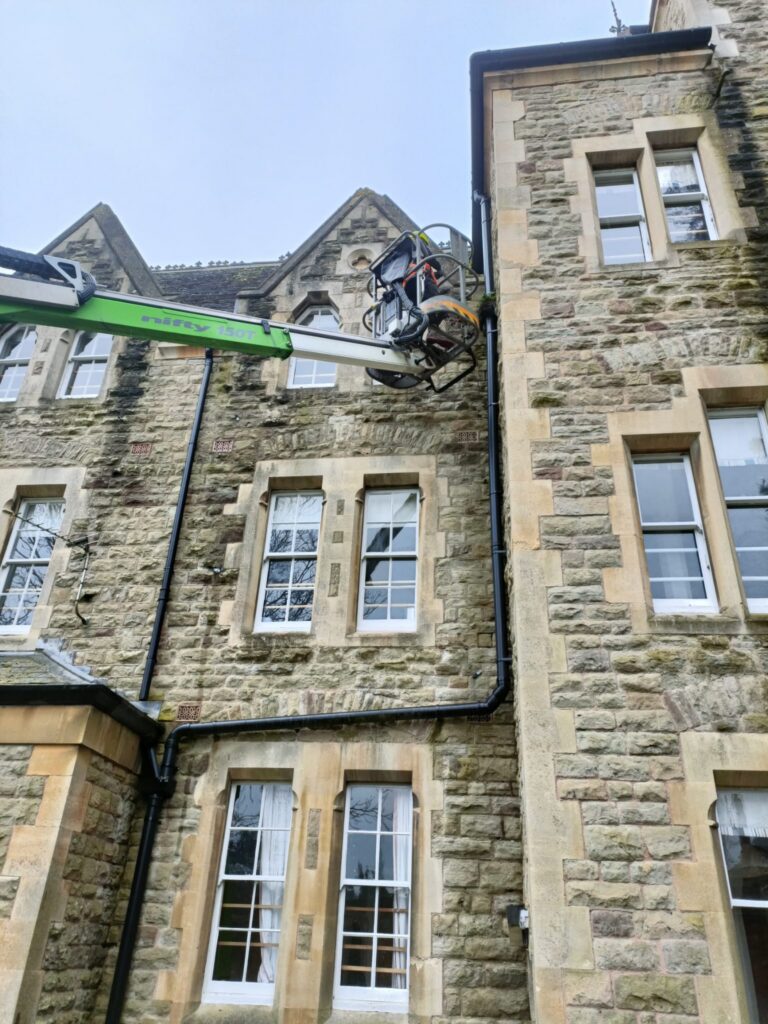
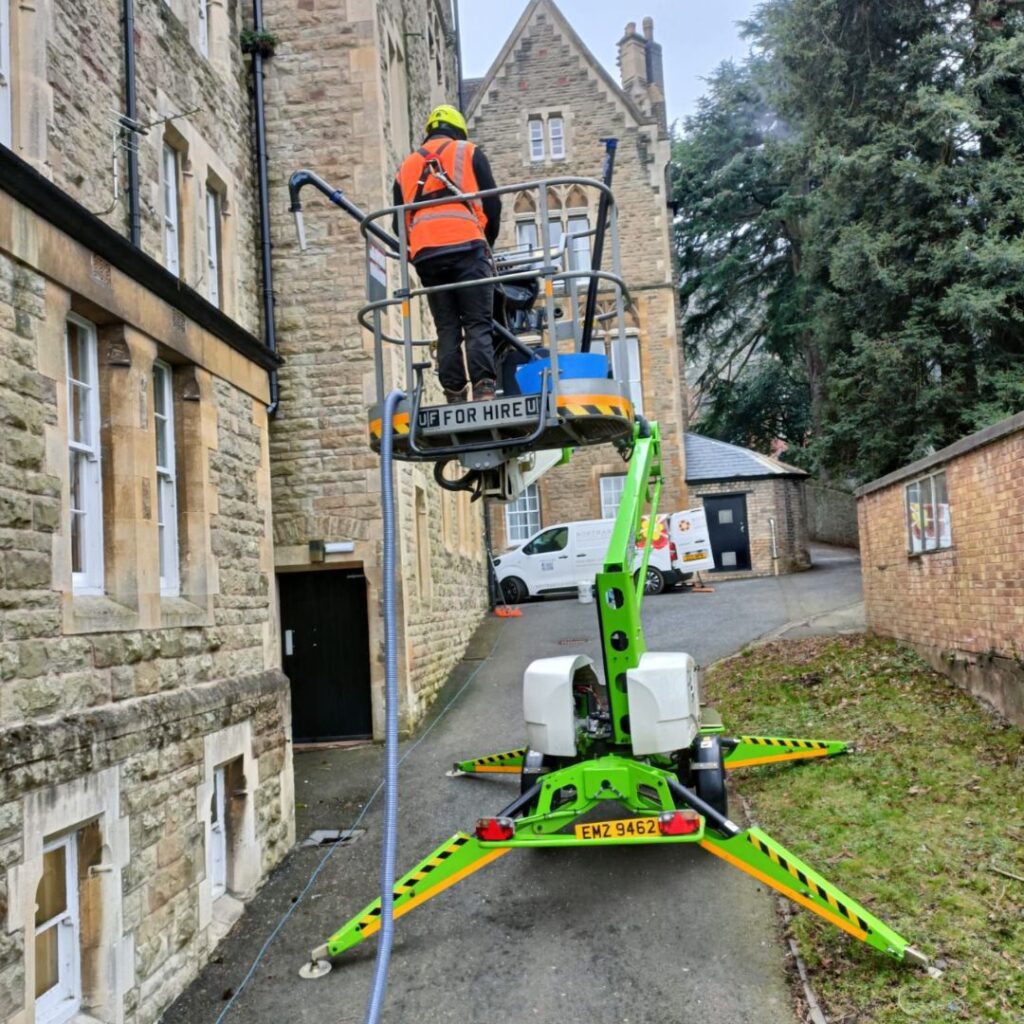
Gutter methods are worth comparing directly, since the differences are substantial and largely invisible in a quotation. Vacuum extraction against hand scooping from a ladder: a ground-level vacuum draws consolidated material into a sealed drum through carbon fibre poles, with nothing dropped onto planting or paving and nobody at height. Hand scooping from a ladder removes the loose upper layer, frequently leaves the compacted deposit beneath, drops material wherever it falls and accounts for most of the injuries in domestic maintenance. Camera inspection against simply looking up: footage from the pole head shows the interior of the run, the depth of remaining silt, joint condition, bracket security and whether the section holds standing water. Looking from the ground shows none of it, and looking from a ladder top shows one metre at a time. Flushing the downpipes against assuming they are clear: a downpipe run through individually with discharge confirmed at the gully is verified. One that sounded clear when water went in is not, since the obstruction may be at a swan neck, a hopper or the gully itself. Fitting guards against regular clearance: guards reduce leaf ingress and do little about the moss, grit and silt that actually consolidate, and several designs make inspection harder while trapping material on top. Clearing a run against re-fixing it properly: a run that has sagged and lost its fall holds standing water and reconsolidates within months, so clearance is a recurring charge and re-fixing is the remedy. Scheduled against reactive: a planned clearance is quick because deposits have not consolidated, while a reactive one follows a symptom, by which point the material has set hard and the damage beneath has usually been developing for months. Householders in Somerton should ask which method a quotation is based on rather than comparing the prices alone.

Render Cleaning Somerton
Render is the surface where the comparison between methods matters most, because one of them causes permanent damage. Soft washing against pressure washing is the first comparison: soft washing applies a biocidal solution at well under a hundred pounds per square inch, penetrating the texture of the finish, killing growth at cellular level and leaving it to weather off over the following weeks. Pressure washing removes growth and finish together, leaving pale scoured patches, exposed base coat and a hard edge where the treated area stops. The first preserves the wall; the second requires re-rendering to correct. A quaternary biocide against bleach-based products: quaternary ammonium compounds work more slowly, are gentler on planting, metalwork and coatings, and kill the spore population thoroughly. Hypochlorite-based mixes act faster and more visibly and are considerably harsher on everything nearby, which raises the protection required accordingly. Treating the wall against coating it afterwards: a protective treatment applied after cleaning slows recolonisation on a genuinely difficult elevation. It is not a substitute for cleaning and is wasted on a sunlit wall that would have held for years anyway. Cleaning the surface against repairing the cause: where staining is a defined vertical streak, the cause is a defective gutter joint or a sill without a drip detail, and cleaning buys eighteen months while the repair resolves it. The whole building against the worst elevation alone: a fixed budget concentrated on the shaded, sheltered face usually produces the better outcome. Testing against assuming: ten minutes spent on an inconspicuous area confirms the dilution suits the finish, which on coloured and painted render is the difference between an even result and a wall carrying visible tide lines. Anyone in Somerton comparing render cleaning near me should ask for the pump pressure, since that single figure distinguishes the first comparison entirely.